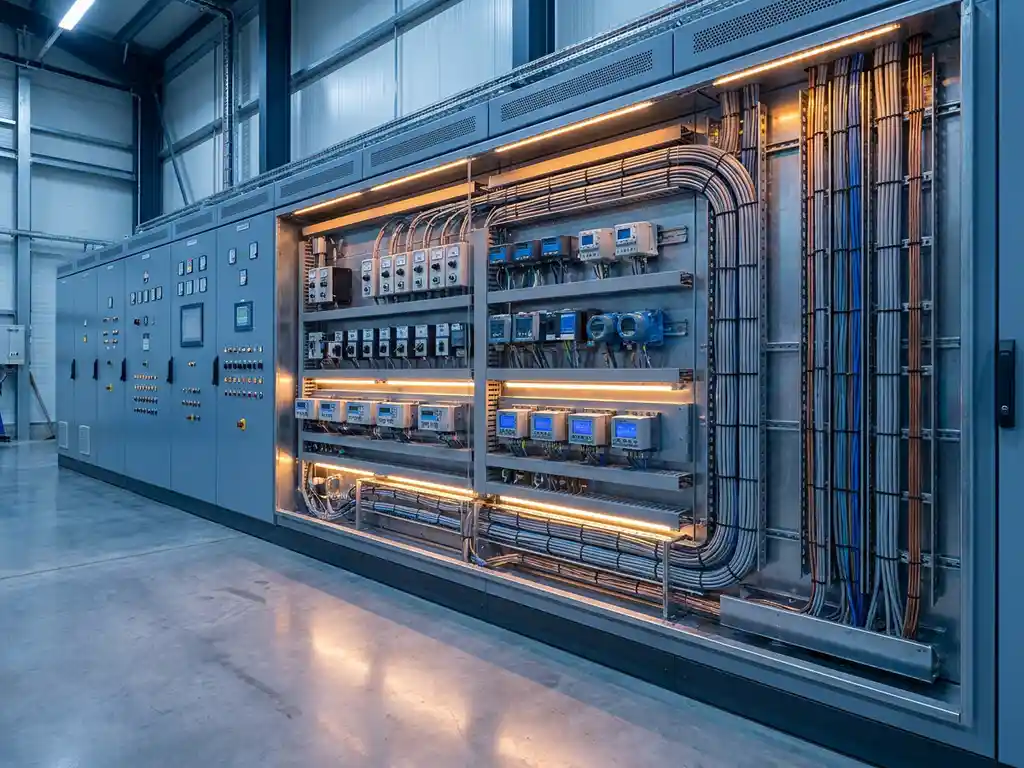

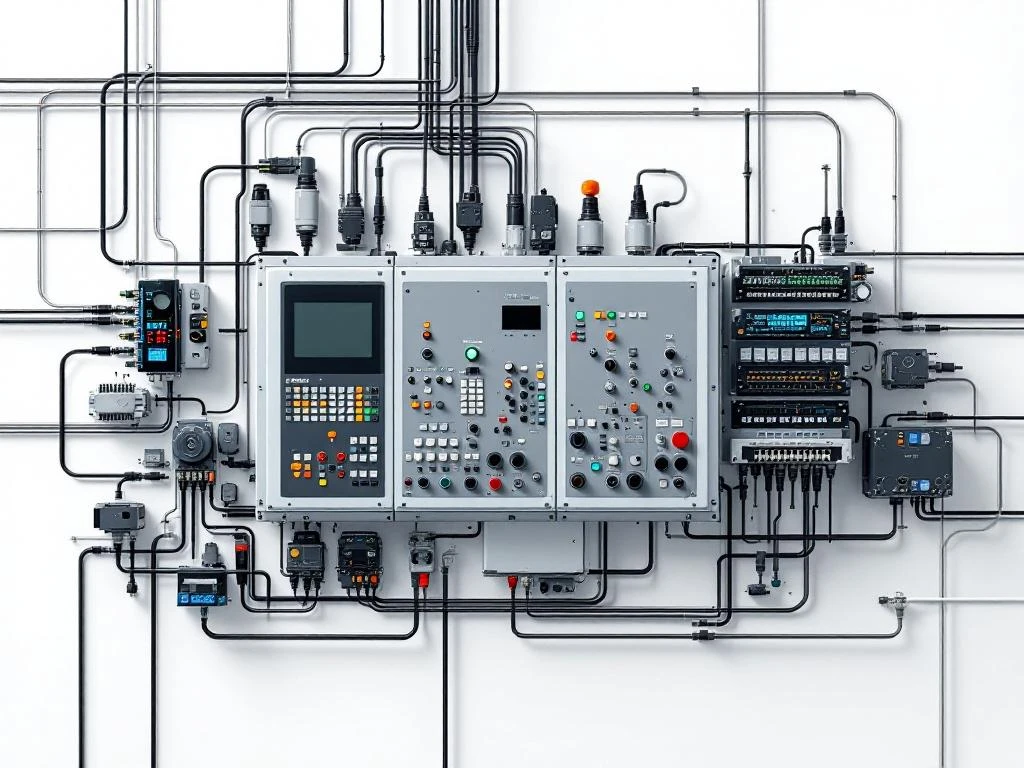
A PLC (Programmable Logic Controller) serves as the central brain of process automation systems, controlling and monitoring industrial equipment through programmed logic. It receives input signals from sensors, processes this data according to pre-programmed instructions, and sends output commands to actuators, valves, and motors. PLCs enable precise, automated control of manufacturing processes while providing real-time monitoring and safety functions that improve efficiency and reduce manual intervention.
What exactly is a PLC and how does it work in industrial settings?
A Programmable Logic Controller is a ruggedized computer specifically designed for industrial automation applications. It consists of a central processing unit, input/output modules, memory, and a power supply, all housed in an enclosure that withstands harsh industrial environments, including extreme temperatures, vibrations, and electrical interference.
The PLC operates through a continuous scan cycle in which it reads input signals from field devices such as sensors and switches, executes the control program stored in its memory, and updates output signals to control devices such as motors, pumps, and valves. This cycle typically completes in milliseconds, ensuring real-time response to changing process conditions.
Input modules convert field signals (analog or digital) into formats the CPU can process, while output modules convert CPU commands back into appropriate signals for field devices. Programming typically uses ladder logic, which resembles electrical relay circuits, making it intuitive for engineers familiar with traditional control systems.
What are the main functions of a PLC in process automation?
Data acquisition and process control represent the core functions of PLCs in automation systems. They continuously collect information from sensors measuring temperature, pressure, flow rates, and other process variables, then execute control algorithms to maintain optimal operating conditions.
PLCs perform several critical functions simultaneously. They monitor process variables against setpoints and automatically adjust control outputs to maintain desired conditions. Safety interlock functions prevent dangerous operating scenarios by immediately shutting down equipment when unsafe conditions are detected.
Communication capabilities allow PLCs to share data with supervisory systems, enabling remote monitoring and control. They also coordinate multiple pieces of equipment, ensuring proper sequencing of operations and maintaining process synchronization across complex manufacturing lines.
Advanced PLCs can perform mathematical calculations, data logging, and trending analysis. This enables sophisticated control strategies such as PID control loops, batch processing sequences, and predictive maintenance algorithms that optimize both product quality and equipment performance.
How does a PLC integrate with other automation systems?
PLCs serve as central communication hubs within industrial automation architectures, connecting field devices to higher-level systems through various communication protocols, including Ethernet, Profibus, Modbus, and proprietary networks. This connectivity enables seamless data exchange between different automation components.
Integration with SCADA (Supervisory Control and Data Acquisition) systems allows operators to monitor and control processes from centralized control rooms. Human-Machine Interfaces (HMIs) provide local operator screens for process visualization and manual control when needed.
Modern PLCs communicate with Manufacturing Execution Systems (MES) to provide production data, quality metrics, and equipment status information. This integration supports real-time production scheduling, inventory management, and quality tracking throughout the manufacturing process.
We specialize in implementing comprehensive automation solutions in which PLCs integrate seamlessly with enterprise systems. This creates complete process automation architectures that provide visibility from the shop floor to management level, enabling data-driven decision-making and continuous process improvement.
What are the key advantages of using PLCs in process automation?
Enhanced reliability and reduced downtime represent the primary advantages of PLC-based automation compared with traditional relay-based control systems. PLCs eliminate mechanical wear associated with electromechanical relays while providing diagnostic capabilities that identify potential issues before failures occur.
Cost-effectiveness arises from reduced wiring complexity, faster installation times, and simplified maintenance procedures. Changes to control logic can be implemented through software modifications rather than physical rewiring, significantly reducing modification costs and downtime.
Safety improvements result from built-in diagnostic functions, redundant safety systems, and fail-safe operating modes. PLCs can implement complex safety interlocks that would be impractical with conventional control methods, protecting both personnel and equipment.
Operational efficiency increases through precise control algorithms, consistent process execution, and integration capabilities that eliminate manual data transfer. PLCs enable 24/7 operation with minimal human intervention while maintaining consistent product quality and optimal resource utilization.
The flexibility of PLC systems allows for easy expansion and modification as production requirements change. This adaptability ensures that automation investments remain valuable as businesses grow and evolve, providing a long-term return on investment through improved productivity and reduced operating costs.