

What are the key differences between the 4 types of processing?
The four types of processing differ primarily in how production is organized, how materials move through the system, and how output is measured. Batch processing produces defined quantities in discrete runs. Continuous processing runs without interruption. Discrete processing assembles individual, countable units. Job shop processing handles custom, low-volume work in flexible configurations.
Each type reflects a different balance between flexibility and efficiency. Continuous and batch processes tend to dominate industries where materials are mixed, transformed, or chemically altered. Discrete and job shop processes are more common where individual components are assembled or fabricated to specification.
- Batch processing: Production occurs in defined lots or batches. The process starts, runs to completion, and then stops before the next batch begins. Common in food production, pharmaceuticals, and specialty chemicals.
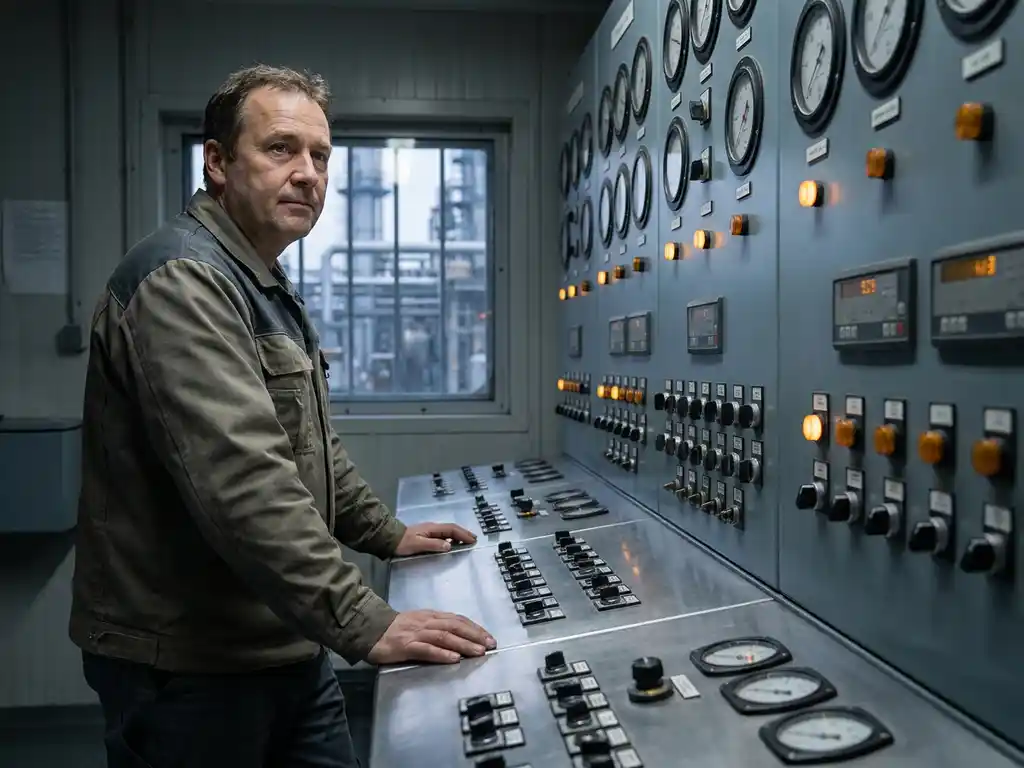
- Continuous processing: Raw materials flow through the system without interruption, 24 hours a day. Typical in oil refining, paper manufacturing, and bulk chemical production.
- Discrete processing: Individual, countable units are produced or assembled. Each item can be tracked separately. Common in automotive, electronics, and consumer goods manufacturing.
- Job shop processing: Small quantities of highly customized products are made to order. Equipment is arranged by function rather than by product flow. Common in metal fabrication, toolmaking, and specialty engineering.
The right process type is rarely a free choice. It is usually dictated by the nature of the product, the required output volumes, and the degree of variation in orders. Manufacturers often operate more than one process type within the same facility.
What industries use batch processing?
Batch processing is used across industries where products must be made in defined quantities, where ingredients must be combined and transformed, or where regulatory traceability requires clear separation between production runs. The most common sectors include pharmaceuticals, food and beverage, specialty chemicals, paints and coatings, and cosmetics.
In pharmaceuticals, batch control is critical because every production run must be documented, validated, and traceable to meet regulatory requirements. A single batch of a drug compound must be manufactured under consistent conditions, and any deviation must be logged and investigated.
In food and beverage manufacturing, batch processing allows producers to switch between recipes, manage seasonal ingredients, and maintain quality standards across different product lines. A brewery, for example, produces each beer style in discrete batches, allowing the recipe and process parameters to be adjusted between runs.
Specialty chemical manufacturers use batch processing when producing products in smaller volumes or when the chemical reactions involved require precise timing and temperature control that would be difficult to sustain in a continuous flow. The flexibility of batch control makes it well suited to operations that produce many different products on shared equipment.
How does continuous processing differ from batch processing?
Continuous processing differs from batch processing in that materials flow through the production system without stopping between runs. There is no defined start and end to a production cycle. In batch processing, a set quantity of material is processed, the equipment is cleared, and a new batch begins. In continuous processing, the process runs uninterrupted, often for weeks or months at a time.
This distinction has significant implications for efficiency, control, and flexibility. Continuous processes are highly efficient at scale because there is no downtime between batches and no time lost to cleaning, loading, or restarting equipment. However, they are far less flexible. Changing the product or adjusting the process typically requires a full shutdown, which is costly and time-consuming.
Batch processing, by contrast, allows manufacturers to change recipes, adjust quantities, and switch between products relatively easily. The trade-off is lower throughput and the overhead associated with managing individual batch records, cleaning cycles, and quality checks between runs.
From an automation and batch control perspective, continuous processes require tightly tuned regulatory control loops that maintain stable operating conditions over long periods. Batch processes require sequence control logic that manages the step-by-step execution of recipes, including transitions between phases such as charging, reacting, and discharging.
When should a manufacturer choose discrete processing?
A manufacturer should choose discrete processing when the product consists of individual, countable units that retain their identity throughout production. If you are assembling components, machining parts, or producing items that can be individually tracked, inspected, and packaged, discrete processing is the appropriate model.
Discrete manufacturing is well suited to high-volume, standardized production where the same product or product family is made repeatedly. Automotive assembly lines, electronics manufacturing, and appliance production are classic examples. The process is optimized around moving individual units through a defined sequence of operations as efficiently as possible.
Discrete processing becomes the right choice when:
- Products are assembled from multiple components rather than transformed from raw materials
- Individual units need to be inspected, tested, or serialized
- Production volumes are high enough to justify dedicated assembly lines or cells
- Lead times are short and customer demand is relatively predictable
If the product changes frequently, volumes are low, or each order requires significant customization, discrete processing may be too rigid. In those cases, a job shop model is often more practical.
What is job shop processing and when is it used?
Job shop processing is a production method where small quantities of custom or made-to-order products are manufactured using general-purpose equipment arranged by function rather than by product flow. Each job follows its own routing through the facility depending on what operations it requires. Job shops are defined by high flexibility, high variety, and relatively low volume.
This approach is used when customer orders are unique or highly variable, when batch sizes are too small to justify dedicated production lines, or when the product requires specialist skills and equipment that serve multiple purposes. Metal fabrication workshops, precision engineering firms, toolmakers, and custom furniture manufacturers are typical examples of job shop environments.
The key advantage of job shop processing is flexibility. The same equipment and workforce can handle a wide range of jobs without significant reconfiguration. The trade-off is complexity in scheduling and routing, since each job may follow a different path and compete for the same shared resources.
From an automation standpoint, job shops are harder to automate than continuous or batch operations because the variability in work makes it difficult to apply fixed control sequences. Automation in job shops tends to focus on individual machines, data collection, and scheduling tools rather than end-to-end process control.
How does process type affect automation and control systems?
Process type directly determines the kind of automation and control system a facility needs. Each production model places different demands on control logic, data management, and system architecture. Choosing the wrong control approach for your process type leads to inefficiency, poor quality, and unnecessary complexity.
Control requirements by process type
Continuous processes rely on regulatory control, primarily proportional-integral-derivative (PID) loops that maintain variables such as temperature, pressure, and flow within tight tolerances over long periods. The control system must respond to disturbances quickly and keep the process stable. Advanced process control and model-predictive control are common in large continuous operations.
Batch processes require sequential control logic that executes recipes step by step. The ISA-88 standard defines a widely adopted framework for batch control, covering the structure of recipes, equipment phases, and procedural elements. A robust batch control system must manage transitions between phases, handle exceptions, and maintain complete records of what happened during each batch.
Discrete and job shop automation
Discrete manufacturing relies on programmable logic controllers (PLCs) and manufacturing execution systems (MES) to coordinate assembly operations, track individual units, and manage quality checks. The focus is on throughput, cycle time, and defect detection rather than process variable regulation.
Job shop environments benefit most from flexible automation at the machine level combined with strong scheduling and data visibility tools. Integrating these machines into a broader digital infrastructure, connecting them to cloud platforms and enterprise systems, allows managers to track job progress, identify bottlenecks, and make better scheduling decisions.
Across all process types, the trend in 2026 is toward greater connectivity between the shop floor and higher-level systems. Whether you operate a continuous chemical plant or a custom fabrication shop, the ability to collect, analyze, and act on process data is becoming a core competitive advantage.
How CoNet helps with process automation and batch control
At CoNet, we work with manufacturers across all four process types to design, implement, and optimize automation systems that match their specific production model. Whether you are running a continuous chemical process, managing complex batch recipes, or looking to bring more structure to a discrete or job shop environment, we bring deep technical expertise and a focused Siemens toolkit to every project.
Here is what we offer in practice:
- Batch control implementation: We design and configure batch control systems based on ISA-88 principles using Siemens PCS 7, ensuring your recipes are executed consistently, your data is traceable, and your system is ready for regulatory scrutiny.
- Continuous process optimization: We tune control loops, implement advanced process control strategies, and reduce variability in continuous operations to improve yield and energy efficiency.
- Process IT and digital connectivity: Our process automation and digital connectivity services connect your automation systems to cloud platforms such as Azure and MindSphere, giving you real-time visibility into your process data and enabling machine learning-driven insights to improve efficiency.
- Engineering and consultancy: From initial design through commissioning and ongoing support, we act as a single point of contact for your process automation needs, covering energy management, process control, and factory automation.
- Process safety: As the only organisation in the Netherlands certified as both a Siemens PCS 7 Process Safety Specialist and a Siemens COMOS Partner, we integrate safety into every layer of your control system.
If you are unsure which process type applies to your operation, or if your current control system is not keeping pace with your production demands, we would be glad to help you find a practical way forward. Get in touch with our team to discuss your situation and explore what the right automation approach looks like for your facility.
Frequently Asked Questions
Can a single facility operate more than one type of processing simultaneously?
Yes, and this is more common than many manufacturers expect. A food and beverage company, for example, might use batch processing to produce sauces or beverages while running a discrete assembly line to fill, cap, and label individual units for retail packaging. The key is ensuring that the automation and control systems for each process type are properly integrated so that data flows consistently across the facility without creating operational silos.
How do I know if my current process type is the right fit for my operation?
Start by evaluating three factors: your product variety, your production volumes, and your degree of order customization. If you are running high-variety, low-volume work on a discrete line designed for standardized products, you are likely experiencing scheduling bottlenecks and inefficiency. A process audit — reviewing your routing, equipment utilization, and changeover times — will quickly reveal whether your production model is aligned with your actual order profile.
What is the ISA-88 standard and why does it matter for batch manufacturers?
ISA-88 is an international standard that defines a structured framework for batch process control, covering how recipes are organized, how equipment capabilities are described, and how procedural logic is executed. It matters because it gives batch manufacturers a common language for designing and documenting control systems, making it significantly easier to validate processes for regulatory compliance, troubleshoot deviations, and scale or modify recipes without rebuilding the entire control structure from scratch.
What are the most common mistakes manufacturers make when automating a job shop environment?
The most frequent mistake is attempting to apply rigid, end-to-end automation sequences to a job shop before the underlying scheduling and routing processes are well defined. Automation amplifies whatever process exists — if job routing is inconsistent or scheduling is ad hoc, automation will make those problems more visible, not solve them. A more effective approach is to start with machine-level data collection and scheduling visibility tools, then layer in automation incrementally as workflows become more predictable.
How does switching from batch to continuous processing affect product quality and regulatory compliance?
Transitioning from batch to continuous processing can improve consistency by eliminating the batch-to-batch variability inherent in sequential production runs, but it introduces new challenges around in-process quality monitoring and regulatory documentation. Regulatory frameworks in industries like pharmaceuticals have historically been built around batch traceability, so continuous manufacturers must demonstrate equivalent or superior control over product quality using real-time monitoring data and continuous process verification strategies. This transition should always involve a thorough regulatory impact assessment before implementation.
What role does a Manufacturing Execution System (MES) play across different process types?
An MES acts as the operational layer between your shop floor control systems and your enterprise resource planning (ERP) system, and its role shifts depending on your process type. In discrete manufacturing, MES focuses on tracking individual units, managing work orders, and monitoring cycle times. In batch environments, it manages recipe execution, batch records, and genealogy. In continuous operations, it handles production reporting, downtime tracking, and yield accounting. Selecting an MES with modules suited to your specific process type is essential to getting value from the investment.
How should I prioritize automation investments if I have a limited budget?
Focus first on the areas where process variability is highest and where the cost of poor control is most visible — typically in quality failures, rework, or unplanned downtime. For batch and continuous operations, improving control loop performance and recipe management often delivers rapid, measurable returns. For discrete and job shop environments, investing in data collection and production visibility typically provides the fastest payback by exposing bottlenecks that were previously invisible. Build a business case around specific, quantifiable losses before committing to any broader automation program.