
Industrial IoT delivers measurable operational benefits by connecting machines, sensors, and systems across a factory or plant into a unified data network. The result is real-time visibility into every layer of your operation, from individual equipment performance to plant-wide energy consumption. This article unpacks the most common questions about Industrial IoT so you can evaluate what it means for your specific situation.
How does Industrial IoT actually work in a factory setting?
Industrial IoT works by embedding sensors and communication hardware into physical equipment, which then transmits operational data to a central platform, either on-premises or in the cloud. That data is processed and analysed in real time, giving operators and engineers a continuous, accurate picture of what is happening across the production environment.
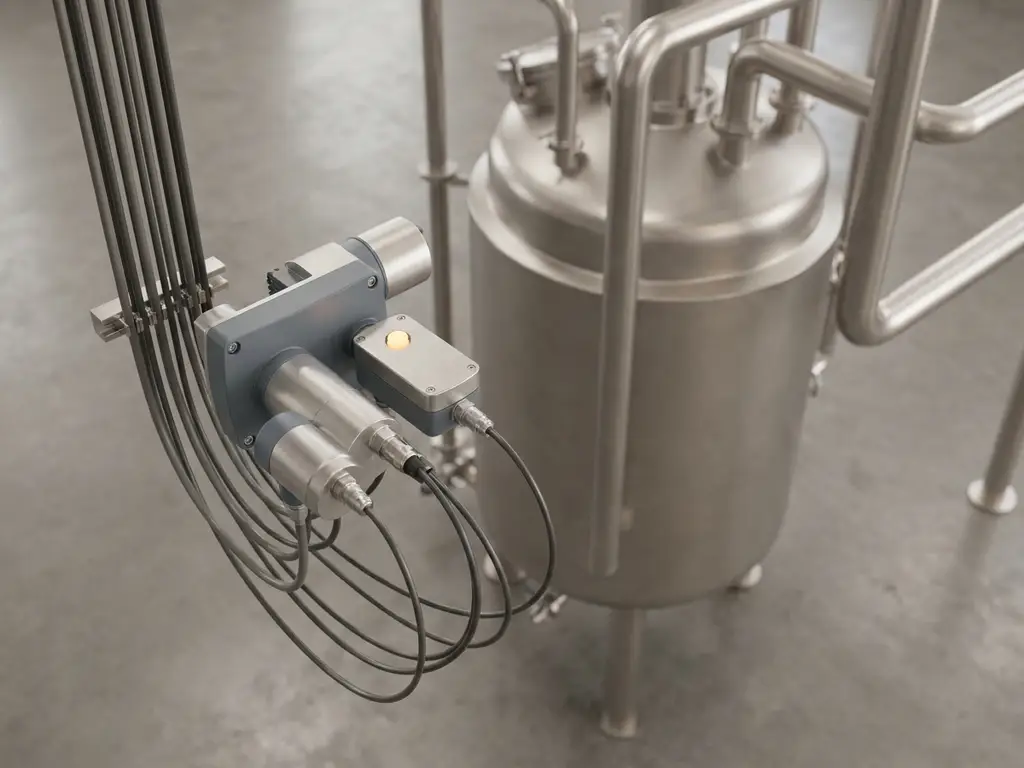
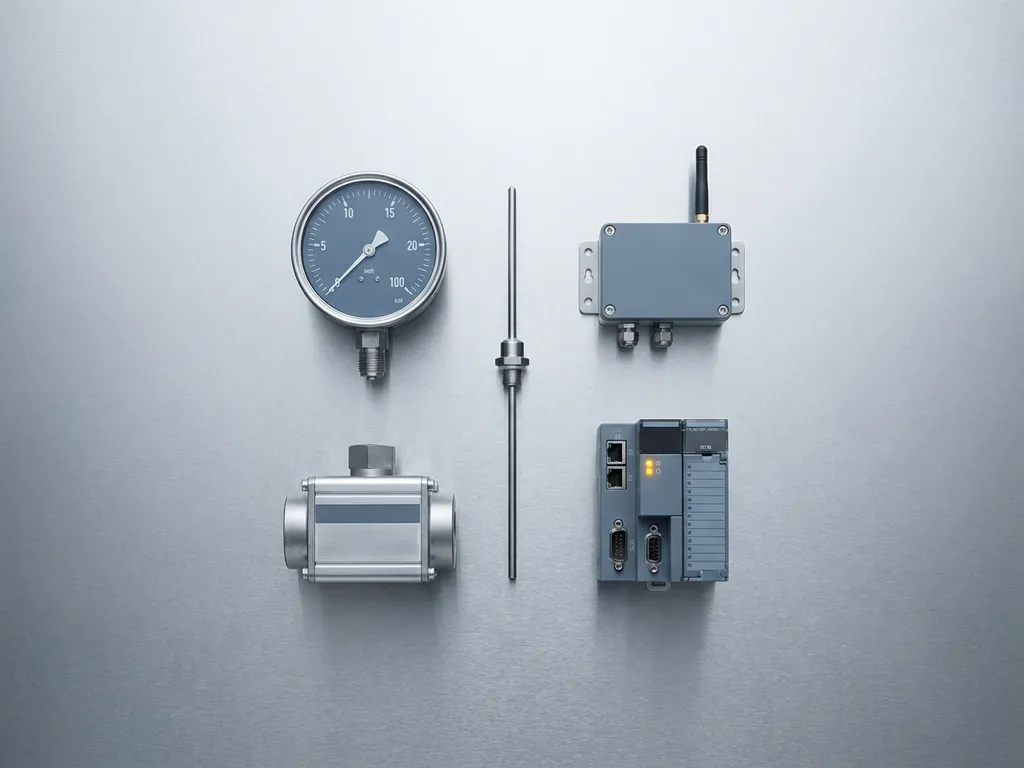
In practice, a factory running Industrial IoT might have temperature sensors on heat exchangers, vibration monitors on rotating equipment, and flow meters on process lines, all feeding data into a single dashboard. Edge computing devices handle time-sensitive processing locally, while aggregated data moves to cloud platforms for longer-term analysis and machine learning applications.
The connectivity layer is critical. Industrial protocols such as OPC UA, MQTT, and Modbus allow modern IoT platforms to communicate with both new equipment and legacy systems that were never designed with connectivity in mind. This means most factories do not need to replace existing assets to benefit from IIoT. They simply add a connectivity layer on top of what is already there.
What operational improvements can IIoT deliver for process industries?
For process industries such as chemicals, food and beverage, and oil and gas, Industrial IoT delivers improvements across four core areas: asset utilisation, energy efficiency, quality consistency, and operational agility. These are not incremental gains. When implemented thoughtfully, connected operations can fundamentally change how a plant is managed.
Asset utilisation and throughput
When every piece of equipment reports its status continuously, operators can identify bottlenecks and underperforming assets far more quickly than traditional manual inspection allows. Scheduling becomes more precise, and production targets become more achievable because decisions are based on real data rather than estimates.
Energy and resource efficiency
Process plants are among the heaviest energy consumers in industry. IIoT enables granular monitoring of energy use at the equipment level, making it possible to detect waste, optimise load distribution, and align high-consumption activities with lower-cost energy windows. Over time, machine learning models can suggest process adjustments that reduce resource consumption without affecting output quality.
How does IIoT reduce unplanned downtime?
Industrial IoT reduces unplanned downtime by enabling predictive maintenance, which replaces the traditional approach of either reacting to failures after they happen or performing scheduled maintenance regardless of actual equipment condition. Sensors continuously monitor indicators such as vibration, temperature, and pressure, and algorithms flag anomalies before they become failures.
The shift from reactive to predictive maintenance is significant. A bearing failure that would have stopped a production line for hours can instead be caught days in advance, allowing maintenance teams to plan the repair during a scheduled window. This approach also reduces unnecessary maintenance work, because components are serviced only when data indicates they need attention rather than on a fixed calendar cycle.
Beyond individual assets, IIoT platforms can model how failures in one part of a process cascade through downstream equipment. This systems-level view helps maintenance and operations teams prioritise interventions based on actual risk to production continuity.
What is the difference between IIoT and traditional SCADA systems?
The key difference between Industrial IoT and traditional SCADA systems is scope and intelligence. SCADA systems are designed to monitor and control specific processes in real time, typically within a defined plant boundary. Industrial IoT extends that connectivity across facilities, integrates with enterprise systems, and adds analytical and machine learning capabilities that SCADA was never built to provide.
SCADA excels at what it was designed for: reliable, deterministic control of industrial processes. It reads sensor values, triggers alarms, and allows operators to adjust setpoints. What it does not do well is aggregate data across multiple sites, connect to cloud platforms, or learn patterns over time to predict future behaviour.
IIoT does not replace SCADA. In most industrial environments, the two work together. SCADA handles real-time control at the process level, while IIoT platforms sit above it, pulling in data from SCADA alongside other sources, applying analytics, and surfacing insights that inform higher-level decisions. Think of SCADA as the nervous system of a single plant and IIoT as the intelligence layer that spans the entire operation.
What are the biggest challenges of implementing IIoT?
The biggest challenges of implementing Industrial IoT are data integration complexity, cybersecurity risk, and organisational readiness. Technical connectivity is often the most straightforward part. The harder work is making sure the data that flows through an IIoT platform is accurate, secure, and actually used by the people who need it.
- Legacy system integration: Many process plants run equipment that is decades old and was never designed to communicate digitally. Retrofitting connectivity to these assets requires careful protocol selection and sometimes custom engineering.
- Cybersecurity: Connecting operational technology to IT networks and cloud platforms creates new attack surfaces. Industrial environments have historically been air-gapped, so cybersecurity practices and culture often need to mature alongside the technology.
- Data quality: Sensors can drift, fail, or produce noise. If the underlying data is unreliable, the analytics built on top of it will be too. Data governance and validation processes are essential from the start.
- Change management: IIoT changes how operators, engineers, and managers work. Without proper training and clear use cases, even well-implemented platforms go underused.
- Scalability planning: Starting with a pilot is sensible, but if the architecture is not designed to scale, expanding across a site or across multiple facilities becomes expensive and complicated.
When should a company start investing in IIoT?
A company should start investing in Industrial IoT when it has clearly defined operational problems that better data could solve, and when it has the internal capacity to act on what that data reveals. The technology is mature enough in 2026 that the question is rarely whether IIoT is ready, but whether the organisation is ready to use it effectively.
Good indicators that the time is right include recurring unplanned downtime with unclear root causes, difficulty benchmarking performance across production lines or sites, energy costs that are hard to attribute or control, and quality issues that are caught only after the fact. These are problems where continuous data and analytics provide a direct path to improvement.
Companies that are not yet ready typically lack a clear owner for the data, have no process for turning insights into action, or are still working through fundamental control system stability. In those cases, addressing the foundations first will make any IIoT investment far more effective.
Starting small is almost always the right approach. A focused pilot on one asset class or one production line generates real evidence, builds internal confidence, and surfaces integration challenges at a manageable scale before broader rollout.
How CoNet helps with Industrial IoT
We help process industries connect their automation infrastructure to the intelligence layer that makes Industrial IoT genuinely useful. Our Process IT and IIoT services team works with your existing systems, including Siemens PCS 7 environments, to build secure, scalable connectivity between your plant floor and cloud platforms such as Azure and MindSphere.
What we deliver in practice:
- Assessment of your current automation landscape and identification of the highest-value IIoT use cases
- Design and implementation of secure OT-to-cloud connectivity that does not compromise process reliability
- Development of machine learning models that turn your operational data into actionable insights
- Custom dashboards and applications, whether mobile, web, or desktop, built around how your teams actually work
- Ongoing support to ensure your IIoT platform evolves as your operational needs change
We bring together deep Siemens process automation expertise and modern data engineering in a single team, which means your IIoT project does not fall into the gap between IT and OT. If you are ready to explore what connected operations could look like for your plant, get in touch with our team and we will start with a concrete conversation about your specific challenges.
Frequently Asked Questions
How long does a typical IIoT pilot project take to show measurable results?
A well-scoped IIoT pilot focused on a single asset class or production line typically delivers measurable results within 8 to 16 weeks. The key is defining success metrics before you start — whether that is a reduction in unplanned downtime, a percentage improvement in energy consumption, or faster fault detection — so you have a clear baseline to compare against. Pilots that try to solve too many problems at once tend to take longer and produce less convincing evidence for wider rollout.
Do we need to replace our older equipment to implement IIoT, or can legacy assets be connected?
In the vast majority of cases, you do not need to replace legacy equipment. Industrial IoT platforms are specifically designed to work with existing assets by adding a connectivity layer on top through protocols like OPC UA, Modbus, and MQTT, or via edge gateways that translate proprietary machine signals into a common format. Even equipment from the 1980s and 1990s can often be retrofitted with sensors or communication modules at a fraction of the cost of replacement. The real question is not whether your assets can be connected, but which ones offer the highest return on connecting them first.
What does an IIoT-ready team look like, and do we need to hire data scientists to get started?
You do not need a team of data scientists to begin. In the early stages, the most valuable people are those who understand your processes deeply — experienced operators, process engineers, and maintenance leads — combined with at least one person who can own the data platform and act as a bridge between IT and OT. Data science capabilities become more important as you move into advanced analytics and machine learning, but these can be provided by an implementation partner in the initial phases while your internal team develops familiarity with the platform and its outputs.
How do we keep our operational technology network secure after connecting it to the cloud?
Securing OT-to-cloud connectivity starts with network segmentation — keeping your process control network isolated from your corporate IT network and the internet, with tightly controlled, one-directional data flows where possible. Using a demilitarised zone (DMZ) architecture with industrial firewalls, encrypted data transmission, and role-based access controls significantly reduces your attack surface. It is equally important to establish ongoing monitoring and a clear incident response plan, since cybersecurity in industrial environments is not a one-time configuration but a continuous practice that needs to mature alongside your connectivity.
What is the difference between edge computing and cloud computing in an IIoT architecture, and do we need both?
Edge computing processes data locally, at or near the machine, which is essential for time-sensitive decisions like triggering a safety shutdown or detecting an anomaly that requires an immediate response within milliseconds. Cloud computing handles the heavier analytical workloads — long-term trend analysis, machine learning model training, cross-site benchmarking, and enterprise reporting — where latency is acceptable and scalable storage and processing power are needed. Most industrial IIoT architectures benefit from both: edge for real-time responsiveness and data pre-processing, cloud for intelligence and integration. The balance between the two depends on your process requirements and network reliability.
How do we calculate the ROI of an IIoT investment before committing to a full rollout?
Start by quantifying the cost of the specific problems you are trying to solve — for example, the average hourly cost of unplanned downtime multiplied by your annual downtime hours, or the energy spend that is currently unattributed and uncontrolled. Then model a conservative improvement scenario based on published benchmarks for your industry, typically a 10–25% reduction in unplanned downtime and 5–15% improvement in energy efficiency are well-supported figures for process industries. A focused pilot gives you real data to replace those estimates with actuals before you commit to scaling, which is the most reliable way to build a business case that holds up to scrutiny.
Can IIoT platforms integrate with our existing ERP or MES systems, or does it create a separate data silo?
Modern IIoT platforms are built with integration in mind and can connect to ERP systems like SAP and Oracle, as well as Manufacturing Execution Systems (MES), through standard APIs and data connectors. The goal is to create a unified data flow where operational data from the plant floor enriches business-level systems — for example, feeding actual production output and equipment availability into your ERP for more accurate scheduling and procurement decisions. Avoiding a new data silo requires deliberate architecture planning from the start, including agreeing on a single source of truth for key metrics and mapping how data will flow between systems before implementation begins.