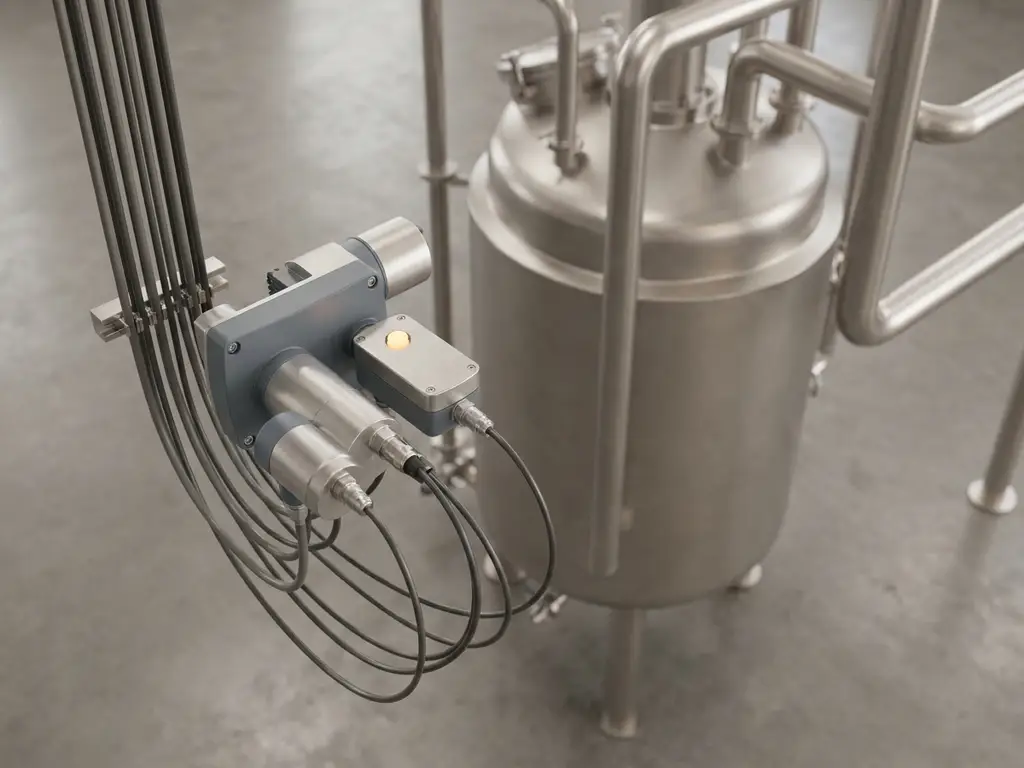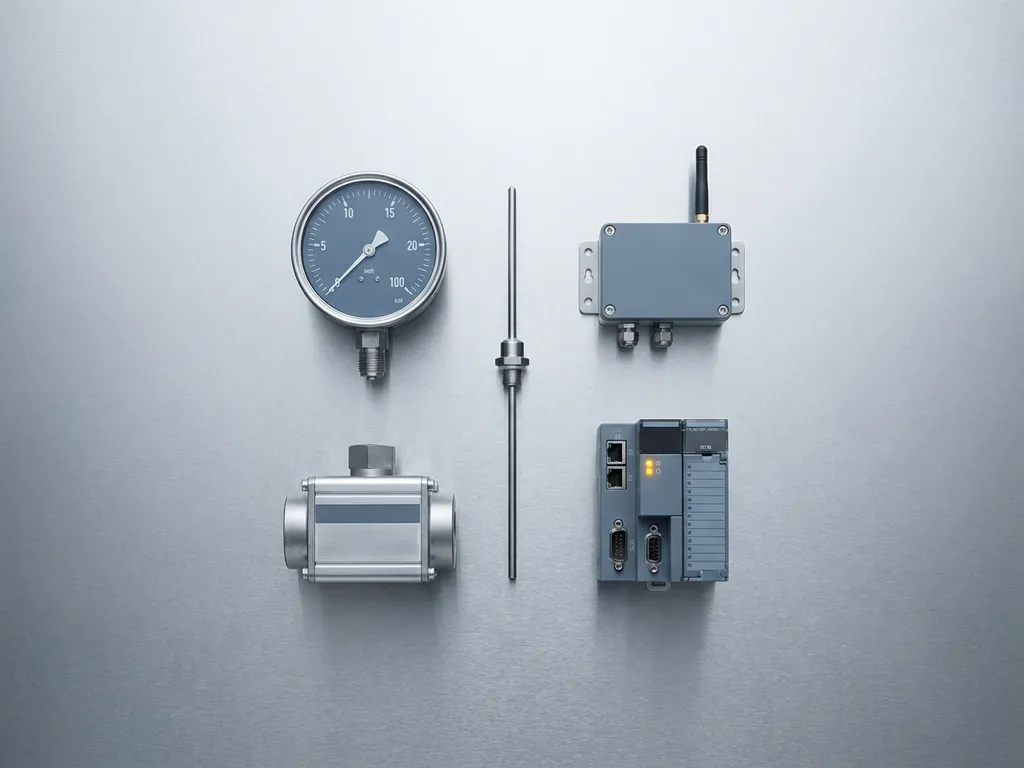

The four pillars of IoT are connectivity, data processing, security, and user interface. Together, they form the complete framework that allows physical devices to collect, transmit, analyse, and act on information. Understanding each pillar is essential for anyone working with industrial IoT systems, where reliability and performance are non-negotiable. The sections below explore how each pillar works, where the challenges lie, and which one carries the most weight in industrial environments.
How do the 4 pillars of IoT work together?
The four pillars of IoT work together as an interconnected chain: devices connect to a network, transmit raw data to a processing layer, operate within a security framework that protects every step, and present actionable insights through a user interface. Remove any single pillar and the system either fails to function or becomes unsafe to operate.
Think of it as a production line for information. Sensors on a factory floor generate readings, connectivity carries those readings to a central platform, data processing turns them into meaningful signals, security ensures nothing is tampered with along the way, and the user interface gives operators the visibility to act. In industrial IoT, this chain runs continuously, often across thousands of endpoints simultaneously.
Each pillar also reinforces the others. Strong connectivity reduces latency, which improves the quality of real-time data processing. Robust security prevents corrupted data from entering the processing layer. A well-designed interface ensures that the insights generated by the processing layer are actually used rather than ignored. The pillars are not independent modules but interdependent components of a single system.
What role does connectivity play in IoT systems?
Connectivity is the foundation of any IoT system. It is the mechanism by which devices communicate with each other and with centralised platforms. Without reliable connectivity, sensors cannot transmit data, control systems cannot receive commands, and the entire IoT architecture collapses into a collection of isolated devices.
In industrial IoT, connectivity choices carry significant consequences. The options range from wired industrial protocols like PROFINET and Modbus to wireless technologies such as Wi-Fi, 4G, and 5G. Each comes with trade-offs between bandwidth, latency, range, and reliability. For process-critical applications, wired connections are often preferred because they offer deterministic performance and are less susceptible to interference.
Cloud connectivity adds another dimension. Modern industrial environments increasingly rely on platforms like Azure IoT or MindSphere to aggregate data from multiple sites. This requires a secure and scalable bridge between operational technology (OT) networks and cloud infrastructure, which is where architectural decisions become particularly important. Poor connectivity design at this stage creates bottlenecks that no amount of processing power can compensate for.
How does IoT data processing differ from traditional data processing?
IoT data processing differs from traditional data processing primarily in volume, speed, and location. Traditional systems process data in batches at scheduled intervals, typically in a central location. IoT systems must handle continuous streams of data from many sources simultaneously, often making decisions in real time and at the edge of the network rather than in a central data centre.
Edge processing versus cloud processing
Edge processing happens directly on or near the device generating the data. A programmable logic controller (PLC) or edge gateway analyses sensor readings locally and only sends relevant results to the cloud. This dramatically reduces bandwidth requirements and enables faster response times, which is critical when milliseconds matter in a production environment.
Machine learning in industrial data pipelines
Cloud processing handles workloads that require more computational power, such as training machine learning models on historical data to predict equipment failures or optimise process parameters. The combination of edge and cloud processing creates a layered architecture where time-sensitive decisions happen locally and deeper analytical work happens centrally. This hybrid approach is increasingly the standard in mature industrial IoT deployments.
What are the biggest IoT security risks and how are they addressed?
The biggest IoT security risks are unauthorised device access, unencrypted data transmission, insecure firmware, and insufficient network segmentation. In industrial environments, these risks carry consequences beyond data loss, including production downtime, safety incidents, and regulatory violations.
Addressing these risks requires a layered security strategy rather than a single solution. Key measures include:
- Device authentication: Every device connecting to the network must be verified before it is allowed to transmit data. Certificate-based authentication is the recommended approach for industrial systems.
- Encrypted communication: Data in transit must be encrypted end-to-end, from sensor to cloud, to prevent interception or manipulation.
- Network segmentation: OT networks should be separated from IT networks using firewalls and demilitarised zones (DMZ) to limit the blast radius of any breach.
- Regular firmware updates: Devices with outdated firmware are a common attack vector. A managed update process ensures vulnerabilities are patched promptly.
- Continuous monitoring: Anomaly detection tools monitor traffic patterns and flag unusual behaviour before it escalates into a serious incident.
Security in industrial IoT is not a one-time configuration but an ongoing operational discipline. Threat landscapes evolve, and the systems protecting against them must evolve accordingly.
Which IoT pillar matters most for industrial automation?
In industrial automation, data processing is the pillar that delivers the most direct operational value, though it depends entirely on connectivity and security to function. Processing is where raw sensor data becomes actionable intelligence, enabling predictive maintenance, process optimisation, and autonomous control decisions that define the competitive advantage of a modern automated facility.
That said, the honest answer is that the most critical pillar is whichever one is weakest in your current setup. A highly sophisticated data processing layer is worthless if connectivity is unreliable or if a security breach corrupts the data entering the pipeline. Industrial automation practitioners often find that connectivity and security receive less investment than processing and interface, creating vulnerabilities that undermine the entire system.
For organisations just beginning their industrial IoT journey, connectivity is typically the right starting point. Establishing reliable, secure data pathways from field devices to processing platforms creates the foundation on which everything else is built. Once that foundation is solid, investing in advanced data processing, including machine learning and real-time analytics, delivers compounding returns over time.
How CoNet helps with industrial IoT
We help industrial organisations build IoT systems that work across all four pillars, from connecting field devices to cloud platforms to turning data into process improvements. Our industrial IoT services and solutions specialise in designing and implementing scalable IoT architectures that bridge operational technology and enterprise systems without compromising security or performance.
Specifically, we offer:
- Azure and MindSphere IoT setup: We design and deploy cloud-connected architectures tailored to your process environment, ensuring reliable data flow from sensor to insight.
- Machine learning integration: We apply machine learning to your operational data to identify patterns, predict failures, and optimise production efficiency.
- Custom application development: Our team builds mobile, web, and desktop applications that present IoT insights in a format your operators can act on immediately.
- Secure platform design: We connect your automation systems to cloud services through architectures that meet industrial security standards, keeping your OT environment protected.
If you are ready to make your industrial data work harder, get in touch with our Process IT team to discuss what an IoT solution could look like for your facility.
Frequently Asked Questions
How do I know which IoT connectivity protocol is right for my industrial facility?
The right protocol depends on your environment’s specific requirements: distance, data volume, latency tolerance, and interference risk. For process-critical applications where deterministic performance is essential, wired protocols like PROFINET or Modbus are typically the safest choice. For assets that are difficult to wire or spread across a large site, wireless options like 5G or industrial Wi-Fi may be more practical. A thorough site assessment that maps your devices, distances, and data requirements is the best starting point before committing to any protocol.
What is the biggest mistake organisations make when implementing an industrial IoT system?
The most common mistake is treating security as an afterthought rather than a foundational design requirement. Many organisations invest heavily in connectivity and data processing, then attempt to layer security on top after deployment, which is significantly less effective and more costly than building it in from the start. A close second is underestimating the complexity of bridging OT and IT networks, which can create bottlenecks and vulnerabilities if not properly architected. Both mistakes are best avoided by involving experienced IoT engineers at the planning stage rather than during troubleshooting.
How much data does a typical industrial IoT system generate, and how should I manage it?
A mid-sized manufacturing facility with hundreds of sensors can generate gigabytes of raw data per day, and large-scale operations can produce significantly more. Managing this effectively requires a deliberate data strategy that distinguishes between data that needs real-time action at the edge and data that is valuable for longer-term analysis in the cloud. Not all data needs to be stored indefinitely — defining retention policies and using edge filtering to send only relevant data upstream will reduce storage costs and keep your processing pipelines efficient.
Can existing legacy equipment be integrated into a modern IoT architecture, or does it need to be replaced?
In most cases, legacy equipment can be integrated without replacement using edge gateways or protocol converters that translate older industrial communication standards into formats compatible with modern cloud platforms. This approach protects existing capital investment while still enabling connectivity to platforms like Azure IoT or MindSphere. The key is assessing whether your legacy devices can expose the data you need and at the frequency required — some older PLCs have limitations on polling rates or data accessibility that may constrain what is achievable without hardware upgrades.
How long does it typically take to see a return on investment from an industrial IoT deployment?
ROI timelines vary depending on the use case, but predictive maintenance applications often deliver measurable returns within 6 to 18 months by reducing unplanned downtime and extending equipment lifespan. Process optimisation use cases, where machine learning is applied to improve yield or reduce energy consumption, can take longer to mature but tend to deliver larger cumulative gains. Starting with a focused pilot project on a high-value asset or production line is a practical way to demonstrate ROI quickly before scaling the architecture across the wider facility.
What is the difference between an IoT platform and an IoT application, and do I need both?
An IoT platform, such as Azure IoT Hub or MindSphere, is the infrastructure layer that manages device connectivity, data ingestion, storage, and integration with analytics services. An IoT application is the user-facing layer — the dashboard, mobile app, or desktop tool that operators interact with to view insights and take action. Most industrial deployments need both: the platform provides the data backbone, while the application determines whether that data actually drives decisions on the shop floor. A powerful platform paired with a poorly designed application will still result in underutilised data.
How do I ensure my IoT system remains secure as it scales to more devices and sites?
Scalable security requires automating the processes that become unmanageable at scale, particularly device provisioning, certificate management, and firmware updates. Using a platform with built-in device management capabilities, such as Azure IoT Hub’s device twin and automatic update features, ensures that security policies are consistently applied as new devices are added. Network segmentation should also be reviewed and updated as the system grows, since an architecture designed for 50 devices may not adequately contain risk across 500. Regular security audits and penetration testing are worthwhile investments as the attack surface expands.