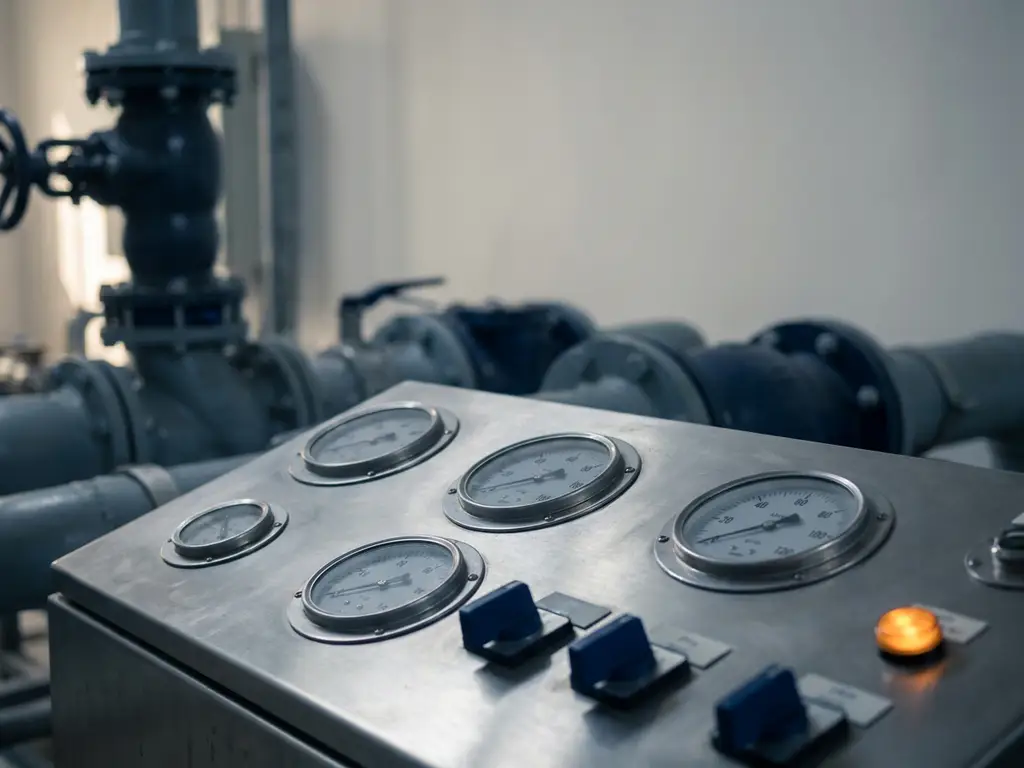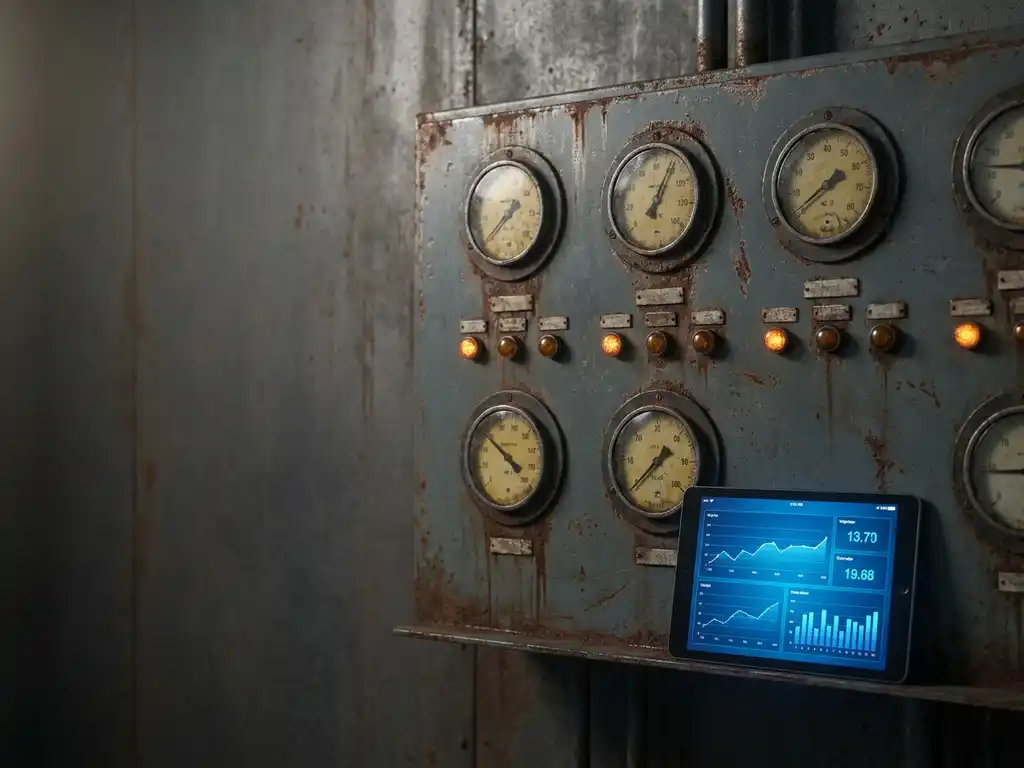

Modern factories rely on PLCs for process control because programmable logic controllers offer fast, reliable, and flexible automation that older hardwired systems simply cannot match. A PLC can execute complex control logic in milliseconds, adapt to changing production requirements through software reprogramming, and integrate directly with the broader digital infrastructure of a modern plant. The sections below unpack the most common questions engineers and plant managers ask about PLC process control.
What makes PLCs better suited for process control than older relay systems?
PLCs are better suited for process control than relay systems because they replace thousands of physically wired connections with programmable software logic, making them faster to modify, easier to troubleshoot, and far more reliable over time. A relay-based panel that controls a single process line can take weeks to rewire when requirements change; a PLC program can be updated in hours.
Relay systems have several fundamental limitations that become costly in industrial environments. Each relay is a mechanical component with a finite number of switching cycles, meaning wear and failure are inevitable. When a relay panel develops a fault, tracing the problem requires physical inspection of every connection. In contrast, a programmable logic controller stores its logic digitally, logs diagnostic data continuously, and can flag faults with specific error codes that point directly to the problem.
Beyond reliability, PLCs offer a level of precision that relay systems cannot achieve. Relay contacts introduce timing delays that are difficult to control consistently. PLCs execute their scan cycles in microseconds, which matters enormously in processes where valve timing, pump sequencing, or temperature ramp rates need to be tightly managed. For any modern factory automation environment, this combination of speed, flexibility, and built-in diagnostics makes the PLC the clear foundation for process control.
How does a PLC actually control an industrial process?
A PLC controls an industrial process by continuously reading inputs from field sensors, executing a programmed control logic sequence, and sending output signals to actuators such as valves, motors, and drives. This cycle repeats hundreds or thousands of times per second, giving the controller near-real-time awareness of and influence over the process.
The control cycle follows a consistent structure:
- Input scan: The PLC reads the current state of all connected sensors, switches, flow meters, and transmitters.
- Logic execution: The processor runs through the control program, evaluating conditions and calculating required outputs based on the current input values.
- Output update: The PLC writes the results of the logic to its output modules, which send signals to actuators in the field.
- Housekeeping: Internal diagnostics, communication tasks, and memory management are handled before the next scan begins.
The control program itself is written in standardized languages defined by the IEC 61131-3 standard, including Ladder Diagram, Function Block Diagram, Structured Text, and Sequential Function Chart. Each language suits different types of control logic, and engineers choose based on the complexity and nature of the process being automated.
What types of processes are PLCs best suited to control?
PLCs are best suited to control discrete, batch, and hybrid processes where sequences of events, on/off switching, and defined production steps are central to operations. They are widely used across manufacturing lines, packaging equipment, material handling systems, and utility control applications in industries ranging from food and beverage to chemicals and energy.
In discrete manufacturing, PLCs manage individual machine cycles, robotic cells, conveyor routing, and assembly sequences. In batch processing, they handle recipe-based production where ingredients, temperatures, mixing times, and transfer steps follow a defined sequence that can vary between product runs. Hybrid processes combine elements of both, which is common in food production and specialty chemicals.
PLCs are less naturally suited to highly continuous processes with large numbers of analog control loops, such as refinery distillation columns or large-scale chemical reactors, where a Distributed Control System may be a better architectural fit. That distinction is worth understanding before committing to a control platform for a new project.
What’s the difference between a PLC and a DCS in process control?
The key difference between a PLC and a DCS in process control is architectural scope. A PLC is a standalone controller designed to handle a defined set of inputs and outputs, while a Distributed Control System distributes control intelligence across multiple controllers that are natively integrated into a unified process management environment. For large, continuous processes, a DCS typically offers more built-in process management capability out of the box.
Where PLCs have the advantage
PLCs excel in applications that are machine-centric, sequence-heavy, or where fast discrete response is needed. They are generally more cost-effective for smaller applications, faster to commission, and easier to maintain by a broader pool of automation engineers. In plant automation projects that involve packaging lines, utilities management, or individual process units, PLCs often deliver the best balance of performance and cost.
Where a DCS has the advantage
A DCS is designed for plants with hundreds or thousands of analog control loops running continuously, such as oil refineries, large chemical plants, or power generation facilities. The native integration of advanced process control, alarm management, historian functions, and operator interfaces within a single platform reduces engineering effort at scale. Siemens SIMATIC PCS 7, for example, bridges much of this gap by offering DCS-level process management built on a familiar Siemens architecture that many PLC engineers already know.
How do modern PLCs connect to SCADA and MES systems?
Modern PLCs connect to SCADA and MES systems through standardized industrial communication protocols, most commonly OPC UA, Profinet, Modbus TCP, and Ethernet/IP. These connections allow real-time process data to flow upward from the controller to visualization, reporting, and production management layers without requiring custom integration work for each connection.
At the SCADA level, operators receive live process data, alarm notifications, and trend information from the PLC. SCADA software reads tag values directly from the PLC memory and presents them in graphical displays that give operators a clear view of the running process. Write commands from the SCADA interface are sent back down to the PLC to adjust setpoints or trigger sequences.
At the MES level, the integration goes further. Manufacturing Execution Systems use PLC data to track production orders, record batch outcomes, monitor equipment performance, and feed quality management systems. Modern PLCs from Siemens support these integrations natively, with structured data models and built-in communication function blocks that reduce the engineering effort needed to connect plant floor control with enterprise systems. This connectivity is increasingly central to the Industrial Internet of Things and Industry 4.0 strategies that factories are building toward in 2026.
When should a factory upgrade or replace its existing PLC infrastructure?
A factory should consider upgrading or replacing its PLC infrastructure when controllers are approaching or past their manufacturer-supported lifecycle, when spare parts are no longer available, when the existing system cannot support current cybersecurity requirements, or when production demands have outgrown what the installed hardware and software can handle.
Several specific triggers make the case for action:
- End of life or discontinued support: When a PLC platform reaches end of life, security patches stop, and hardware replacements become increasingly difficult to source.
- Inability to integrate with modern systems: Older PLCs using legacy serial protocols cannot connect to modern SCADA, MES, or cloud platforms without costly middleware.
- Rising maintenance costs: Increasing downtime, difficult fault diagnosis, and high repair costs on aging hardware often signal that the total cost of maintaining the old system exceeds the cost of replacement.
- Cybersecurity exposure: Industrial cybersecurity standards have evolved significantly. Controllers without network segmentation, encrypted communications, or access control present real operational risk.
- Capacity constraints: When a plant needs to add process steps, new equipment, or additional I/O that the existing controller cannot accommodate, a migration becomes necessary.
A structured migration plan that includes a full inventory of existing hardware, a mapping of current control logic, and a phased cutover strategy can significantly reduce risk and production disruption during the transition.
How CoNet helps with PLC process control
We are CoNet, and PLC process control is at the core of what we do. As a Siemens specialist with decades of hands-on engineering experience across the chemical, food and beverage, oil and gas, and energy sectors, we help industrial companies design, implement, migrate, and optimize their control infrastructure. Our work covers the full scope of PLC industrial automation, from initial architecture advice through engineering, commissioning, and ongoing support.
When you work with us, you get access to a team that combines deep Siemens product knowledge with practical process automation expertise. Specifically, we help with:
- Selecting the right control platform for your process type, whether that is a standalone PLC, a Siemens SIMATIC PCS 7 DCS environment, or a hybrid architecture
- Engineering and programming control logic that meets your production requirements and safety standards
- Migrating legacy PLC systems to modern Siemens hardware with minimal production disruption
- Integrating your PLC infrastructure with SCADA, MES, and energy management systems
- Providing ongoing maintenance, remote support, and system optimization to keep your plant running at peak performance
As the only company in the Netherlands certified as both a PCS 7 Process Safety Specialist and a Siemens Digital Grid partner, we bring a level of specialization that generalist integrators cannot match. If you are evaluating your current factory automation systems or planning a new project, get in touch with our team and we will help you find the right path forward.