
A distributed control system (DCS) is an automated control platform that manages complex industrial processes by distributing control functions across multiple interconnected controllers rather than relying on a single centralised unit. This architecture allows each controller to handle a specific part of the process locally, while a central supervisory layer monitors and coordinates the overall operation. The sections below unpack how a DCS works, what it consists of, and when it makes sense to invest in one.
How does a distributed control system actually work?
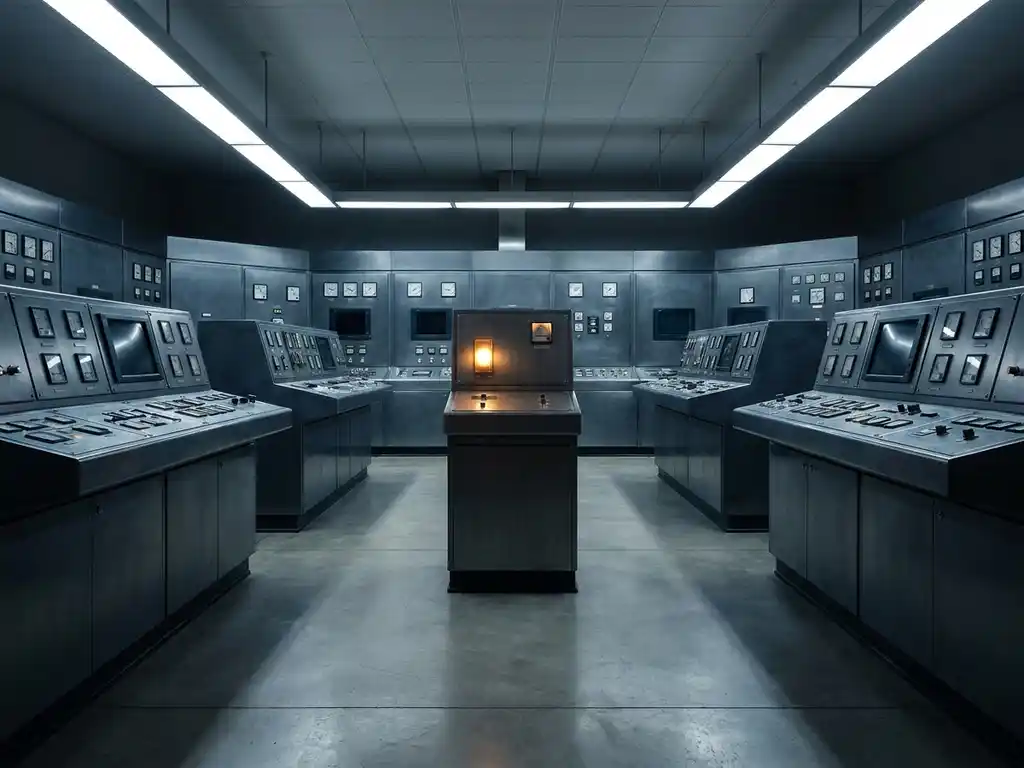
A distributed control system works by spreading control logic across a network of local controllers, each responsible for a defined segment of the process. Sensors and field devices feed real-time data to these controllers, which execute control loops autonomously. The results are then communicated to a central operator station, giving plant personnel a unified view of the entire process without any single point of failure controlling everything.
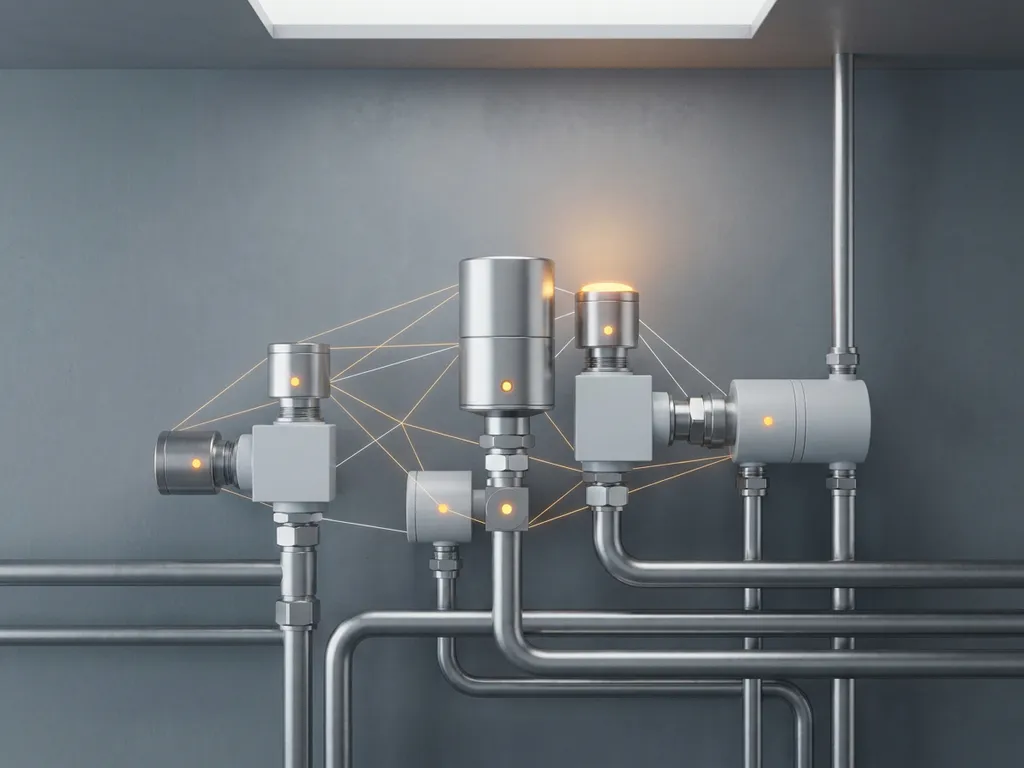
The key to this architecture is the communication network that connects every layer of the system. Field-level devices talk to controllers via industrial protocols, and controllers report upward to supervisory workstations and historians. Because each controller operates independently, a fault in one section does not cascade through the entire plant. The system continues running, and operators can address the issue without shutting down unaffected processes.
What are the main components of a DCS?
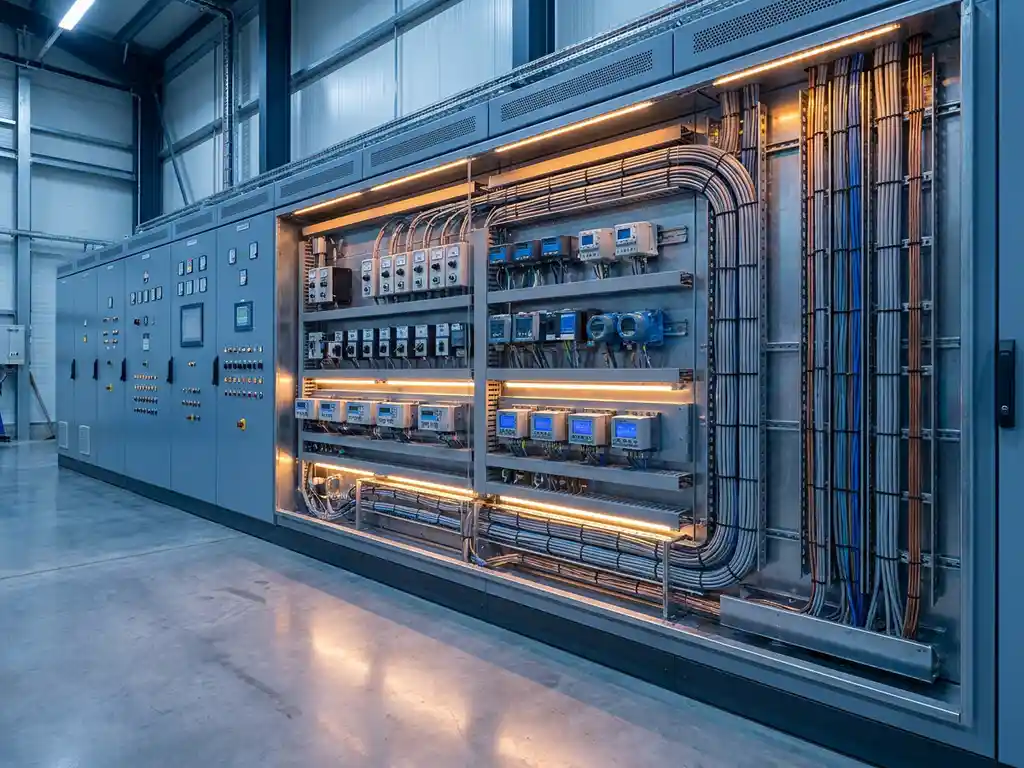
The main components of a DCS are field instruments, local controllers, a communication network, operator workstations, and an engineering station. Together, these layers form a hierarchy that moves data from the physical process up to the people making decisions about it.
- Field instruments: Sensors, transmitters, and actuators that measure and influence the physical process, such as temperature, pressure, flow, and valve position.
- Local controllers: Dedicated processing units that receive field data, execute control algorithms, and send output signals back to actuators.
- Communication network: The industrial network backbone, often using redundant cabling and protocols, that links controllers to each other and to higher-level systems.
- Operator workstations: Human-machine interfaces (HMIs) where plant operators monitor process graphics, acknowledge alarms, and make manual adjustments.
- Engineering station: A dedicated workstation used by automation engineers to configure, program, and maintain the control logic and system configuration.
- Historian: A data server that logs process values over time, enabling trend analysis, reporting, and root-cause investigation.
What’s the difference between a DCS and a PLC?
The key difference between a DCS and a PLC is scope and integration. A DCS is designed from the ground up to manage large, continuous processes as a unified system, with built-in redundancy, a process historian, and operator interfaces. A PLC (Programmable Logic Controller) is a standalone device optimised for discrete, high-speed control tasks and is typically integrated into a broader SCADA system separately.
In practical terms, a DCS is the natural choice when the process involves many interdependent control loops running continuously, such as a chemical reactor or a refinery unit. A PLC excels at fast, event-driven tasks like controlling a packaging line or a conveyor system. That said, the boundary between the two has blurred in recent years. Modern PLCs have grown more capable, and some DCS platforms now incorporate discrete control. The deciding factor is usually the complexity and continuity of the process rather than the technology category alone.
Which industries use distributed control systems?
Distributed control systems are most commonly used in industries where processes run continuously, involve many interdependent variables, and demand high reliability. These include oil and gas, chemical processing, power generation, water treatment, food and beverage, and pharmaceuticals.
In oil and gas, a DCS manages everything from wellhead instrumentation to refinery distillation columns. Chemical plants rely on DCS platforms to maintain precise reaction conditions across dozens of control loops simultaneously. Power stations use them to balance generation output, manage boiler controls, and respond to grid demands. In food and beverage, a DCS ensures consistent product quality by tightly controlling temperature, mixing times, and batch parameters. Wherever a process is large, continuous, and costly to interrupt, a DCS is typically the control architecture of choice.
What are the advantages of a DCS over other control systems?
The main advantages of a DCS over other control systems are redundancy, scalability, centralised visibility, and integrated process management. Because control is distributed, no single hardware failure brings down the entire plant. Redundant controllers and power supplies mean the system can absorb faults and keep running.
Beyond reliability, a DCS offers genuine scalability. Adding new process units or expanding an existing plant typically means extending the network and adding controllers, without redesigning the entire control architecture. Centralised operator workstations give plant teams a consistent, unified view of the process, which reduces the chance of missed alarms or conflicting information. Integrated historians and reporting tools also make it easier to comply with regulatory requirements and optimise process performance over time. Compared to a standalone PLC-SCADA combination, a DCS tends to reduce engineering complexity for large, continuous processes because the system components are designed to work together from the start.
When should a plant consider upgrading its DCS?
A plant should consider upgrading its DCS when the existing system can no longer be supported by the vendor, when spare parts become difficult to source, or when the system’s capabilities fall short of current process or regulatory requirements. Ageing hardware and obsolete software are the most common triggers for a DCS migration project.
Other strong signals that an upgrade is overdue include:
- Increasing frequency of unplanned downtime linked to control system failures
- Inability to integrate with modern IT systems, cloud platforms, or digital twin tools
- Loss of vendor support for the current platform, meaning no patches or firmware updates
- Difficulty recruiting engineers who are familiar with the legacy system
- Process expansion that the existing architecture cannot accommodate
- New safety or environmental regulations that the current system cannot meet
Upgrading a DCS is a significant investment, but the cost of running an unsupported system typically grows faster than most plants anticipate. Factoring in the risk of an extended outage caused by an irreplaceable failed component, many organisations find that a planned migration is far less disruptive than a forced one.
How CoNet helps with distributed control systems
We are a Siemens specialist with more than 25 years of experience in industrial automation, and distributed control systems are at the heart of what we do. As one of the world’s leading Siemens PCS 7 Specialist Partners, we support our clients throughout the entire lifecycle of their DCS, from initial design and engineering to migration, maintenance, and ongoing optimisation.
When you work with us, you get access to a team of 62 specialists who focus exclusively on Siemens technology. Our industrial automation and DCS support services cover:
- DCS design and engineering: We translate your process requirements into a robust, scalable control architecture.
- PCS 7 migration projects: We plan and execute migrations from legacy systems to current Siemens platforms with minimal disruption to production.
- Process safety: As the only organisation in the Netherlands certified as a Siemens PCS 7 Process Safety Specialist, we ensure your system meets the highest safety standards.
- Maintenance and support: We provide ongoing support to keep your DCS performing reliably, including remote monitoring and on-site assistance.
- Consultancy and optimisation: We help you get more from your existing system through process tuning, alarm management, and digital integration.
Whether you are evaluating a first DCS installation, planning a migration from an ageing platform, or looking to optimise an existing Siemens PCS 7 environment, we are ready to help. Get in touch with our team to discuss your situation and find out how we can support your next step in process automation.
Frequently Asked Questions
How long does a typical DCS migration project take from planning to go-live?
The timeline for a DCS migration varies significantly depending on plant size, process complexity, and the degree of difference between the legacy and target systems, but most industrial sites should budget between 12 and 36 months for a full migration. This includes the engineering and design phase, factory acceptance testing (FAT), site installation, and commissioning. Breaking the migration into phased stages — migrating one process unit at a time rather than the entire plant at once — is a common strategy to reduce risk and minimise production impact.
What is the biggest risk during a DCS upgrade, and how can it be mitigated?
The greatest risk is unplanned production downtime during the cutover period, when the old system is taken offline and the new one goes live. This can be mitigated through thorough pre-migration planning, including detailed loop-by-loop documentation, rigorous factory and site acceptance testing, and running parallel systems wherever feasible before the final switchover. Engaging an experienced migration partner who has executed similar projects on the same target platform significantly reduces the chance of surprises during the critical cutover window.
Can a DCS be integrated with modern IT systems, cloud platforms, or digital twin tools?
Yes, modern DCS platforms are designed with open connectivity in mind and support standard industrial communication protocols such as OPC UA, which allows them to exchange data with MES, ERP, cloud analytics platforms, and digital twin environments. Legacy systems, however, often lack native connectivity and may require middleware or protocol converters to bridge the gap. If IT/OT integration is a priority, it is worth assessing your current system’s connectivity capabilities as part of any upgrade evaluation, since a modern platform will make future digital initiatives considerably easier to implement.
How is cybersecurity handled in a distributed control system?
Cybersecurity in a DCS environment is addressed through a combination of network segmentation, access control, patch management, and monitoring — often guided by the IEC 62443 industrial security standard. Because DCS networks were historically isolated from corporate IT systems, many older installations have significant security gaps that become critical as IT/OT convergence increases. Best practice involves establishing a demilitarised zone (DMZ) between the control network and the corporate network, enforcing role-based user access, and working with a vendor-certified partner to apply firmware and security patches on a regular, structured schedule.
What is the difference between a DCS and a SCADA system?
A DCS and a SCADA (Supervisory Control and Data Acquisition) system both monitor and control industrial processes, but they differ in architecture and application. A DCS performs closed-loop control locally at the controller level, making it well suited to continuous processes where tight, real-time regulation is critical. SCADA systems are typically designed for supervisory monitoring and control over geographically dispersed assets — such as pipelines or power distribution networks — where the communication latency between sites makes local closed-loop control less practical. In short, a DCS controls the process; SCADA primarily supervises and reports on it.
How do you calculate the total cost of ownership (TCO) for a DCS?
TCO for a DCS goes well beyond the initial hardware and software purchase price. It should include engineering and commissioning costs, operator and engineer training, ongoing vendor support contracts, spare parts inventory, planned maintenance activities, and the eventual cost of migration when the platform reaches end of life. A useful rule of thumb is that the upfront capital cost often represents only 20–30% of the total lifecycle cost over a 15–20 year system lifespan. Factoring in the cost of unplanned downtime caused by ageing or unsupported hardware makes a compelling case for proactive lifecycle planning rather than running a system until it fails.
What should we look for when choosing a DCS vendor or implementation partner?
When evaluating a DCS vendor, key criteria include the platform’s track record in your specific industry, the vendor’s long-term commitment to supporting the platform, the availability of certified local partners, and the openness of the system’s communication architecture. For the implementation partner, look for demonstrated experience with projects of similar scope and complexity, relevant vendor certifications, and a clear methodology for managing the engineering, testing, and commissioning phases. A partner who specialises exclusively in the target platform — rather than offering it as one option among many — will typically have deeper expertise and faster access to vendor escalation support when issues arise.