A DCS system typically lasts between 15 and 25 years, though many installations remain in operation well beyond that range. The actual lifespan depends on factors like vendor support availability, spare part supply, and how well the system has been maintained over time. Understanding the full lifecycle of a DCS helps plant operators plan proactively, avoid unplanned downtime, and make smarter investment decisions.
How long does a DCS system typically last?
Most DCS systems have an operational lifespan of 15 to 25 years. However, the functional life of a system and the supported life are two different things. A DCS may continue to control a process reliably long after the vendor has stopped providing software updates, hardware replacements, or technical support, which creates growing risk even when the system appears to be working fine.
Several factors influence how long a DCS remains viable in practice:
- Vendor support status: Once a platform reaches end-of-life, patches, spare parts, and technical assistance become harder or impossible to obtain.
- Hardware availability: Aging I/O cards, processors, and communication modules become scarce over time, making repairs costly and uncertain.
- Software compatibility: Legacy DCS software often cannot integrate with modern cybersecurity tools, historian systems, or cloud-based analytics platforms.
- Regulatory requirements: Safety and compliance standards evolve, and older systems may no longer meet current requirements without significant modification.
In practice, many plants push systems well past the 20-year mark, but doing so without a structured lifecycle plan significantly increases operational and safety risk.
What are the main phases of a DCS lifecycle?
The DCS lifecycle consists of four main phases: installation and commissioning, operational maturity, aging and risk management, and end-of-life transition. Each phase has distinct characteristics and requires a different management approach to keep the system performing safely and efficiently.
Installation and commissioning
This phase covers the initial design, hardware procurement, software configuration, and startup. It is the most capital-intensive period and sets the foundation for long-term performance. Proper documentation and configuration management during this phase pay dividends throughout the entire lifecycle.
Operational maturity
During the operational years, the focus shifts to maintenance, optimization, and incremental upgrades. This is typically the longest phase, spanning a decade or more. Regular software updates, hardware health checks, and operator training are essential to sustaining performance and extending the useful life of the system.
Aging and risk management
As the system ages, spare parts become scarce, vendor support diminishes, and integration with newer plant systems becomes increasingly difficult. This phase requires active risk assessment to weigh the cost of maintaining the existing system against the benefits of upgrading or migrating.
End-of-life transition
The final phase involves planning and executing either an upgrade or a full migration to a new platform. This is the most disruptive and complex phase, requiring careful coordination to minimize production impact while ensuring a safe and complete transition.
What causes a DCS system to reach end of life?
A DCS system reaches end of life when the vendor officially discontinues support, but several other conditions can effectively end a system’s viable life before that announcement. The most common causes include hardware obsolescence, the inability to source replacement components, and the growing gap between legacy system capabilities and modern operational demands.
Other significant drivers include:
- Cybersecurity vulnerabilities: Older systems were not designed with modern network threats in mind and cannot be patched to meet current security standards.
- Loss of engineering knowledge: As experienced engineers retire, the internal expertise needed to maintain and troubleshoot legacy systems disappears.
- Incompatibility with digital initiatives: Legacy DCS platforms often cannot connect to modern data analytics, MES, or cloud environments without costly workarounds.
- Increased failure frequency: Aging hardware fails more often, and each failure becomes more difficult and expensive to resolve.
What’s the difference between a DCS upgrade and a DCS migration?
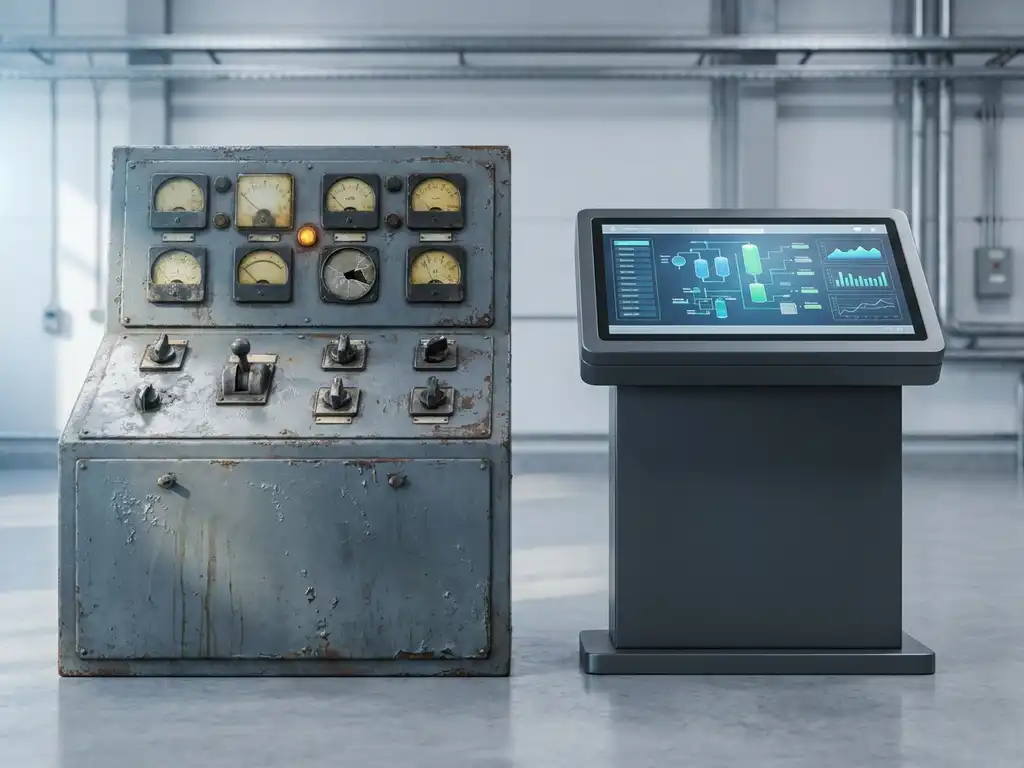
A DCS upgrade involves replacing or updating specific components within the existing platform, while a DCS migration involves moving to an entirely new control system platform. The key distinction is scope: an upgrade extends the life of the current system, while a migration replaces it entirely with a new architecture.
Upgrades are typically chosen when the core platform is still vendor-supported but specific hardware or software components have become outdated. For example, replacing aging operator workstations or updating to a newer software version within the same product family counts as an upgrade. This approach is less disruptive and lower in cost, but it does not address fundamental platform limitations.
Migration is the right choice when the platform itself is at or near end of life, when cybersecurity or compliance requirements cannot be met on the existing system, or when the plant needs capabilities that the current DCS simply cannot provide. Migrations are more complex and require detailed planning, but they deliver a modern foundation that supports the next 15 to 25 years of operation.
When should you start planning a DCS lifecycle transition?
Planning for a DCS lifecycle transition should begin at least three to five years before the anticipated end of life. Starting early gives engineering teams time to assess the current system thoroughly, evaluate replacement options, secure budget approval, and schedule the transition around planned shutdowns rather than reacting to failures.
Waiting too long creates compounding problems. Spare parts become unavailable, forcing costly workarounds or acceptance of operational risk. Engineering resources with knowledge of the legacy system become harder to find. And rushed migrations increase the likelihood of configuration errors, safety incidents, and production losses during cutover.
A practical trigger for starting the planning process is when any of the following conditions appear:
- The vendor announces an end-of-support date for the platform or a major component.
- Spare parts for critical hardware become difficult to source within normal lead times.
- The system requires workarounds to meet current cybersecurity or safety standards.
- Maintenance costs begin rising significantly year over year.
- The system can no longer integrate with new plant systems or digital tools.
How does lifecycle management affect plant safety and compliance?
Active DCS lifecycle management directly affects plant safety by ensuring the control system remains reliable, patchable, and capable of meeting current functional safety standards. An unmanaged legacy DCS introduces risk at multiple levels: hardware failures become unpredictable, cybersecurity gaps widen, and the system may no longer satisfy the requirements of standards such as IEC 61511 for process safety.
From a compliance perspective, many regulatory frameworks require that safety-instrumented systems and process control systems be maintained to a defined integrity level throughout their operational life. Vendor end-of-life status can directly affect a plant’s ability to demonstrate compliance during audits, particularly when the system can no longer receive security patches or when documentation and support are no longer available.
Good lifecycle management is not just about avoiding failure. It includes maintaining accurate as-built documentation, conducting regular functional safety assessments, tracking hardware health, and keeping a clear view of vendor roadmaps so that transitions can be planned before risk accumulates.
How CoNet helps with DCS lifecycle management
We support industrial plants across the full DCS lifecycle, from system health assessments and optimization during the operational phase to structured upgrade and migration projects as systems approach end of life. As a Siemens PCS 7 specialist, we bring deep platform knowledge that generalist integrators simply cannot match.
Here is what we offer in practice:
- DCS lifecycle assessments: We evaluate the current state of your system, identify risks, and provide a clear view of where you stand in the lifecycle.
- Upgrade engineering: We design and execute targeted upgrades that extend system life while reducing risk, with minimal disruption to production.
- Migration planning and execution: We manage full platform migrations from legacy DCS to modern Siemens PCS 7 or next-generation architectures, including safety system integration and engineering services.
- Ongoing maintenance and support: We provide structured maintenance programs that keep your system performing reliably and your documentation up to date.
- Cybersecurity and compliance support: We help you meet current security and functional safety requirements throughout the lifecycle.
If your DCS is aging, showing signs of strain, or approaching vendor end of life, now is the right time to act. Contact CoNet to discuss where your system stands and what the right next step looks like for your plant.
Frequently Asked Questions
How do I know if my DCS is still in the operational maturity phase or has entered the aging phase?
The clearest indicators of a shift into the aging phase are increasing difficulty sourcing spare parts, rising maintenance costs year over year, and growing incompatibility with newer plant systems or tools. If your team is spending more time finding workarounds than optimizing performance, or if your vendor has begun communicating end-of-support timelines for any major platform components, your system has likely crossed into the aging phase and warrants a formal lifecycle assessment.
What are the most common mistakes plants make when managing an aging DCS?
The most common mistake is waiting for a failure before acting — by that point, spare parts may be unavailable and engineering expertise scarce, leaving the plant with few good options. A close second is treating lifecycle management as a one-time event rather than an ongoing process; systems need regular health checks, updated documentation, and continuous tracking of vendor roadmaps. Plants also frequently underestimate the time and budget required for a migration, which leads to rushed transitions that increase the risk of configuration errors and production losses during cutover.
Can a DCS migration be done without shutting down production entirely?
Yes, in many cases a phased migration strategy allows sections of the plant to be cut over incrementally, keeping the rest of production running during the transition. This approach requires detailed upfront engineering to design parallel operation periods and clear cutover sequences, but it is a well-established method for minimizing production impact. The feasibility depends on the plant’s process architecture, the degree of interdependency between control loops, and how thoroughly the migration is planned — which is another reason why starting the planning process three to five years in advance is so important.
How much does a DCS lifecycle assessment typically involve, and how long does it take?
A thorough lifecycle assessment covers hardware health and spare parts availability, software version status, vendor support roadmap, cybersecurity posture, documentation quality, and integration capability with modern plant systems. Depending on the size and complexity of the installation, an assessment typically takes anywhere from a few days to a few weeks of on-site and engineering review time. The output is a clear picture of where the system stands in its lifecycle, what risks exist, and a prioritized set of recommendations for extending life or planning a transition.
What cybersecurity risks are specific to legacy DCS systems, and how serious are they?
Legacy DCS platforms were designed in an era before industrial cybersecurity was a primary concern, meaning they often run on unpatched operating systems, use unsecured communication protocols, and lack the architecture needed to support modern network segmentation or endpoint protection. Once a vendor stops issuing security patches, any newly discovered vulnerabilities remain permanently unaddressed, and these vulnerabilities are increasingly well-documented in the public domain. The risk is serious and growing — a successful cyberattack on an unprotected DCS can result in process disruption, equipment damage, safety incidents, and significant regulatory consequences.
Is it worth upgrading a DCS that is already past vendor end of life, or should we go straight to migration?
Upgrading a system that is already past vendor end of life is rarely the right long-term strategy, because any investment in the existing platform does not resolve the fundamental issues of unsupported software, unavailable patches, and dwindling spare parts. That said, targeted interim measures — such as stocking critical spare parts or implementing network isolation to reduce cybersecurity exposure — can be justified to buy time while a migration is properly planned and budgeted. The decision should be based on a realistic assessment of remaining risk tolerance, available capital, and how quickly a migration can realistically be executed.
How do we build an internal business case for DCS migration when the system is still technically running?
The most effective business case quantifies the cost of inaction rather than just the cost of migration — this means documenting rising maintenance expenses, estimating the financial impact of an unplanned production outage caused by an irreplaceable failed component, and identifying compliance or insurance exposure tied to an unsupported system. Pairing these figures with a clear-eyed migration cost estimate and a timeline tied to vendor end-of-support dates gives decision-makers a concrete risk-versus-investment comparison. Engaging a specialist to conduct a formal lifecycle assessment adds independent credibility to the analysis and often surfaces risks that internal teams have normalized over time.