
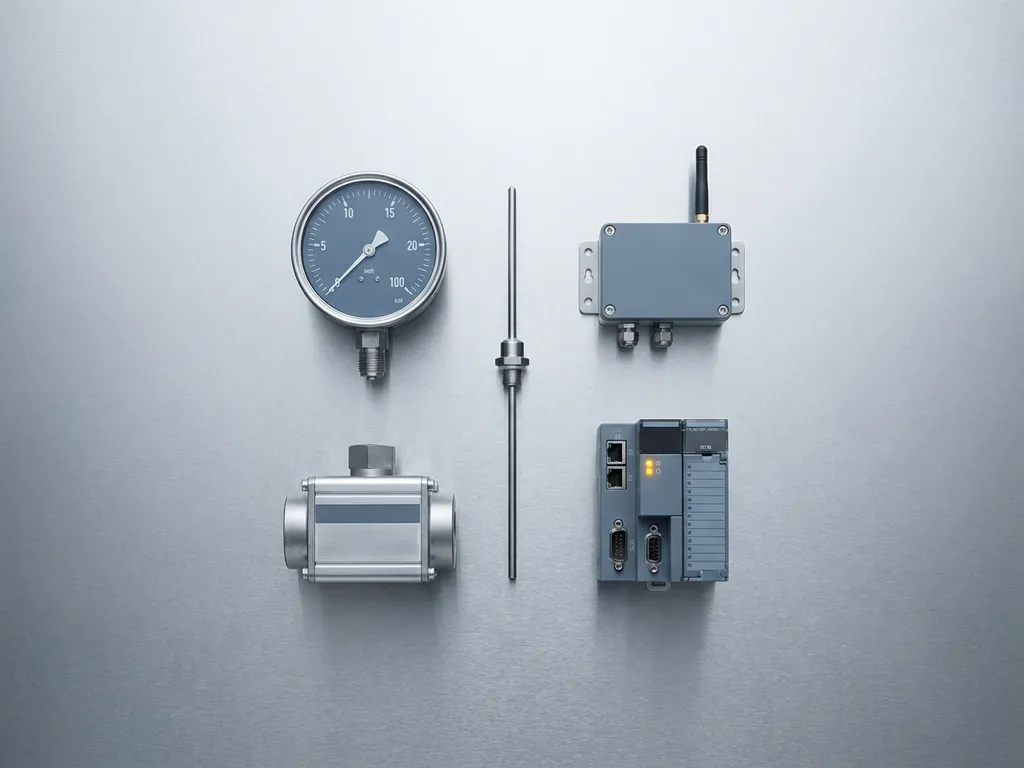
Five common examples of IoT devices are smart sensors, industrial controllers, connected meters, GPS trackers, and edge computing gateways. These devices collect, transmit, and act on data from the physical world, enabling real-time monitoring and automated decision-making across virtually every sector. The sections below unpack how they work, where they are used, and what challenges come with deploying them at scale.
How do IoT devices actually work?
IoT devices work by combining a sensor or actuator with a communication module and a processing unit. The sensor captures a physical measurement such as temperature, pressure, or vibration. That data is then processed locally or transmitted over a network to a cloud platform or enterprise system, where it can trigger alerts, feed dashboards, or drive automated responses.
Most IoT devices follow the same basic architecture regardless of their application:
- Sensing layer: Hardware that measures a physical condition and converts it into a digital signal
- Connectivity layer: A communication protocol such as MQTT, OPC UA, Wi-Fi, or cellular that moves data to its destination
- Processing layer: Logic that runs either on the device itself (edge computing) or in the cloud to interpret the data
- Application layer: Software that presents insights to operators or triggers automated actions in connected systems
In industrial IoT environments, the communication layer is particularly important. Protocols must be robust enough to handle harsh conditions, intermittent connectivity, and strict latency requirements. That is why industrial IoT deployments often combine edge processing with cloud integration rather than relying on cloud connectivity alone.
What are 5 common examples of IoT devices?
The five most common examples of IoT devices are smart sensors, programmable logic controllers (PLCs) with connectivity, smart meters, asset tracking devices, and edge gateways. Each plays a distinct role in collecting or acting on data, and together they form the backbone of most connected industrial and commercial environments.
Smart sensors
Smart sensors go beyond simple measurement. They process data locally and communicate readings directly to control systems or cloud platforms. In a manufacturing plant, a smart vibration sensor on a motor can detect early signs of bearing wear and raise a maintenance alert before a failure occurs.
Connected PLCs and industrial controllers
Modern PLCs and distributed control systems increasingly include built-in IoT connectivity. This allows them to share process data with higher-level systems such as MES or ERP platforms while continuing to run real-time control logic. Siemens SIMATIC controllers are a well-known example of this category in industrial settings.
Smart meters
Smart meters measure energy, water, or gas consumption and transmit that data automatically at defined intervals. In industrial facilities, they provide granular visibility into energy use across different production lines or buildings, making them essential tools for energy management programs.
Asset tracking devices
GPS- and RFID-based trackers monitor the location and condition of mobile assets such as vehicles, containers, or field equipment. In logistics and supply chain environments, they provide real-time visibility that reduces loss and improves scheduling.
Edge gateways
Edge gateways sit between field devices and cloud platforms, translating between industrial protocols and internet-friendly formats. They also perform local data filtering and preprocessing, reducing the volume of data sent to the cloud and improving response times for time-critical applications.
What is the difference between IoT devices and regular connected devices?
The key difference between IoT devices and regular connected devices is purpose and autonomy. Regular connected devices such as laptops or smartphones are general-purpose tools that require human interaction to perform tasks. IoT devices are purpose-built to sense, transmit, or act on specific physical data with minimal or no human involvement.
Several characteristics set IoT devices apart:
- Dedicated function: An IoT sensor does one thing well rather than many things at a user’s direction
- Continuous operation: IoT devices typically run around the clock, sampling and transmitting data at regular intervals
- Low-power design: Many IoT devices are optimized for battery life or energy efficiency because they operate in locations without reliable power
- Machine-to-machine communication: IoT devices primarily communicate with other systems, not with human users
- Edge intelligence: Industrial IoT devices increasingly process data locally rather than depending entirely on a central server
In an industrial IoT context, this distinction matters because it shapes how devices are integrated, secured, and managed. An IoT sensor on a pipeline has very different requirements from a tablet used by a field technician, even though both are technically connected devices.
Where are IoT devices used in industrial environments?
In industrial environments, IoT devices are used for process monitoring, predictive maintenance, energy management, quality control, and safety monitoring. These applications span sectors including chemical processing, oil and gas, food and beverage, and energy production, where continuous data collection is essential for safe and efficient operations.
Some of the most impactful industrial IoT applications include:
- Predictive maintenance: Vibration, temperature, and acoustic sensors detect equipment degradation before it causes unplanned downtime
- Process optimization: Real-time data from flow meters and pressure sensors feeds control systems that automatically adjust process parameters
- Energy management: Smart meters and power analyzers identify consumption peaks and inefficiencies across production facilities
- Environmental monitoring: Gas detectors and emissions sensors ensure compliance with environmental regulations
- Remote operations: Connected field devices allow operators to monitor and adjust processes from a central control room or even remotely
The industrial IoT is particularly valuable in environments where manual inspection is dangerous, impractical, or simply too slow to keep pace with process dynamics. When sensor data feeds directly into automation platforms, decisions that once required human intervention can happen in milliseconds.
What are the main challenges of deploying IoT devices?
The main challenges of deploying IoT devices are cybersecurity, interoperability, data management, connectivity reliability, and organizational readiness. Each of these challenges can delay or undermine an industrial IoT project if it is not addressed during the planning phase rather than after deployment.
Cybersecurity is the most frequently cited concern. Every connected device is a potential entry point for unauthorized access, and industrial networks are high-value targets. Securing IoT deployments requires network segmentation, device authentication, encrypted communications, and ongoing vulnerability management.
Interoperability is a persistent technical challenge. Industrial environments often include equipment from multiple vendors using different protocols and data formats. Getting these systems to share data reliably requires protocol translation, middleware, and careful integration work.
Data volume and quality can quickly overwhelm organizations that are not prepared. Hundreds of sensors generating readings every few seconds produce enormous datasets. Without a clear strategy for filtering, storing, and analyzing that data, the value it could deliver is lost in noise.
Connectivity in harsh environments presents physical challenges. Electromagnetic interference, extreme temperatures, and remote locations can all disrupt the reliable communication that IoT systems depend on. Edge computing helps by reducing dependence on constant cloud connectivity, but it adds its own integration complexity.
Organizational readiness is often underestimated. Successful industrial IoT deployment requires buy-in from operations, IT, and management, as well as staff who understand how to act on the insights the data provides. Technology alone does not deliver value without the processes and people to support it.
How CoNet helps with industrial IoT
We help industrial organizations move from isolated automation systems to fully connected, data-driven operations. Our industrial IoT and Process IT services builds secure, scalable IoT solutions that bridge the gap between your shop floor and your enterprise systems, so the data your plant generates becomes a genuine asset rather than an untapped resource.
Here is what we bring to your industrial IoT project:
- Azure and MindSphere IoT integration: We design and implement cloud connectivity solutions tailored to Siemens environments, connecting your automation systems to enterprise platforms securely and reliably
- Machine learning and analytics: Our team uses your process data to build models that identify inefficiencies, predict failures, and surface actionable insights
- Custom application development: We develop mobile, web, and desktop applications that put the right data in front of the right people at the right time
- End-to-end expertise: From consultancy and architecture through to implementation and support, we manage the full lifecycle of your IoT solution
- Deep Siemens knowledge: As a certified Siemens specialist, we understand how to integrate IoT layers with existing PCS 7 and SIMATIC environments without disrupting your operations
If you are ready to unlock the value hidden in your process data, get in touch with our team to discuss what a connected, intelligent plant could look like for your organization.
Frequently Asked Questions
How do I decide which IoT devices are the right fit for my industrial facility?
Start by mapping your operational pain points — whether that is unplanned downtime, energy waste, quality issues, or lack of visibility into remote assets. Match each pain point to the device type best suited to address it: smart sensors for condition monitoring, smart meters for energy management, asset trackers for mobile equipment, and so on. A phased approach, starting with one high-impact use case before scaling, typically delivers faster ROI and reduces integration risk.
What IoT communication protocols are most commonly used in industrial environments, and how do I choose between them?
The most widely used industrial IoT protocols include MQTT for lightweight, cloud-bound telemetry; OPC UA for secure, structured machine-to-machine communication; and Modbus or PROFINET for legacy device integration. Your choice depends on factors such as latency requirements, existing infrastructure, and whether devices need to communicate locally, with an edge gateway, or directly with a cloud platform. In mixed-vendor environments, an edge gateway with multi-protocol support is often the most practical solution.
What is the biggest mistake organizations make when rolling out an industrial IoT project?
The most common mistake is treating IoT as a purely technical project and underinvesting in the organizational side — the processes, training, and cross-functional alignment needed to act on the data. Installing sensors and connecting them to a dashboard delivers no value if operators do not know how to interpret the alerts or if maintenance workflows have not been updated to reflect new insights. Define how the data will change decisions before you deploy the hardware.
How can I secure IoT devices on an industrial network without disrupting existing operations?
The safest approach is to implement network segmentation that isolates IoT devices from your core operational technology (OT) and IT networks, limiting the blast radius if a device is compromised. Combine this with strong device authentication, encrypted communications (TLS/DTLS), and a regular patch and firmware update schedule. Work with your IT and OT teams together from the outset, as security decisions that make sense on the IT side can have unintended consequences for real-time control systems if applied without OT context.
Can IoT devices be added to older industrial equipment that was not originally designed for connectivity?
Yes — retrofitting legacy equipment is one of the most common industrial IoT scenarios. External smart sensors can be clamped onto motors, pipelines, or tanks to capture vibration, temperature, or pressure data without modifying the equipment itself. For older PLCs or controllers that lack native connectivity, an edge gateway can read data via legacy protocols such as Modbus RTU and translate it into modern formats for cloud or MES integration. This approach extends the useful life of existing assets while delivering the visibility benefits of a fully connected environment.
How much data do industrial IoT deployments actually generate, and how should it be managed?
A mid-sized manufacturing facility with a few hundred sensors sampling every few seconds can easily generate gigabytes of raw data per day. Rather than sending everything to the cloud, best practice is to apply edge filtering — discarding redundant readings and only transmitting data that crosses a meaningful threshold or is needed for long-term trend analysis. Pair this with a clear data retention policy and a purpose-built time-series database or industrial data platform to keep storage costs manageable and query performance fast.
What should I expect in terms of timeline and complexity for a first industrial IoT deployment?
A focused pilot project — for example, deploying vibration sensors on a critical asset group for predictive maintenance — can typically be scoped, deployed, and producing actionable insights within eight to sixteen weeks, depending on the complexity of existing infrastructure and integration requirements. The variables that most commonly extend timelines are legacy protocol translation, IT/OT security approvals, and data pipeline design. Engaging a specialist partner with both OT and cloud integration experience from the start significantly reduces the risk of delays and rework.