
Batch processing examples include pharmaceutical drug manufacturing, food and beverage production, chemical blending, paint formulation, and water treatment. In each case, raw materials are gathered, processed together as a defined group or “batch,” and the finished product is released only after the entire batch meets quality standards. The sections below explore how batch processing works, where it applies, and how it differs from other production methods.
How does batch processing work in industrial settings?
Batch processing works by collecting a fixed quantity of raw materials, moving them through a defined sequence of process steps, and completing all steps before the next batch begins. Unlike continuous production, each batch has a clear start and end point, and the equipment is often cleaned or reconfigured between runs. The result is a discrete, traceable unit of production.
In practice, a batch process typically follows a recipe: a documented set of instructions that specifies ingredient quantities, process temperatures, mixing times, reaction durations, and quality checkpoints. This recipe-driven approach is central to batch control, because it ensures every batch is produced under identical conditions and can be reproduced reliably.
The ISA-88 standard (commonly called S88) is the internationally recognized framework for structuring batch processes. It defines a hierarchy of equipment and procedural elements, from the overall recipe down to individual operations and phases. Most modern batch automation systems are built around this standard, making it easier to transfer recipes between plants or scale production up and down.
What are the most common examples of batch processing in manufacturing?
The most common examples of batch processing in manufacturing are found in pharmaceuticals, food and beverage, specialty chemicals, paints and coatings, and water treatment. These industries share a need for precise formulation, strict quality control, and full traceability of every production run.
- Pharmaceuticals: Active ingredients are combined in exact proportions, reacted under controlled conditions, and tested before release. Each batch must meet regulatory specifications, and every step is documented for audit purposes.
- Food and beverage: Products such as sauces, yogurt, beer, and baked goods are produced in batches to allow recipe changes between runs and to accommodate seasonal or promotional variations.
- Specialty chemicals: Adhesives, resins, and polymers require precise reaction conditions that are easier to control in a closed batch reactor than in a continuous flow system.
- Paints and coatings: Different colors and formulations are produced in sequence, with thorough cleaning between batches to prevent cross-contamination.
- Water and wastewater treatment: Batch reactors are used for dosing, neutralization, and sludge treatment where the volume to be treated varies and continuous flow is not practical.
What these examples have in common is variability: the product mix changes regularly, quality must be verified batch by batch, and full traceability back to raw material lots is essential. Batch processing is the natural fit for these requirements.
What is the difference between batch processing and continuous processing?
The key difference between batch processing and continuous processing is that batch processing handles a fixed, discrete quantity of material through each step before starting the next batch, while continuous processing moves material through the production system in an uninterrupted flow with no defined start or end point for individual units.
Batch processing: strengths and trade-offs
Batch processing offers flexibility. A plant can switch between product formulations simply by loading a different recipe, and quality can be verified before any batch is released. The trade-off is lower throughput efficiency: equipment sits idle during loading, unloading, and cleaning, and production rates are inherently lower than what a continuous system of the same scale could achieve.
Continuous processing: strengths and trade-offs
Continuous processing excels at high-volume, single-product manufacturing. Oil refining, cement production, and paper manufacturing are classic examples where shutting down and restarting the process is costly and disruptive. The downside is inflexibility: changing the product specification or formulation typically requires a full shutdown and reconfiguration. Traceability is also more complex, because there is no natural batch boundary to isolate a quality event.
When should a plant choose batch processing over other methods?
A plant should choose batch processing when it produces multiple product variants, requires strict lot traceability, operates at volumes that do not justify continuous production, or needs the flexibility to adjust formulations frequently. Batch processing is also the right choice when regulatory requirements demand documented proof that each production unit met defined quality criteria.
Practical indicators that batch processing is the better fit include:
- The product range includes dozens or hundreds of formulations produced on shared equipment.
- Customers or regulators require batch certificates and full material genealogy.
- Demand is seasonal or variable, making continuous production economically inefficient.
- The chemistry or biology of the process requires a defined reaction time that cannot be maintained in a continuous flow.
- Cleaning and changeover between products is a regulatory requirement, as in pharmaceutical or food production.
When volumes are very high and the product does not change, continuous processing is usually more cost-effective. Many plants operate hybrid models, using batch processing for upstream formulation steps and continuous processing for downstream packaging or finishing.
How is batch processing automated and controlled?
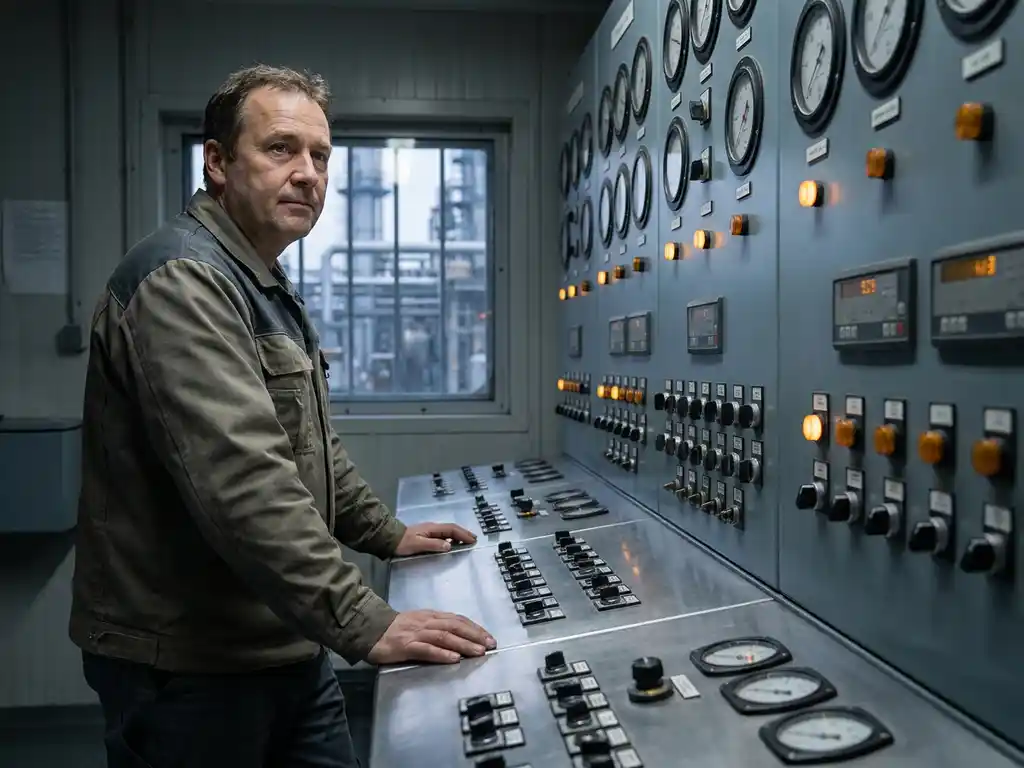
Batch processing is automated and controlled through a combination of a batch management system, a process control platform, and an instrument network. The batch management system holds the recipes and orchestrates the sequence of operations. The process control platform, such as Siemens SIMATIC PCS 7, executes the individual control actions, and field instruments measure and regulate temperatures, pressures, flows, and levels in real time.
Effective batch control relies on several interconnected layers:
- Recipe management: Master recipes define the standard process; control recipes are the specific instances executed for each batch, with actual parameter values recorded for traceability.
- Phase logic: Each step in the batch, such as heating, dosing, or mixing, is encoded as a phase that can be reused across multiple recipes, reducing engineering effort and the risk of errors.
- Exception handling: The system must respond automatically to deviations, such as a temperature out of range, by pausing, alarming, or aborting the batch according to predefined rules.
- Electronic batch records: Every parameter, alarm, and operator action is logged automatically, creating a complete audit trail without manual paperwork.
Modern batch automation increasingly connects to higher-level systems for scheduling, quality management, and data analytics. Integrating the batch control layer with cloud platforms and enterprise applications allows production teams to monitor batch performance in real time, identify process deviations earlier, and use historical batch data to improve future recipes.
How CoNet helps with batch processing automation
We support process manufacturers across the full lifecycle of batch automation, from initial process design through engineering, commissioning, and ongoing optimization. Our work is built on deep expertise in Siemens SIMATIC PCS 7 and the ISA-88 batch standard, giving our customers reliable, auditable batch control that scales with their production needs.
Specifically, we help with:
- Designing and implementing ISA-88-compliant batch systems on Siemens PCS 7, including recipe management, phase libraries, and electronic batch records.
- Integrating batch control systems with enterprise applications and cloud platforms through our batch automation and process IT services, enabling real-time batch monitoring, data-driven process improvement, and seamless connection to MES and ERP systems.
- Applying machine learning to historical batch data to identify root causes of yield variation and reduce batch failures.
- Providing process safety expertise as the only organization in the Netherlands certified as both a Siemens PCS 7 Process Safety Specialist and a Siemens COMOS Partner.
- Supporting existing batch installations with maintenance, upgrades, and 24/7 technical support to minimize unplanned downtime.
Whether you are building a new batch facility, modernizing an existing system, or looking to get more value from your batch data, we are ready to help. Contact us today to discuss your batch automation challenges and find out how we can improve the reliability, traceability, and efficiency of your production.
Frequently Asked Questions
How long does it typically take to implement a batch automation system in an existing plant?
The timeline varies significantly depending on the complexity of the process, the number of recipes, and the state of the existing infrastructure, but most mid-scale batch automation projects run between 6 and 18 months from design to commissioning. Plants that already have a modern DCS in place and well-documented recipes can move faster, while greenfield projects or those requiring extensive instrument upgrades take longer. Breaking the project into phases — starting with a pilot unit or a single production line — is a practical way to manage risk and demonstrate value early.
What is the ISA-88 standard and do I really need to follow it?
ISA-88 (S88) is an internationally recognized standard that defines a consistent way to structure batch processes, recipes, and equipment hierarchies. While it is not a legal requirement in most industries, following it brings significant practical benefits: it makes recipes portable between plants, simplifies engineering reuse through phase libraries, and makes your system easier for third-party engineers to understand and maintain. In regulated industries like pharmaceuticals, auditors are familiar with S88 terminology, which also streamlines validation and documentation efforts.
What are the most common mistakes companies make when setting up a batch process?
One of the most frequent mistakes is underinvesting in recipe structure — writing recipes as monolithic scripts rather than modular, reusable phases, which makes future changes costly and error-prone. Another common pitfall is neglecting exception handling: failing to define clear, automated responses to process deviations means operators must make critical decisions under pressure, increasing the risk of batch failures. Finally, many plants overlook electronic batch records from the start, relying on manual logbooks and only digitizing later at much greater cost and effort.
How do I ensure full traceability of raw materials across multiple batches?
Full raw material traceability requires linking every batch record to the specific lot numbers of each ingredient consumed, which is best achieved by integrating your batch management system with your inventory or ERP system so that material movements are captured automatically at the point of dispensing. The batch control system should record not just what was used, but when, by whom, and in what quantity, creating an unbroken chain from supplier lot to finished product. This integration also enables rapid, precise recalls if a raw material quality issue is identified after production.
Can batch processing and continuous processing be combined in the same facility?
Yes, and this hybrid approach is actually very common in industries like food and beverage, pharmaceuticals, and specialty chemicals. A typical setup uses batch processing for upstream steps that require precise formulation, reaction time, or frequent product changeovers, and then feeds a continuous downstream process for filling, packaging, or finishing where high throughput matters most. The key engineering challenge is managing the interface between the two modes — specifically, buffering and scheduling — so that the continuous line is not starved by batch cycle times.
How can historical batch data be used to improve future production performance?
Historical batch data — when properly structured and stored — is a powerful source of process insight. By comparing key process parameters (temperatures, dosing times, agitation speeds) against quality outcomes across hundreds of batches, machine learning models can identify which parameter combinations are most strongly associated with yield variation, off-spec results, or extended cycle times. These insights can then be translated into tighter recipe parameter windows, updated operator guidance, or automated early-warning alerts that flag a batch as at-risk before it reaches the quality check stage.
What should I look for when evaluating a batch automation partner or system integrator?
Look for a partner with demonstrated experience in your specific industry and process type, not just general automation expertise, since the regulatory and technical requirements in pharmaceuticals differ substantially from those in specialty chemicals or food production. Verified certifications — such as platform-specific credentials for Siemens PCS 7 or equivalent DCS systems — and a track record with ISA-88-compliant implementations are strong indicators of technical depth. It is also worth asking about post-commissioning support capabilities, including remote monitoring, upgrade pathways, and response times for critical issues, since batch automation systems are long-term investments that require ongoing partnership.