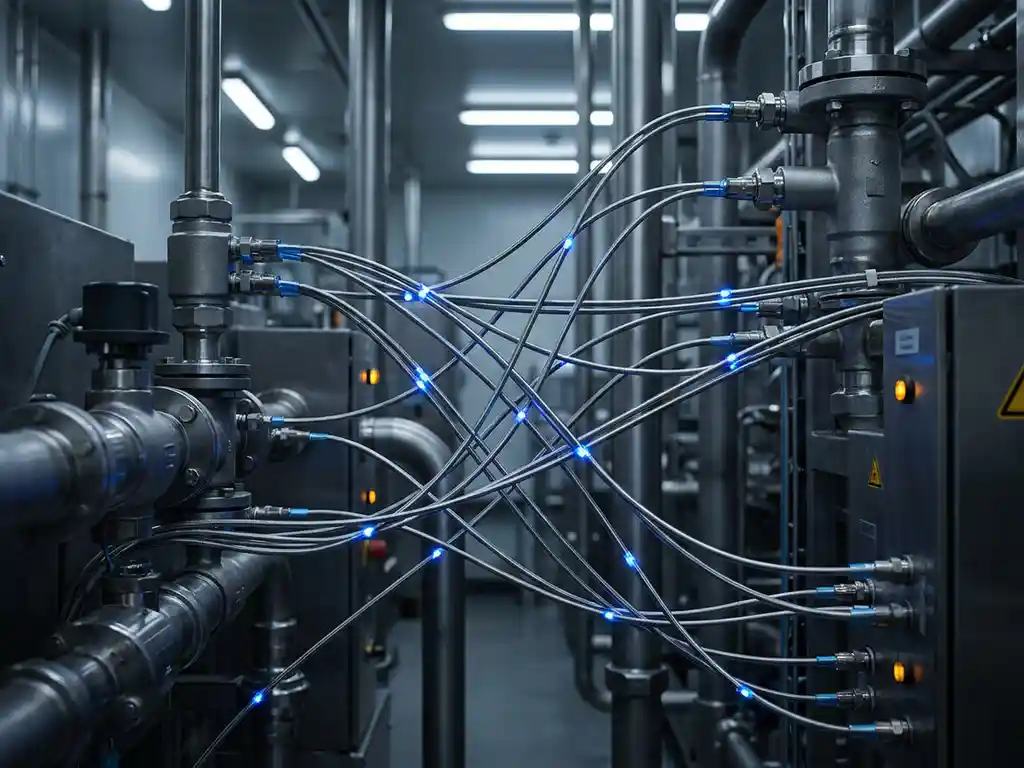

A PLC (Programmable Logic Controller) works in manufacturing by continuously scanning inputs from sensors and switches, executing programmed logic based on these inputs, and controlling outputs such as motors, valves, and lights. This automated control cycle repeats hundreds of times per second, enabling precise control of manufacturing processes. PLCs replaced traditional relay-based systems because they offer greater flexibility, reliability, and easier troubleshooting for complex industrial operations.
What is a PLC and why is it essential in manufacturing?
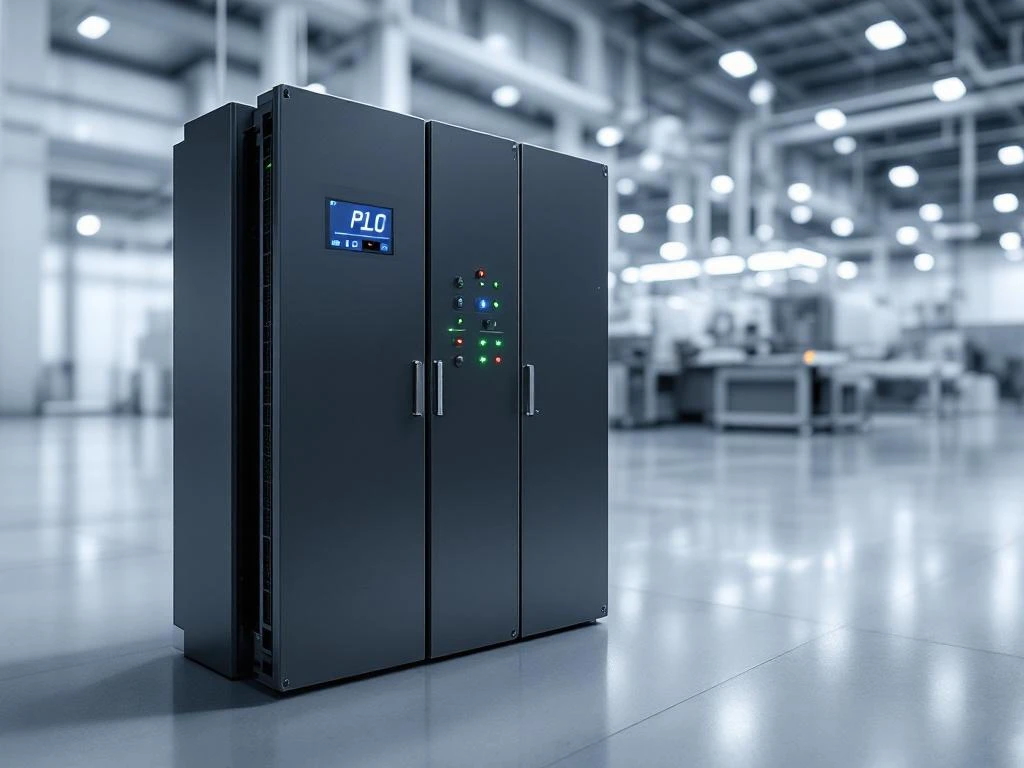
A Programmable Logic Controller (PLC) is a ruggedized industrial computer designed to control manufacturing equipment and processes in real time. PLCs monitor inputs from sensors, switches, and other field devices, then execute programmed instructions to control outputs such as motors, pumps, valves, and conveyor systems.
PLCs became essential in manufacturing because they replaced complex relay-based control panels that were difficult to modify and maintain. Traditional relay systems required physical rewiring to change control logic, whereas PLCs allow engineers to modify control programs through software. This flexibility enables manufacturers to adapt quickly to production changes, implement quality improvements, and reduce downtime.
Modern manufacturing depends on PLCs for consistent operation, precise timing, and integration with other systems. They provide the reliability needed for continuous production while offering the flexibility to handle varying product requirements and production schedules.
How does a PLC actually control manufacturing processes?
PLCs control manufacturing processes through a continuous scan cycle that typically completes in milliseconds. The cycle begins with input scanning, where the PLC reads signals from all connected sensors, switches, and measuring devices. Next comes program execution, where the PLC processes these inputs according to programmed logic instructions. Finally, output updating occurs, sending control signals to actuators, motors, and other field devices.
During input scanning, the PLC captures a snapshot of all input conditions and stores this information in memory. The program execution phase processes this data using ladder logic, function blocks, or other programming languages to determine the required actions. The output update phase then activates or deactivates connected devices based on the program’s decisions.
This scan cycle repeats continuously, enabling real-time response to changing conditions. Advanced PLCs can complete scan cycles in under one millisecond, ensuring an immediate response to critical safety conditions or process changes. The deterministic nature of this cycle ensures predictable, reliable control of manufacturing operations.
What are the main components inside a PLC system?
A PLC system contains four essential components: the Central Processing Unit (CPU), input/output (I/O) modules, power supply, and programming interface. The CPU serves as the brain, executing control programs and managing system operations. I/O modules provide the physical interface between the PLC and field devices, converting real-world signals into digital information the CPU can process.
The CPU contains memory for storing control programs and data, along with communication ports for networking and programming. Input modules convert signals from sensors and switches into digital format, while output modules convert CPU commands into signals that control actuators and indicators. Different I/O modules handle various signal types, including digital, analog, and specialized communications.
The power supply provides stable, regulated power to all PLC components, often including backup capabilities for critical applications. Programming interfaces, whether handheld terminals or computer software, allow engineers to create, modify, and troubleshoot control programs. This modular design enables PLCs to be configured for specific applications while maintaining reliability and serviceability.
What types of manufacturing processes can PLCs control?
PLCs control both discrete manufacturing processes such as assembly lines, packaging systems, and material handling, and continuous processes such as chemical mixing, temperature control, and flow regulation. Discrete applications involve controlling individual components and step-by-step operations, whereas continuous processes require precise regulation of variables such as pressure, temperature, and flow rates.
In assembly operations, PLCs coordinate robotic arms, conveyor systems, and quality inspection equipment to ensure proper sequencing and timing. Packaging applications use PLCs to control filling, sealing, labeling, and sorting equipment with precise timing and counting capabilities. Material handling systems rely on PLCs to manage automated storage and retrieval systems, sorting conveyors, and inventory tracking.
Process industries use PLCs for batch control, where recipes determine mixing sequences and ingredient quantities. Temperature control applications use PLCs with PID (Proportional-Integral-Derivative) algorithms to maintain precise heating and cooling. Through advanced process automation solutions, we help manufacturers optimize these diverse applications for maximum efficiency and reliability.
How do PLCs communicate with other manufacturing systems?
PLCs communicate with other manufacturing systems through industrial networking protocols and communication interfaces that enable data exchange with SCADA systems, Human-Machine Interfaces (HMIs), and enterprise software. Common protocols include EtherNet/IP, PROFINET, Modbus, and DeviceNet, each designed for specific communication requirements and network architectures.
Industrial Ethernet has become the preferred communication method, providing high-speed data transfer and integration capabilities. PLCs can share real-time process data with supervisory systems, receive production schedules from Manufacturing Execution Systems (MES), and report performance data to enterprise resource planning software. This connectivity enables coordinated operation across entire manufacturing facilities.
Fieldbus networks connect PLCs to intelligent field devices, enabling distributed control and advanced diagnostics. Modern PLCs also support wireless communication for mobile devices and cloud connectivity for remote monitoring and data analytics. This comprehensive communication capability transforms individual PLCs into integrated components of smart manufacturing systems, enabling the data collection and visualization essential for modern production optimization.
Understanding PLC operation helps manufacturers make informed decisions about automation investments and system upgrades. Whether implementing new control systems or optimizing existing processes, PLCs provide the foundation for reliable, flexible manufacturing operations. Consider consulting with automation specialists to determine the best PLC solutions for your specific manufacturing requirements and long-term production goals.