
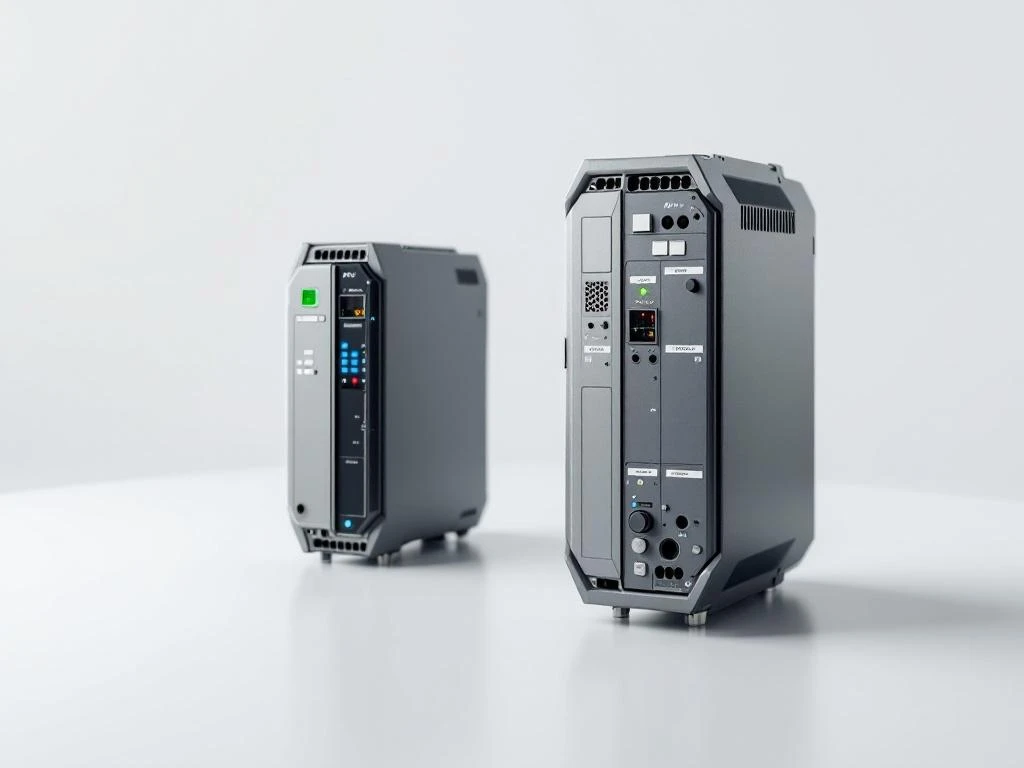
The main difference between PLC and PAC lies in their capabilities and complexity. PLCs (Programmable Logic Controllers) are designed for basic automation tasks with simple programming, while PACs (Programmable Automation Controllers) offer advanced processing power, sophisticated programming languages, and extensive networking capabilities for complex industrial processes.
What exactly is a PLC and how does it work in industrial automation?
A PLC (Programmable Logic Controller) is a ruggedised computer system designed to control manufacturing processes and machinery in industrial environments. PLCs monitor input devices such as sensors and switches, process this information according to programmed logic, and control output devices such as motors, valves, and lights.
PLCs excel at handling discrete control applications where processes involve simple on/off operations. They use ladder logic programming, which resembles electrical relay circuits and makes them accessible to technicians with electrical backgrounds. Common applications include conveyor belt control, packaging machinery, and basic assembly line operations.
The reliability of PLCs makes them ideal for harsh industrial conditions. They operate consistently in extreme temperatures, vibration, and electromagnetic interference. Their real-time processing ensures immediate responses to input changes, which is crucial for safety systems and time-critical operations in manufacturing environments.
What is a PAC and why do modern factories choose this technology?
A PAC (Programmable Automation Controller) combines the functionality of PLCs with advanced computing capabilities, offering multiple programming languages, enhanced networking, and superior processing power. PACs handle both discrete and analogue control while managing complex mathematical calculations and data processing tasks.
Modern factories choose PACs because they integrate seamlessly with enterprise systems, supporting protocols such as Ethernet/IP, OPC, and web services. This connectivity enables real-time data exchange between factory-floor equipment and management systems, facilitating Industry 4.0 initiatives and smart manufacturing implementations.
PACs support various programming languages, including structured text, function block diagrams, and high-level languages such as C++. This flexibility allows engineers to choose the most appropriate programming method for specific applications, from simple control logic to complex algorithms for process optimisation and predictive maintenance.
What are the main differences between PLC and PAC systems?
Processing power and memory represent the most significant differences between these systems. PLCs typically offer limited processing capabilities suitable for straightforward control tasks, while PACs provide substantial computational resources for complex algorithms, data logging, and multi-tasking operations.
Programming capabilities vary considerably between the two systems. PLCs primarily use ladder logic and basic function blocks, making them straightforward for traditional automation tasks. PACs support multiple programming languages and development environments, enabling sophisticated application development and integration with IT systems.
Networking and connectivity options differ substantially. PLCs often rely on proprietary communication protocols and limited network interfaces. PACs feature extensive networking capabilities, supporting standard IT protocols, web servers, database connectivity, and seamless integration with enterprise resource planning systems.
Cost considerations reflect these capability differences. PLCs generally offer lower initial investment and simpler maintenance requirements. PACs require higher upfront costs but provide greater long-term value through enhanced functionality, scalability, and integration possibilities.
How do you decide whether your facility needs a PLC or PAC?
Process complexity serves as the primary decision factor. Choose PLCs for straightforward automation tasks involving basic input/output operations, simple logic, and standalone equipment control. Select PACs when processes require advanced calculations, data analysis, or integration with multiple systems.
Integration requirements significantly influence system selection. PLCs work well for isolated control applications with minimal connectivity needs. PACs become essential when facilities need seamless communication between automation systems, manufacturing execution systems, and enterprise software platforms.
Future expansion plans should guide your decision. PLCs suit applications with stable requirements and limited growth expectations. PACs provide the flexibility and scalability necessary for evolving processes, additional equipment integration, and advanced automation features.
Budget constraints and operational needs require careful balance. Consider total cost of ownership, including programming time, maintenance requirements, and potential system upgrades. We help clients evaluate these factors to ensure optimal system selection for their specific process automation requirements.
What should you expect when upgrading from PLC to PAC systems?
Migration complexity depends on your existing system architecture and integration requirements. Simple PLC applications may require complete reprogramming, while more complex systems benefit from gradual migration strategies that maintain operational continuity during the transition process.
Timeline expectations typically range from several weeks to several months, depending on system complexity and customisation requirements. Planning phases include system analysis, hardware specification, program development, testing, and commissioning. Proper project management ensures minimal disruption to production operations.
Benefits realised after PAC implementation include improved process visibility, enhanced data collection capabilities, better integration with enterprise systems, and increased operational flexibility. These advantages often justify the investment through reduced downtime, improved efficiency, and enhanced decision-making capabilities.
Training requirements increase with PAC systems due to their advanced capabilities and programming complexity. Staff need education on new programming languages, networking concepts, and system maintenance procedures. However, the enhanced functionality enables more sophisticated process control and optimisation strategies.
Understanding the differences between PLC and PAC systems enables informed decisions about automation investments. Consider your current needs, future requirements, and integration goals when selecting control systems. Professional guidance ensures optimal technology choices that support long-term operational success and process optimisation objectives.