
IoT, or the Internet of Things, refers to the network of physical devices, sensors, and systems that collect and exchange data over the internet. Ten clear examples include smart thermostats, connected factory machines, wearable health monitors, precision agriculture sensors, smart energy meters, autonomous vehicles, remote patient monitoring, supply chain trackers, smart city infrastructure, and industrial predictive maintenance systems. These examples span both consumer life and industrial operations, showing just how broadly IoT technology has taken hold. The sections below explore each area in depth, from everyday applications to the specific challenges and technologies shaping industrial IoT today.
Where is IoT already being used in everyday life?
IoT is already embedded in everyday life across homes, healthcare, transportation, and retail. Smart thermostats adjust heating based on your habits. Wearables track heart rate and sleep. Connected vehicles receive real-time traffic data. Even supermarkets use IoT-enabled shelf sensors to manage stock automatically. These consumer-facing applications are often the most visible face of a much larger technology ecosystem.
Some of the most recognizable everyday IoT examples include:
- Smart home devices such as voice assistants, connected lighting, and automated security systems
- Wearable health technology including fitness trackers and smartwatches that sync data to mobile apps
- Connected vehicles that communicate with navigation systems, traffic infrastructure, and service centers
- Smart energy meters that give households real-time insight into electricity consumption
- Precision agriculture tools that monitor soil moisture, weather conditions, and crop health remotely
What these examples share is the same underlying principle: physical objects generate data, that data travels over a network, and software turns it into something useful. Whether the goal is saving energy at home or optimizing a delivery route, the mechanism is the same. Consumer IoT has grown rapidly because hardware costs have dropped significantly, and cloud platforms have made it easier than ever to process and act on sensor data at scale.
How does IoT work in industrial automation and manufacturing?
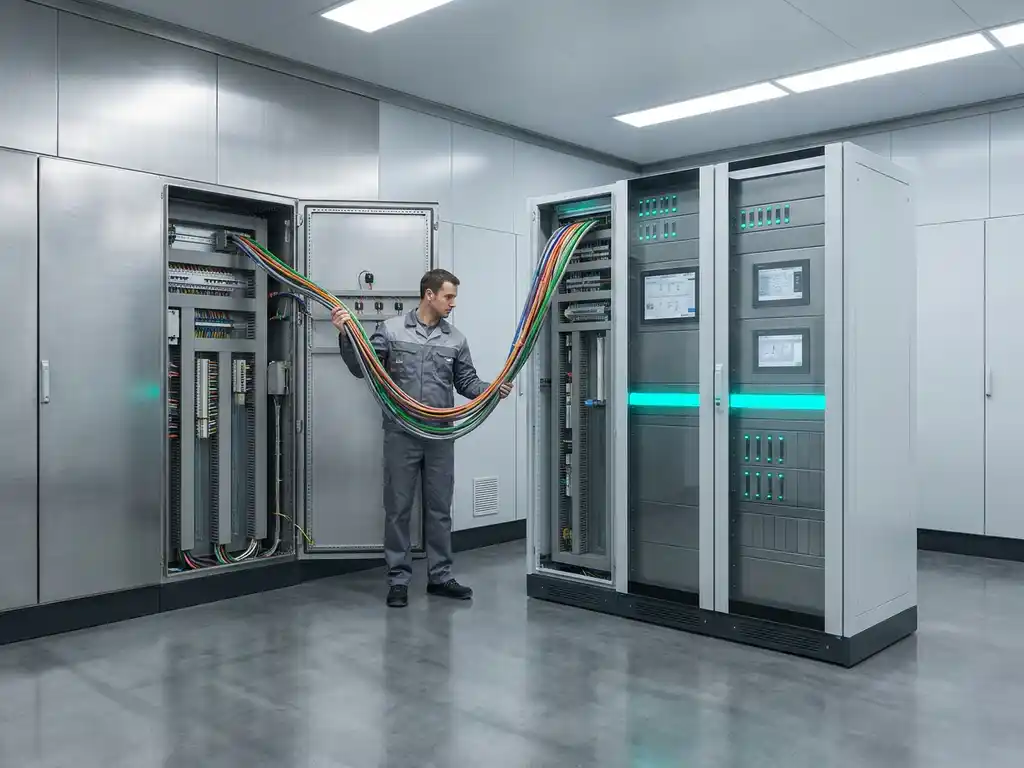
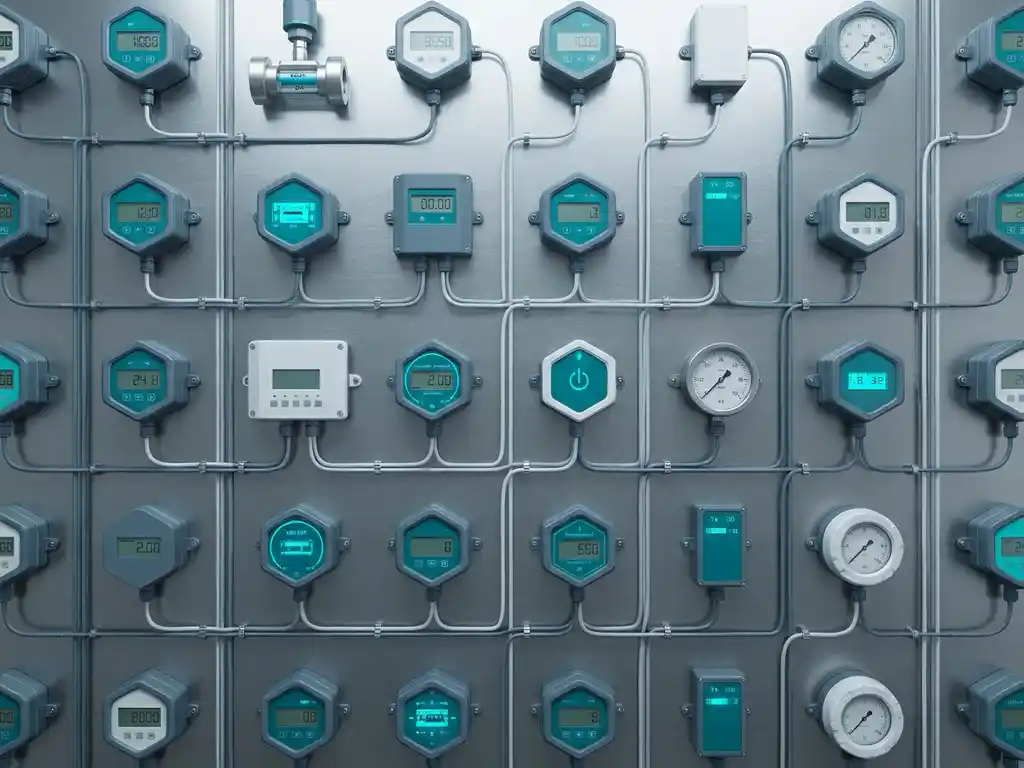
In industrial automation and manufacturing, IoT works by connecting machines, sensors, and control systems so that data flows continuously between the shop floor and higher-level software platforms. Sensors attached to equipment capture variables like temperature, pressure, vibration, and flow rate. That data is transmitted to control systems or cloud platforms where it is analyzed, triggering automatic responses or alerting engineers to take action.
In a modern manufacturing plant, this might look like a conveyor belt sensor detecting an unusual vibration pattern and automatically scheduling a maintenance check before a breakdown occurs. Or a production line that adjusts its output speed in real time based on downstream demand signals. These capabilities reduce downtime, cut waste, and give plant managers far greater visibility into what is actually happening across their operations.
Industrial IoT also enables remote monitoring, which means engineers do not need to be physically present to oversee complex processes. This is particularly valuable in hazardous environments or geographically distributed facilities. When connected to enterprise systems like ERP or MES platforms, IoT data can also feed directly into production planning and quality management workflows, closing the loop between the physical process and business decision-making.
What is the difference between IoT and IIoT?
The key difference between IoT and IIoT is the context and requirements of their application. IoT refers broadly to any network of connected devices, including consumer products. IIoT, or the Industrial Internet of Things, is a subset focused specifically on industrial environments such as manufacturing, energy, oil and gas, and chemical processing, where reliability, safety, and precision are non-negotiable.
Consumer IoT can tolerate occasional connectivity drops or minor data inaccuracies. A smart speaker that misses a command is an inconvenience. In contrast, IIoT systems operate in environments where a failed sensor reading or a delayed signal could mean equipment damage, process failure, or a serious safety incident. This is why IIoT places far greater emphasis on:
- Reliability and uptime, often requiring redundant communication paths
- Cybersecurity, because connected industrial systems are attractive targets for attacks
- Real-time data processing, often handled at the edge rather than in the cloud to minimize latency
- Integration with existing control systems such as SCADA, DCS, and PLC architectures
- Compliance with industry standards and functional safety requirements
In short, IIoT takes the foundational concept of connected devices and applies it under the strict operational and regulatory demands of industrial settings. The underlying technology may overlap, but the engineering standards, risk tolerance, and integration complexity are in a completely different league.
How does IoT improve energy management in industrial plants?
IoT improves energy management in industrial plants by giving operators continuous, granular visibility into where and how energy is being consumed across every part of a facility. Rather than relying on monthly meter readings or manual audits, connected energy meters and sensors stream real-time data that reveals inefficiencies the moment they appear, making it possible to act before waste accumulates.
Practical improvements typically include:
- Identifying machines or processes that consume disproportionate amounts of energy relative to their output
- Automatically reducing power usage during peak tariff periods by shifting non-critical loads
- Detecting equipment degradation early, since a motor running inefficiently often draws more current before it fails
- Benchmarking energy performance across shifts, production lines, or facilities to find best practices
- Integrating energy data with production data to calculate the true energy cost per unit of output
For process industries in particular, energy is one of the largest operating costs. Even modest improvements in energy efficiency, driven by better data and smarter control, can translate into significant savings over a full production year. IoT-enabled energy management also supports sustainability reporting and regulatory compliance, both of which are growing priorities for industrial operators in 2026.
What are the biggest challenges of implementing IoT in industry?
The biggest challenges of implementing IoT in industry are legacy system integration, cybersecurity, data management complexity, and the shortage of skilled professionals who can bridge operational technology and information technology. Most industrial plants were not designed with connectivity in mind, which means adding IoT capabilities often requires retrofitting equipment that was never intended to communicate digitally.
Legacy system integration
Many industrial facilities run on control systems that are decades old. These systems use proprietary protocols and were designed as closed, isolated networks. Connecting them to modern IoT platforms requires protocol translation, careful network segmentation, and thorough testing to ensure that adding connectivity does not destabilize the underlying control environment. This is time-consuming and technically demanding work.
Cybersecurity and data governance
Connecting industrial systems to broader networks increases the attack surface. A breach in an IT system is damaging; a breach in an operational technology environment can halt production or create physical hazards. Industrial IoT implementations must address network segmentation, access control, encrypted communications, and ongoing vulnerability management. Alongside security, organizations also face the challenge of deciding what data to collect, how long to retain it, and who has access to it.
Beyond these two core challenges, organizations also frequently underestimate the cultural and organizational change required. Engineers and operators who have managed processes in a certain way for years need to trust new data sources and adapt their workflows. Without proper training and change management, even technically sound IoT implementations can fail to deliver their intended value.
Which IoT technologies are most commonly used in process industries?
The most commonly used IoT technologies in process industries include industrial communication protocols such as OPC UA and MQTT, edge computing hardware, cloud platforms, and data analytics tools including machine learning applications. These technologies work together to move data from physical processes through to actionable insights at the business level.
Key technologies found across chemical, food and beverage, oil and gas, and energy facilities include:
- OPC UA: A vendor-neutral communication standard that allows different automation systems to share data securely and reliably
- MQTT: A lightweight messaging protocol well-suited to environments with bandwidth constraints or large numbers of connected devices
- Edge computing devices: Hardware installed close to the process that preprocesses data locally, reducing latency and bandwidth demands on central systems
- Cloud IoT platforms such as Microsoft Azure IoT or Siemens MindSphere, which provide scalable infrastructure for data storage, visualization, and analysis
- Machine learning and AI tools that identify patterns in process data and support predictive maintenance or quality optimization
- Digital twin technology, which creates virtual models of physical assets or processes that can be tested and optimized without touching the real environment
The choice of technology stack depends heavily on the existing control environment, the specific use case, and the level of IT and OT integration already in place. In Siemens-based environments, platforms like MindSphere and tools within the SIMATIC ecosystem provide a natural starting point for connecting process data to higher-level analytics and enterprise systems.
How CoNet Helps with Industrial IoT
We help industrial organizations move from disconnected automation systems to fully integrated, data-driven operations. Our Process IT team and industrial IoT services specializes in connecting your existing automation infrastructure to cloud platforms and enterprise applications, turning raw process data into actionable insights that improve efficiency, reduce downtime, and support better decision-making.
Concretely, we offer:
- Azure and MindSphere IoT implementations: We design and deploy secure, scalable IoT architectures built on Microsoft Azure and Siemens MindSphere, tailored to your specific process environment
- Machine learning applications: We apply ML models to your process data to identify inefficiencies, predict equipment failures, and optimize production performance
- Custom application development: Our team builds mobile, web, and desktop applications that give your operators and managers clear visibility into process performance from anywhere
- OT/IT integration: We bridge the gap between your existing Siemens automation systems and higher-level business platforms, ensuring data flows securely and reliably across your organization
- Energy management solutions: As a Siemens Value Added Partner for Digital Grid, we connect energy monitoring directly into your process automation environment
Whether you are just beginning to explore industrial IoT or looking to expand an existing connected infrastructure, we bring the technical depth and Siemens expertise to get it right. Get in touch with our team to discuss how we can help you unlock the value of your process data.
Frequently Asked Questions
How long does a typical industrial IoT implementation take from start to finish?
The timeline varies significantly depending on the scope and complexity of the project. A focused pilot — such as connecting a single production line for predictive maintenance — can be up and running in 8 to 12 weeks. A full-scale, plant-wide IIoT rollout involving legacy system integration, cloud platform deployment, and custom dashboards typically takes 6 to 18 months. Starting with a well-defined pilot use case is the most effective way to demonstrate value quickly and build internal confidence before scaling.
Do we need to replace our existing automation equipment to implement IoT?
In most cases, no. The majority of industrial IoT projects are built around retrofitting existing equipment rather than replacing it. Edge gateways and protocol converters can be added to legacy PLCs, SCADA systems, and sensors to extract data without disrupting the underlying control environment. This approach protects your existing capital investment while progressively adding connectivity. Full equipment replacement is only typically necessary when hardware is so outdated that it cannot support any form of data extraction.
What is the best way to get started with IIoT if we have no existing connected infrastructure?
The most practical starting point is to identify one high-value, well-defined use case — such as monitoring energy consumption on a key production line or tracking downtime on a critical piece of equipment. Running a time-limited pilot on that single use case lets you validate the technology, build internal skills, and generate measurable ROI before committing to broader deployment. Trying to connect everything at once is one of the most common and costly mistakes organizations make when starting out with IIoT.
How do we keep our industrial IoT systems secure without disrupting operations?
The foundation of IIoT security is strict network segmentation — keeping your operational technology (OT) network isolated from your IT network and the internet, with tightly controlled and monitored data pathways between them. Beyond segmentation, best practices include enforcing role-based access controls, using encrypted communication protocols such as OPC UA with security profiles enabled, and establishing a routine patch and vulnerability management process. Critically, any security changes to a live industrial environment should be thoroughly tested in a staging environment first to avoid unintended disruption to production.
What is edge computing, and why does it matter for industrial IoT?
Edge computing means processing data locally — on hardware installed close to the physical process — rather than sending all raw data to a central cloud platform. In industrial settings, this matters because many control and safety decisions need to happen in milliseconds, which is too fast for a round trip to the cloud. Edge devices filter and preprocess data, reducing bandwidth demands and ensuring that time-critical responses happen reliably. Cloud platforms then receive the refined, aggregated data for longer-term analytics, reporting, and machine learning applications.
How do we measure the return on investment (ROI) of an industrial IoT project?
ROI for IIoT projects is most clearly measured against specific operational KPIs established before the project begins — for example, unplanned downtime hours per month, energy cost per unit of output, or mean time between failures for critical equipment. Comparing these metrics before and after implementation gives a concrete, defensible picture of value delivered. Softer benefits such as improved regulatory compliance, faster root-cause analysis, and better cross-shift visibility are harder to quantify but should also be documented, as they contribute meaningfully to the overall business case.
Can industrial IoT data integrate directly with our ERP or business intelligence systems?
Yes, and this integration is increasingly considered a core requirement rather than an optional add-on. Modern IIoT platforms such as Microsoft Azure IoT and Siemens MindSphere are designed with open APIs and standard connectors that allow process data to flow into ERP systems like SAP, as well as BI tools such as Power BI or Tableau. This closes the loop between what is physically happening on the shop floor and the business decisions being made at the management level — enabling everything from real-time production cost tracking to automated maintenance work order generation.