
Every plant manager faces a foundational question at some point: should production run continuously, or in discrete batches? The answer shapes everything from capital investment and staffing to the complexity of the control system sitting at the heart of operations. Getting this decision right from the start, or revisiting it with fresh eyes during an expansion, can mean the difference between a plant that consistently hits its targets and one that quietly bleeds efficiency year after year. Understanding how batch systems and continuous processes differ, and how modern platforms like PCS 7 and SIMATIC Batch support both, is essential for any operations leader navigating this choice in 2026.
This article walks through the core distinctions between the two approaches, the plant-specific variables that should drive the decision, the automation and DCS implications of each, and the hybrid models that are increasingly common in modern facilities. It also covers the mistakes that trip up even experienced teams, so the right choice sticks.
Key differences that shape production outcomes
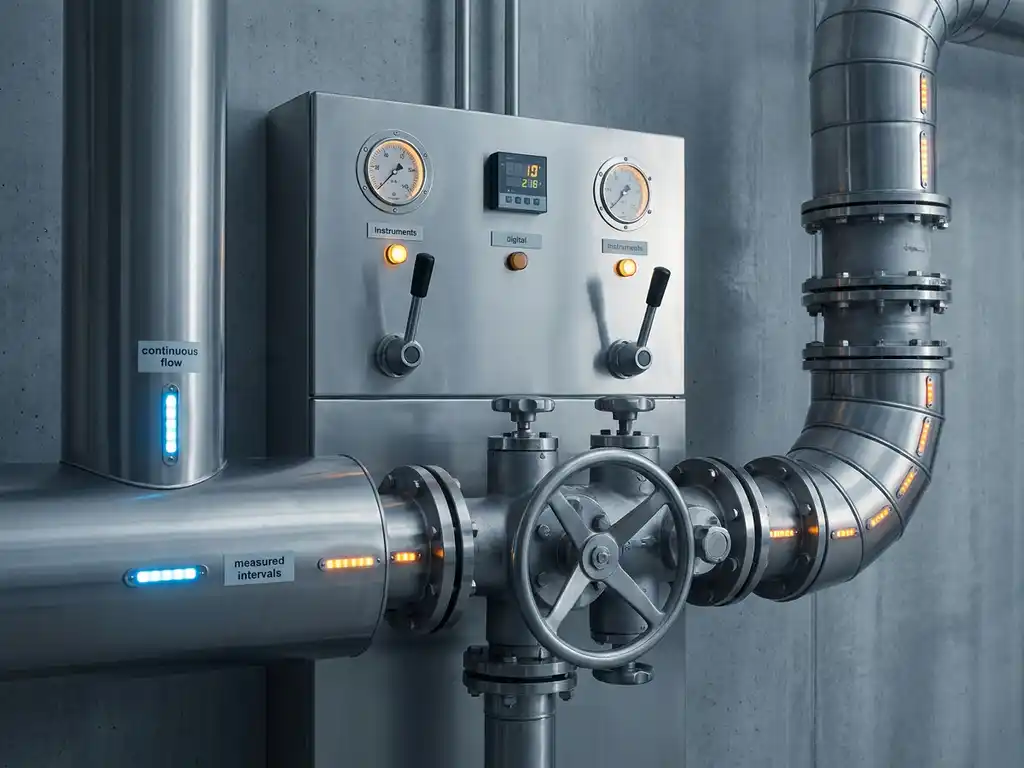
Continuous processes run without interruption, moving material through the plant in a steady, unbroken flow. Refineries, large-scale chemical plants, and commodity food manufacturers typically operate this way because their products are uniform, demand is predictable, and shutting down is expensive. Batch systems, by contrast, produce defined quantities of a product in discrete runs, making them well suited to specialty chemicals, pharmaceuticals, craft food and beverage, and any environment where recipes change frequently or traceability is a regulatory requirement.
The production outcome differences run deeper than just throughput. Continuous processes excel at consistency and volume but carry high transition costs when the product mix needs to change. Batch production offers flexibility and precise lot control, which is critical when a single contaminated run could trigger a recall or a compliance failure. Batch control also enables detailed electronic batch records, something regulators in pharma and food increasingly mandate. The right approach is not simply about which mode produces more; it is about which mode produces the right product, at the right quality, under the right regulatory conditions.
How plant variables determine the right process type
No two plants are identical, and the variables that matter most are often site-specific. Product diversity is one of the most decisive factors. A plant producing a single bulk chemical at scale almost always benefits from continuous operation. A plant producing dozens of formulations, each with its own recipe, temperature profile, and hold time, is a natural candidate for batch architecture.
Volume and demand stability matter equally. Continuous processes require sustained, predictable demand to justify their capital intensity. When demand fluctuates significantly across seasons or customer segments, the inability to easily ramp down a continuous line becomes a real cost burden. Batch operations scale more gracefully because individual runs can simply be scheduled or postponed. Equipment cleaning requirements are another variable that often gets underweighted. Products that require full Clean-In-Place or Clean-Out-of-Place cycles between runs are inherently batch-friendly, and forcing them into a continuous model typically creates compliance headaches rather than efficiency gains.
Automation complexity and control system demands
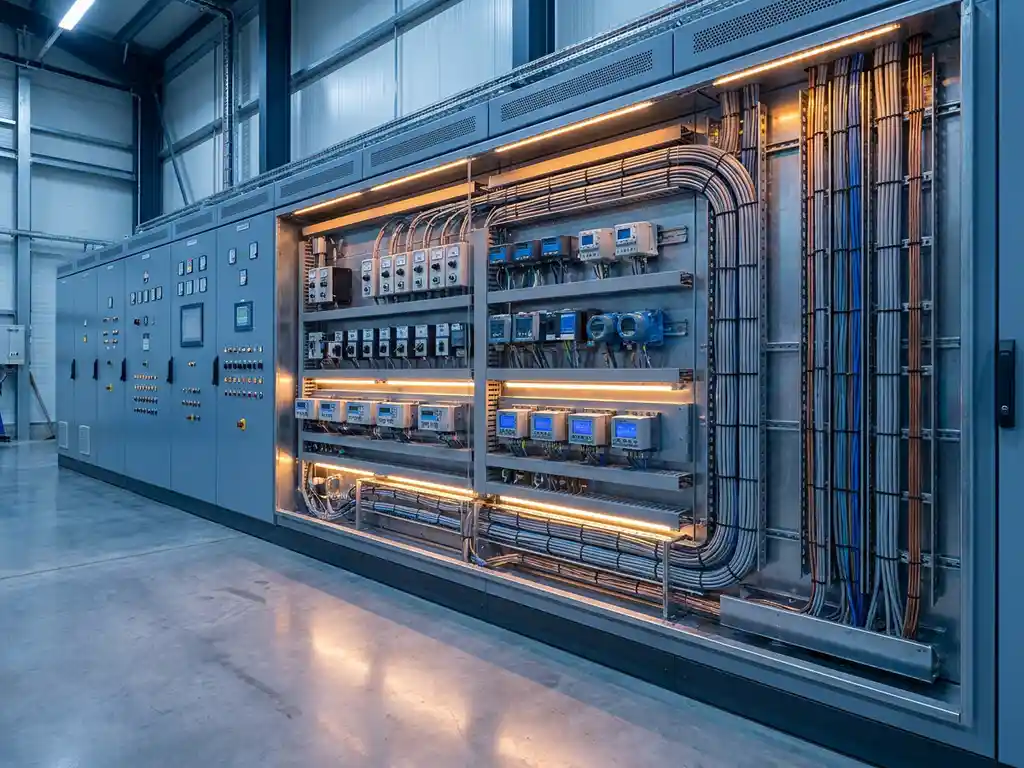
The control system requirements for batch and continuous operations differ substantially, and this is where the choice becomes highly technical. Continuous processes rely on steady-state control loops, where the primary challenge is maintaining stable operating conditions across a narrow window of acceptable variation. A well-configured DCS handles this effectively through PID control and advanced process control layers.
Batch control introduces a fundamentally different layer of complexity: procedural automation. Each batch must execute a defined sequence of steps, manage transitions between phases, handle deviations, and generate an accurate electronic record of what happened. The ISA-88 standard provides the procedural model that most modern batch platforms follow, and SIMATIC Batch from Siemens is built directly around this standard. It integrates tightly with PCS 7 to deliver recipe management, phase logic execution, and batch reporting within a single engineering environment. For plants that need to connect batch execution data to higher-level systems, the SIMATIC Batch API provides the interface layer that enables integration with MES, ERP, and quality management platforms without custom middleware.
The engineering effort required to configure batch logic correctly should not be underestimated. Phase libraries, equipment modules, and procedural elements all need to be designed with reuse and flexibility in mind, otherwise the system becomes rigid precisely when production flexibility is most needed. This is an area where deep platform experience pays off significantly.
Hybrid approaches in modern process plants
The binary framing of batch versus continuous rarely reflects the reality of modern process plants. Many facilities run a hybrid model, where upstream operations run continuously to maintain a steady supply of intermediate material, while downstream finishing, blending, or filling steps operate in batch mode. This combination captures the throughput benefits of continuous processing while preserving the flexibility and traceability that batch control provides at the point where product differentiation actually occurs.
PCS 7 is particularly well suited to hybrid environments because it supports both continuous regulatory control and ISA-88-compliant batch execution within the same platform. Engineers can configure continuous loops and batch procedural logic in a unified engineering environment, reducing the integration complexity that comes with running separate systems for each mode. As plants evolve and product portfolios shift, this architectural flexibility becomes a long-term asset rather than a one-time convenience. We work with clients across chemical, food and beverage, and energy sectors who have successfully implemented hybrid architectures that would have been impractical without a unified control platform.
Common decision mistakes and how to avoid them
One of the most frequent mistakes is letting the current product mix drive a decision that should account for future product strategy. A plant designed purely for continuous operation based on today’s product range can become a constraint when the business shifts toward specialty products or smaller lot sizes five years from now. Building in architectural flexibility from the start, even if it adds some upfront complexity, almost always proves worthwhile.
Another common error is underestimating the importance of batch record integrity. Teams sometimes treat electronic batch records as a compliance formality rather than a core operational tool. In practice, a well-structured batch record is one of the most valuable sources of process insight available, enabling root cause analysis, yield optimization, and audit readiness simultaneously. Platforms like SIMATIC Batch generate these records automatically as part of execution, but only if the underlying recipe and phase logic is designed with that goal in mind.
Finally, the decision between batch and continuous is sometimes made without sufficient input from the control system engineering team. Process design and automation design need to happen in parallel. A process that looks elegant on a P&ID can become an automation nightmare if the sequencing logic, exception handling, and operator interaction requirements are not thought through early. Bringing automation expertise into the conversation at the concept stage, rather than after process design is locked, is one of the most effective ways to avoid costly rework later.