
A programmable logic controller is used in industry to automate repetitive, time-critical, or safety-sensitive processes by continuously monitoring inputs from sensors and equipment, then executing pre-programmed instructions to control outputs such as motors, valves, and alarms. PLCs form the operational backbone of industrial automation across virtually every manufacturing and process sector. The sections below unpack how they work, where they are used, and what their limitations are.
How does a programmable logic controller actually work?
A programmable logic controller works by running a continuous scan cycle: it reads the current state of all connected inputs, executes its stored logic program, updates the outputs accordingly, and then repeats the cycle. This loop typically completes in milliseconds, giving a PLC the speed and reliability needed to control physical machinery in real time.
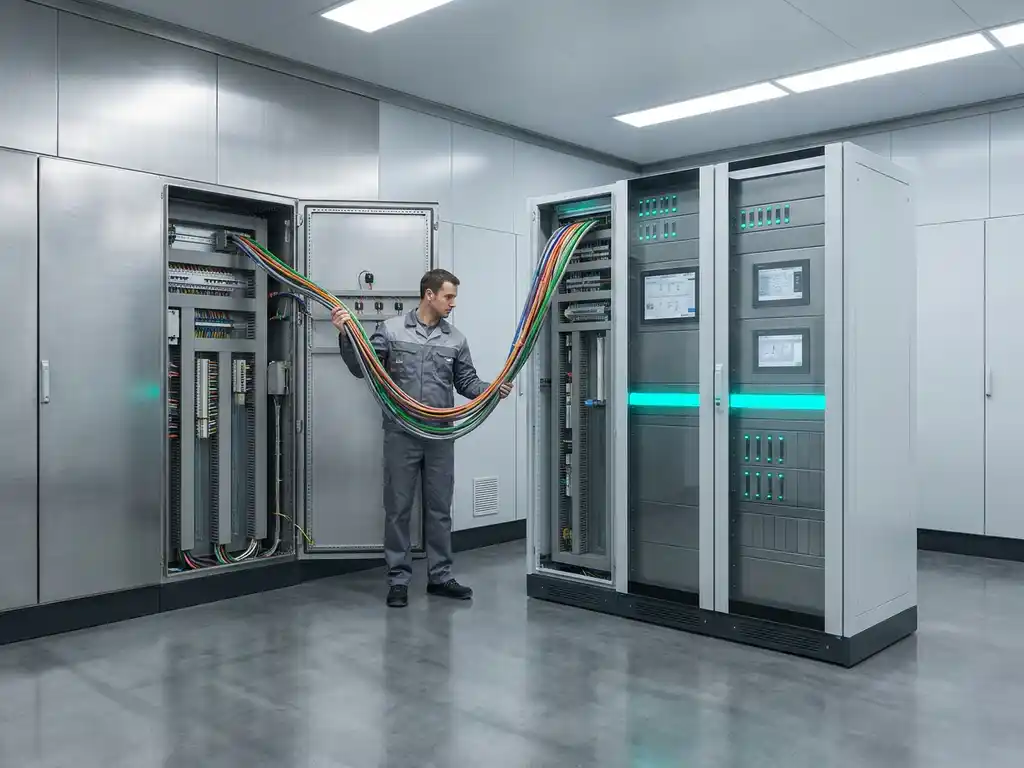
The core components of any PLC are the processor unit (CPU), input and output modules, a power supply, and a programming interface. Sensors, switches, and other field devices feed signals into the input modules. The CPU processes those signals against the programmed logic, and the output modules send commands to actuators, drives, and other controlled equipment.
Programming is most commonly done in ladder logic, a graphical language that resembles electrical relay diagrams and makes the control logic readable to both electricians and engineers. Modern PLCs also support structured text, function block diagrams, and other IEC 61131-3 languages, giving engineers flexibility in how complex control strategies are expressed.
What industries rely on PLCs for process control?
PLCs are used across a wide range of industries wherever repetitive, high-speed, or safety-critical control is needed. The most common sectors include manufacturing, food and beverage, chemical processing, oil and gas, water treatment, pharmaceuticals, and energy production. In each case, the PLC’s ability to react consistently and quickly makes it indispensable.
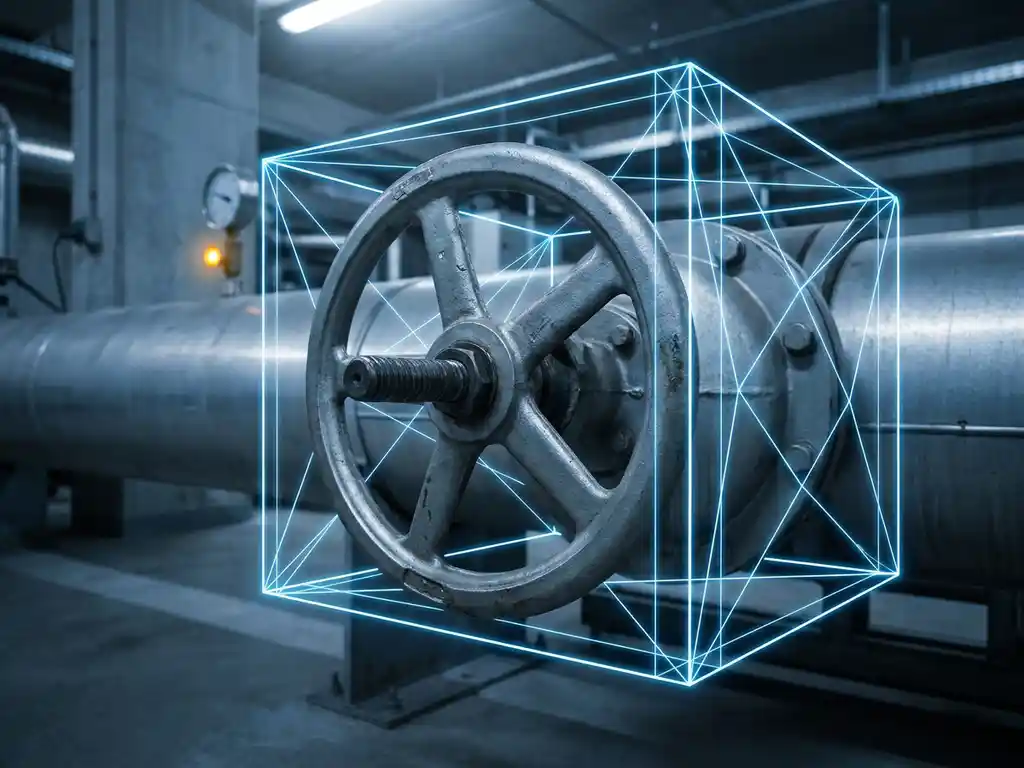
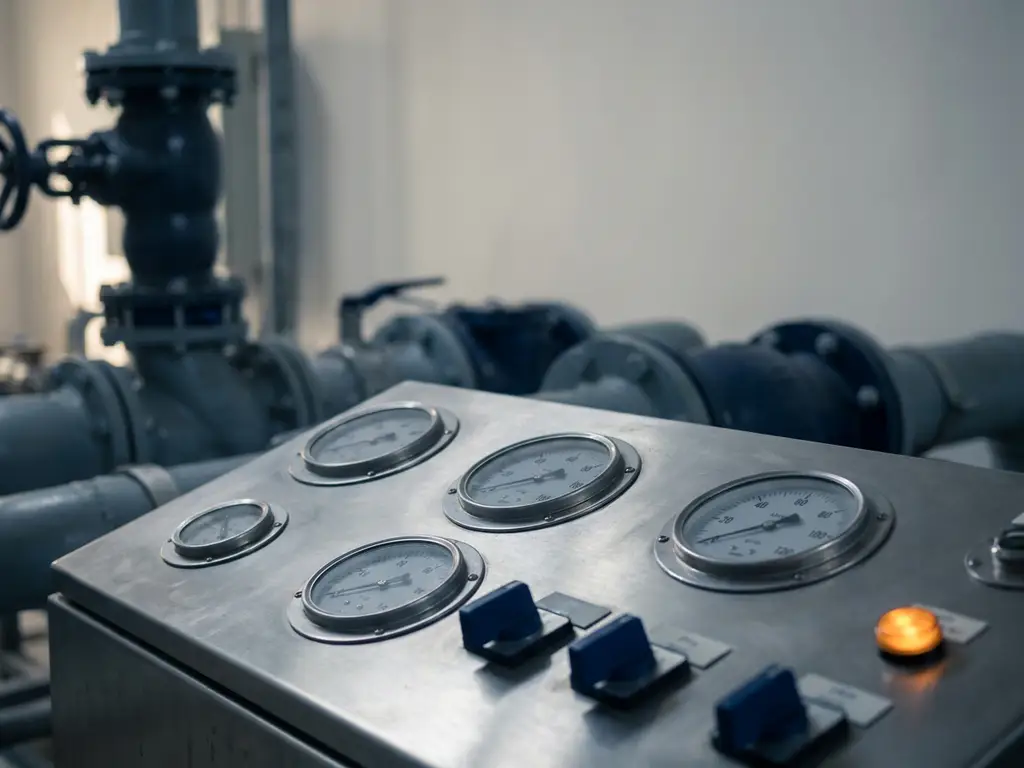
In food and beverage production, PLCs manage conveyor speeds, filling sequences, pasteurisation cycles, and packaging lines. In chemical plants and oil and gas facilities, they handle valve actuation, pump control, and emergency shutdown routines where split-second response times are non-negotiable. Water treatment plants rely on PLCs to regulate dosing, filtration stages, and pump stations across geographically spread sites.
In discrete manufacturing, PLCs coordinate robotic arms, CNC machines, and assembly lines. The automotive industry, in particular, has long depended on PLC-driven automation to maintain the precision and throughput that modern production demands. As plant automation continues to evolve, PLCs remain a foundational layer even in highly digitised facilities.
What’s the difference between a PLC and a DCS?
The key difference between a PLC and a Distributed Control System (DCS) is scope and architecture. A PLC is typically a standalone or small-network controller optimised for fast, discrete, or localised control tasks. A DCS is a plant-wide system designed to manage complex, continuous processes through a distributed network of controllers that share a common engineering and operator environment.
PLCs excel at high-speed, event-driven tasks such as machine sequencing, motion control, and safety interlocks. They are generally faster in their scan cycles and more cost-effective for focused applications. A DCS, by contrast, is built for continuous process industries where hundreds or thousands of control loops need to be managed together, with integrated historian functions, advanced process control, and centralised operator views.
In practice, the line between the two has blurred. Modern systems like Siemens SIMATIC PCS 7 combine PLC-level hardware performance with DCS-style engineering and operator frameworks, making it possible to handle both discrete and continuous control within a single architecture. The right choice depends on the complexity of the process, the number of control loops involved, and the long-term integration requirements of the facility.
What tasks can a PLC not handle on its own?
A PLC cannot, on its own, handle advanced process optimisation, large-scale data analytics, complex batch management, or integrated plant-wide coordination. It is designed to execute deterministic control logic reliably and quickly, but it is not built to make higher-level decisions or manage information across an entire enterprise.
Specific limitations include:
- Advanced process control: Techniques like model predictive control require computing resources and software environments beyond what a standard PLC provides.
- Batch management: Multi-phase, recipe-driven batch processes require dedicated batch execution software that sits above the PLC layer.
- Asset management and diagnostics: Monitoring the health of field devices across a plant requires dedicated tools such as SIMATIC PDM or COMOS, which integrate with but operate independently of the PLC.
- Historian and reporting functions: Long-term data storage, trending, and production reporting are handled by SCADA or MES systems, not by the PLC itself.
- Cybersecurity management: Network segmentation, user access control, and intrusion detection require dedicated IT and OT security infrastructure.
Understanding these boundaries is important when designing an automation architecture. A PLC is most effective when it is paired with the right higher-level systems rather than being asked to do everything alone.
How does a PLC connect to other systems in a factory?
A PLC connects to other factory systems through industrial communication networks and standard protocols. Common connections include field-level buses such as PROFIBUS and PROFINET for communicating with sensors, drives, and remote I/O, as well as Ethernet-based links to SCADA systems, historian servers, and MES platforms at higher levels of the automation hierarchy.
Modern PLCs support OPC UA, which has become the preferred protocol for secure, standardised data exchange between controllers and IT systems. This is particularly relevant as Industrial Internet of Things (IIoT) architectures push more data up to cloud analytics platforms and digital twin environments.
Within a Siemens environment, SIMATIC PLCs integrate natively with PCS 7, WinCC, and COMOS through PROFINET and S7 communication, creating a coherent data flow from the field device level up to engineering and operator tools. This tight integration reduces configuration effort and improves diagnostic transparency across the entire plant.
When should a facility upgrade or replace its PLCs?
A facility should consider upgrading or replacing its PLCs when the hardware is approaching end-of-support from the manufacturer, when spare parts become difficult to source, when the system can no longer communicate with modern networks and software, or when process demands have outgrown the original controller’s capacity. Waiting until a failure occurs is the costliest approach.
Practical indicators that an upgrade is due include:
- End-of-life announcements: Manufacturers publish lifecycle roadmaps. When a platform reaches end-of-support, security patches and firmware updates stop, creating operational and compliance risk.
- Spare parts scarcity: If replacement modules are only available through secondary markets, the risk of unplanned downtime increases significantly.
- Connectivity gaps: Older PLCs that lack Ethernet ports or modern protocol support become bottlenecks in any digitalisation or IIoT initiative.
- Performance limitations: Increased process complexity, faster cycle time requirements, or expanded I/O counts can push an ageing controller beyond its design limits.
- Software incompatibility: If the programming environment no longer runs on current operating systems, maintaining and modifying the control logic becomes increasingly difficult.
Upgrades do not always mean full replacement. Migration paths often allow existing I/O infrastructure and field wiring to be retained while replacing only the CPU and communication hardware, reducing both cost and downtime.
How CoNet helps with industrial PLC automation
CoNet is a Siemens specialist with nearly three decades of hands-on experience in industrial automation, and we work with facilities across the chemical, food and beverage, oil and gas, and energy sectors to get the most out of their PLC and process control infrastructure. Whether you are commissioning a new system, migrating away from ageing hardware, or troubleshooting a performance issue, we bring the engineering depth to handle it properly.
Here is what we offer:
- PLC and PCS 7 engineering: We design, program, and commission SIMATIC-based control systems, from standalone PLC applications to full DCS architectures.
- Migration and modernisation: We guide facilities through structured migration projects that preserve existing field infrastructure while bringing control hardware and software up to current standards.
- Process optimisation: We identify where control strategies can be improved to reduce variability, energy use, or unplanned downtime.
- Ongoing support and maintenance: We provide long-term support agreements so your automation systems stay reliable, secure, and aligned with evolving process demands.
- Digital Grid integration: As a Siemens Digital Grid partner, we connect process automation with energy management in a single integrated framework.
If you want to talk through your current setup or explore what a modernisation project could look like for your facility, get in touch with our team and we will be happy to help.