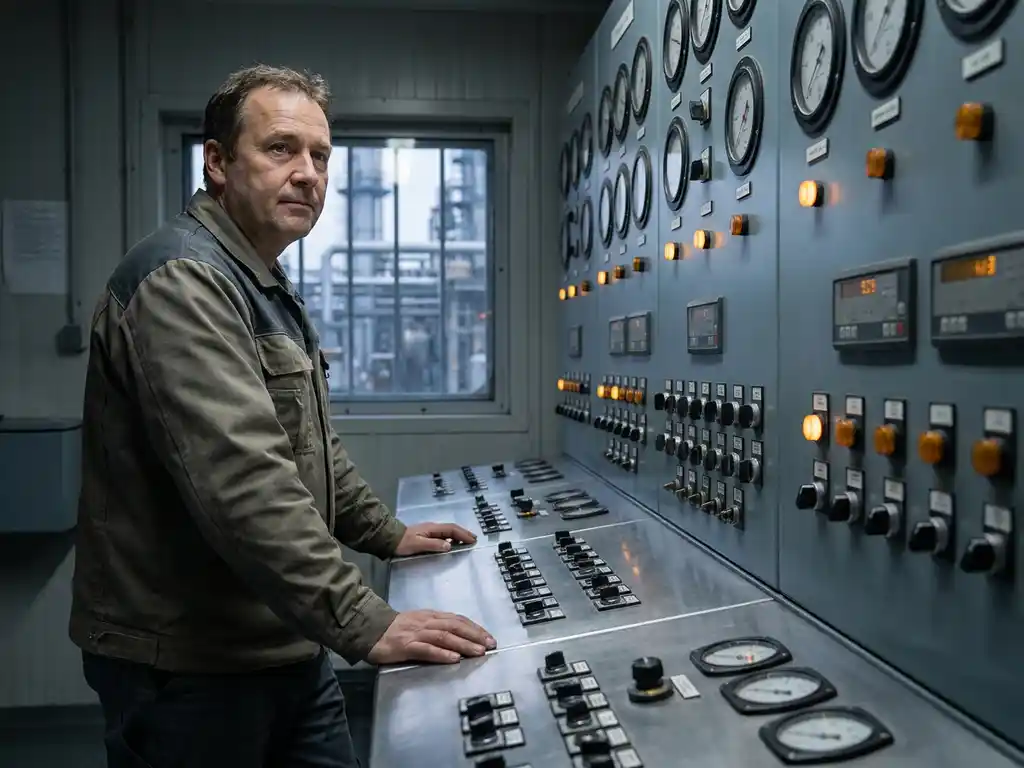

A real-life example of IoT is a smart factory where sensors on production equipment continuously send data to a central system, automatically adjusting machine settings, flagging maintenance needs, and optimizing energy use without human intervention. This kind of connected setup is no longer a concept for the future. It is already running in chemical plants, food production facilities, and energy grids around the world. The questions below unpack exactly how IoT works across these environments and what it means in practice.
Where is IoT already being used in daily life?
IoT is already being used in daily life across smart home devices, connected vehicles, healthcare wearables, and industrial facilities. A thermostat that learns your schedule, a fitness tracker that monitors your heart rate, or a delivery truck that reports its location in real time are all IoT applications. The technology shows up wherever physical objects collect and share data automatically.
Most people encounter consumer IoT without thinking much about it. Smart speakers, connected doorbells, and energy monitors in homes are familiar examples. But IoT extends far beyond the household. Hospitals use connected devices to track patient vitals remotely. Retailers use shelf sensors to manage stock levels. Cities use connected infrastructure to manage traffic flow and reduce congestion. The common thread in all of these is simple: physical objects equipped with sensors and connectivity, sharing data that triggers useful actions.
How does IoT work in industrial settings?
In industrial settings, IoT works by connecting machines, sensors, and control systems to a shared network where data is collected, transmitted, and analyzed in real time. Sensors attached to equipment measure variables like temperature, pressure, vibration, and flow rate. That data travels to a central platform, where software interprets it and either triggers automated responses or presents insights to operators.
The architecture typically involves three layers. At the field level, sensors and actuators are embedded in physical equipment. At the edge, local computing processes time-sensitive data before it reaches the cloud. At the top layer, cloud platforms store and analyze larger data sets, enabling historical trend analysis and machine learning applications. In process industries like chemicals or oil and gas, this layered approach allows for precise control over complex, continuous production processes while keeping latency low for safety-critical decisions.
What is the difference between consumer IoT and industrial IoT?
The key difference between consumer IoT and industrial IoT is the operating environment and the consequences of failure. Consumer IoT prioritizes convenience and user experience. Industrial IoT, often called IIoT, prioritizes reliability, safety, and operational continuity. A smart speaker going offline is an inconvenience. A sensor failure in a chemical reactor can be a safety event.
Industrial IoT systems are built to much stricter standards. They must operate in harsh conditions involving heat, dust, vibration, and corrosive substances. They require deterministic communication, meaning data must arrive within a guaranteed time window. They are also subject to regulatory requirements around process safety and data integrity. Consumer devices are designed for ease of setup and broad compatibility. Industrial devices are designed for longevity, precision, and integration with existing automation infrastructure like SCADA systems and distributed control systems.
What are the most impactful IoT use cases in manufacturing?
The most impactful industrial IoT use cases in manufacturing include predictive maintenance, quality control, production optimization, and supply chain visibility. Each of these directly reduces cost, improves output, or reduces risk in ways that are measurable and significant.
- Predictive maintenance: Sensors monitor equipment condition continuously, detecting early signs of wear or failure. Maintenance teams can act before a breakdown occurs, avoiding unplanned downtime that would otherwise halt production.
- Quality control: Connected inspection systems capture product data at every stage of production. Deviations from specification are flagged immediately, reducing waste and rework.
- Production optimization: Real-time data from the production line allows operators and automated systems to adjust parameters dynamically, improving throughput and reducing energy consumption per unit produced.
- Supply chain visibility: IoT-enabled tracking of raw materials and finished goods gives manufacturers accurate, real-time information about inventory levels and logistics, reducing both shortages and excess stock.
Across these use cases, the common benefit is replacing reactive decision-making with data-driven action. Instead of responding to problems after they occur, manufacturers can anticipate and prevent them.
How does IoT improve energy management in industry?
IoT improves energy management in industry by giving facility operators granular, real-time visibility into where energy is being consumed, when demand peaks occur, and where inefficiencies exist. Instead of relying on monthly utility bills to understand energy use, connected metering systems provide continuous data at the asset level, enabling targeted action.
In practice, this means a plant can identify that a specific compressor is drawing significantly more power than expected, indicating a maintenance issue or an inefficient operating point. It means automated systems can shift non-critical loads to off-peak periods to reduce demand charges. It also means energy-intensive processes can be scheduled to align with periods when renewable energy is available or grid tariffs are lower. Over time, machine learning models trained on this data can recommend further optimizations that human operators would not identify from manual review alone.
What challenges come with implementing IoT in industrial environments?
The main challenges of implementing IoT in industrial environments are legacy system integration, cybersecurity, data management, and organizational readiness. These are not purely technical problems. They involve people, processes, and governance as much as technology.
- Legacy integration: Many industrial facilities run equipment and control systems that were not designed for connectivity. Retrofitting these systems with sensors and communication modules requires careful engineering to avoid disrupting existing operations.
- Cybersecurity: Connecting operational technology to networks increases the attack surface. Industrial systems were historically isolated, and introducing connectivity demands a rigorous approach to network segmentation, access control, and monitoring.
- Data volume and quality: IoT deployments generate enormous quantities of data. Without a clear strategy for what to collect, store, and act on, organizations can quickly become overwhelmed by noise rather than gaining useful insight.
- Skills and culture: Extracting value from industrial IoT requires people who understand both the operational process and the digital tooling. Bridging the gap between operational technology teams and IT teams is often as challenging as the technical implementation itself.
Successful implementations tend to start with a clearly defined use case, a realistic assessment of existing infrastructure, and a phased approach that delivers early results before scaling.
How CoNet helps with industrial IoT
We help industrial companies turn IoT ambitions into working solutions, from initial architecture design through to ongoing support. Our industrial IoT and automation services team specializes in connecting automation systems with cloud services and enterprise applications, building on platforms like Azure and Siemens MindSphere. We work with your existing infrastructure rather than replacing it, which means faster time to value and lower implementation risk.
Here is what we bring to an industrial IoT project:
- Secure and scalable connectivity between your automation systems and cloud or enterprise platforms
- Data analysis and machine learning to surface actionable insights from your process data
- Custom mobile, web, and desktop applications that put the right information in front of the right people
- Deep Siemens expertise, including PCS 7 integration, so your IoT layer works in harmony with your existing control environment
- Energy management solutions that combine real-time metering with intelligent analysis to reduce consumption and cost
Whether you are taking your first steps with connected sensors or looking to scale an existing IoT deployment, we would be glad to explore what is possible for your facility. Get in touch with our team to start the conversation.
Frequently Asked Questions
How do I know if my facility is ready to start an industrial IoT project?
A good starting point is assessing whether you have a clearly defined operational problem you want to solve, such as unplanned downtime, high energy costs, or poor production visibility. You do not need a fully modernized infrastructure to begin. Many successful IIoT projects start by retrofitting existing equipment with sensors and targeting a single, high-value use case before scaling. An honest audit of your current automation systems, network infrastructure, and available skills will tell you where the gaps are and what a realistic first phase looks like.
What is the difference between edge computing and cloud computing in an IoT setup, and do I need both?
Edge computing processes data locally, close to the source, which is critical when decisions need to happen in milliseconds, such as shutting down a machine that exceeds a safety threshold. Cloud computing handles longer-term storage, trend analysis, and machine learning workloads where latency is less critical. Most industrial IoT deployments benefit from both working together: the edge handles time-sensitive responses while the cloud enables deeper analytics and cross-site benchmarking. Whether you need both depends on the latency requirements and data volumes of your specific use case.
How do you secure an industrial IoT deployment without disrupting existing operations?
The most effective approach is network segmentation, which keeps your operational technology environment isolated from broader IT networks while still allowing controlled data flows to cloud or enterprise systems. This is typically achieved through industrial DMZs, firewalls, and secure data diodes. Access control, encrypted communications, and continuous monitoring for anomalous behavior are also essential layers. Critically, security measures should be designed into the architecture from the start rather than bolted on afterward, and any changes to the operational network should be tested thoroughly in a staging environment before going live.
What kind of ROI can manufacturers realistically expect from an industrial IoT investment?
ROI varies significantly depending on the use case and starting point, but predictive maintenance alone commonly delivers returns through a 10–25% reduction in unplanned downtime and a 20–30% reduction in maintenance costs, according to industry benchmarks. Energy management projects often yield 5–15% reductions in energy spend within the first year. The most important factor is choosing a use case where the cost of the problem is well understood, so you can measure the improvement directly. Starting with a focused pilot project makes it easier to demonstrate value and build the business case for wider rollout.
Can IoT be implemented on older industrial equipment that was not designed for connectivity?
Yes, and this is one of the most common scenarios in practice. Older machines without built-in communication capabilities can be retrofitted with external sensors and communication modules that attach to existing measurement points or read signals from existing control panels. Industrial IoT gateways can then translate legacy protocols such as Modbus or PROFIBUS into modern formats compatible with cloud platforms. The key engineering challenge is ensuring that the retrofit does not interfere with the control logic or safety systems already in place, which requires careful planning and testing.
What is the biggest mistake companies make when starting an industrial IoT project?
The most common mistake is starting with the technology rather than the business problem. Organizations sometimes deploy sensors across an entire facility and collect vast amounts of data without a clear plan for what decisions that data should inform. This leads to data overload, poor adoption, and difficulty justifying ongoing investment. A more effective approach is to identify one specific operational challenge, define what a measurable improvement looks like, and build a focused solution around that goal before expanding scope.
How long does a typical industrial IoT implementation take from start to working solution?
A focused pilot targeting a single use case, such as predictive maintenance on a critical asset or real-time energy monitoring for one production area, can typically be operational within 8 to 16 weeks depending on infrastructure readiness and integration complexity. Larger deployments covering multiple sites or deeply integrated with enterprise systems like ERP or MES naturally take longer and are better approached in phases. Phased delivery is generally recommended because it allows teams to learn from early results, refine the approach, and demonstrate value incrementally rather than waiting for a large-scale rollout to deliver its first output.