
A DCS (Distributed Control System) and a PLC (Programmable Logic Controller) are both industrial control technologies, but they serve fundamentally different purposes. A DCS is designed for continuous, process-wide control across large, complex facilities, while a PLC is optimized for discrete, high-speed machine-level automation. Understanding the distinction helps plant engineers select the right tool for the right job.
The choice between these two systems shapes everything from how a facility scales to how operators interact with the process. The sections below unpack the key differences, typical use cases, and practical considerations for choosing between them.
What makes a DCS and a PLC architecturally different?
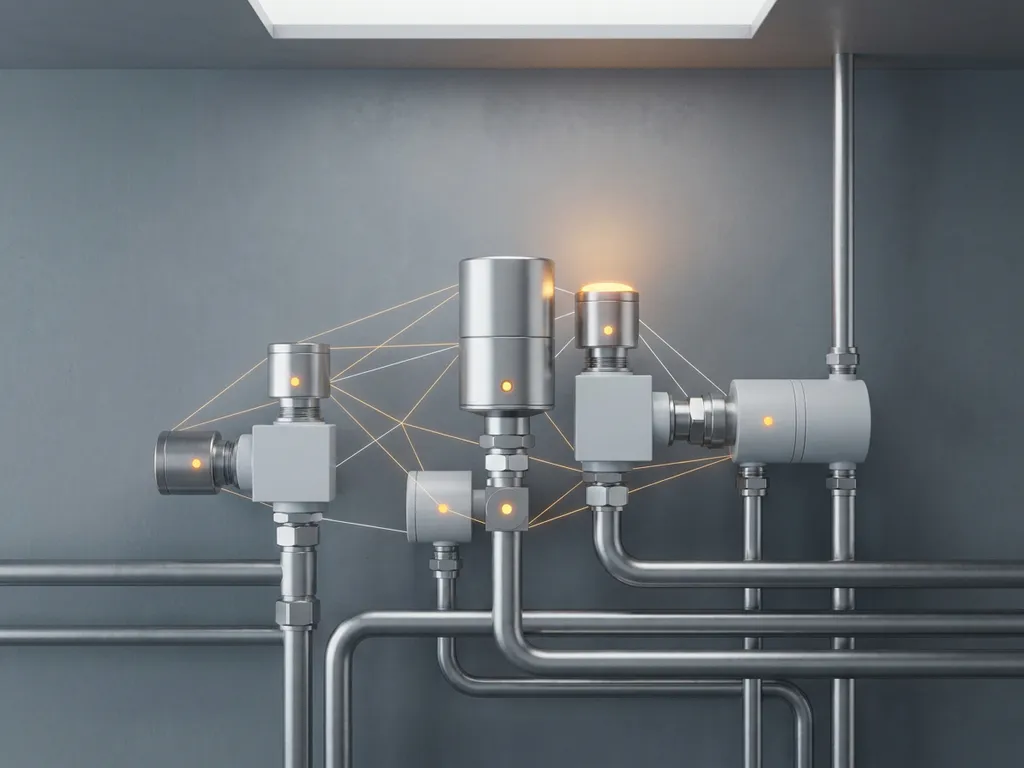
The core architectural difference is that a DCS distributes control intelligence across multiple controllers that communicate over a dedicated process network, while a PLC centralizes logic in a single programmable unit. A DCS is built from the ground up as an integrated system, where controllers, I/O modules, a historian, and the operator interface all share a unified architecture. A PLC, by contrast, is a standalone device that requires additional software, hardware, and integration effort to achieve similar system-wide coordination.
In a DCS, controllers are physically distributed close to the process equipment they manage. This reduces wiring runs, improves fault tolerance, and allows sections of the plant to continue operating even if one controller experiences a problem. Communication between these distributed nodes happens over a proprietary or standardized process bus designed specifically for deterministic, real-time data exchange.
A PLC system typically uses a scan-based execution model, running through its ladder logic sequentially at very high speed. This makes PLCs excellent at reacting to discrete events in milliseconds. However, coordinating multiple PLCs across a plant requires additional SCADA software, networking infrastructure, and careful integration work that a DCS provides natively.
Which industries typically use a DCS versus a PLC?
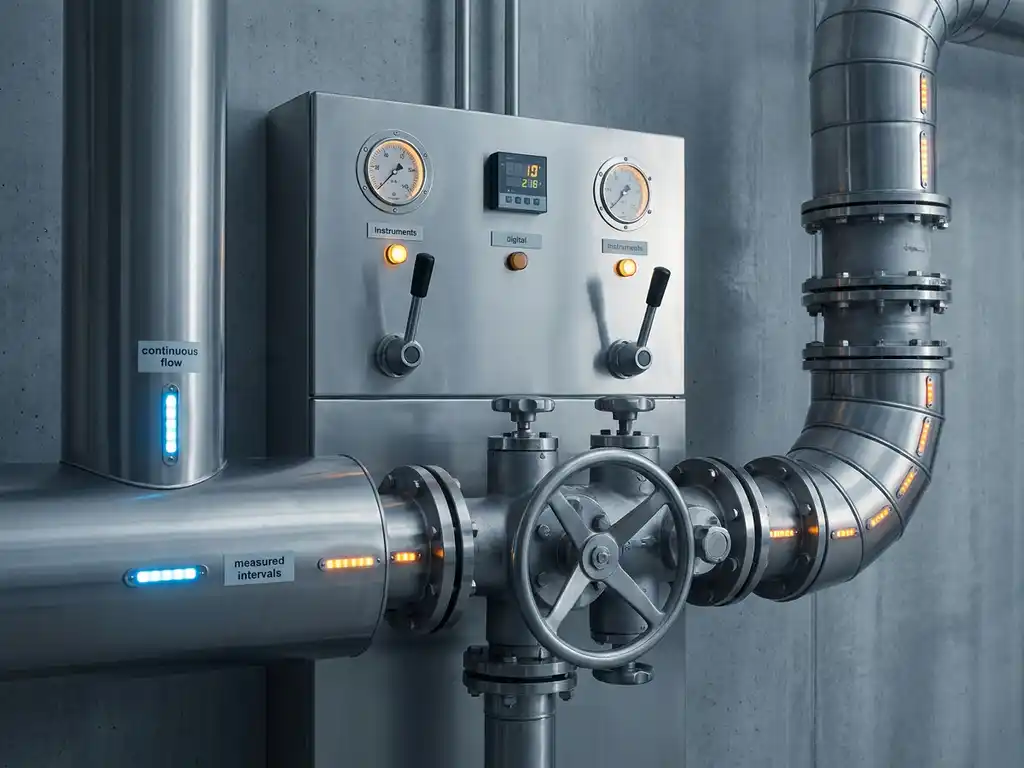
A DCS is the dominant choice in industries with continuous processes, such as chemical manufacturing, oil and gas refining, petrochemicals, pharmaceuticals, and power generation. A PLC is the standard in industries with discrete manufacturing, such as automotive assembly, packaging, material handling, and machine tool operations. The nature of the process, whether it flows continuously or moves in distinct steps, is the primary driver of this split.
In chemical plants and refineries, operators manage thousands of control loops simultaneously. Temperature, pressure, flow, and level must be maintained within tight tolerances around the clock. A DCS handles this naturally because it was engineered for exactly that environment. The integrated alarm management, batch control, and process historian built into platforms like Siemens PCS 7 reflect decades of refinement for continuous process industries.
PLCs thrive where the task is sequencing discrete actions: open a valve, start a conveyor, detect a part, stop a motor. These operations are fast, binary, and often independent of broader plant-wide conditions. A PLC executes this logic with low latency and high reliability, making it ideal for machine-level control where speed and simplicity matter more than system-wide integration.
How do DCS and PLC systems handle scalability and integration?
A DCS scales naturally by adding controllers, I/O stations, and operator workstations within its existing architecture, often without redesigning the control strategy. A PLC system scales by adding more PLCs, which then requires additional integration effort to maintain coordinated control. For large, complex facilities, a DCS offers a more manageable growth path because scalability is built into the platform from the start.
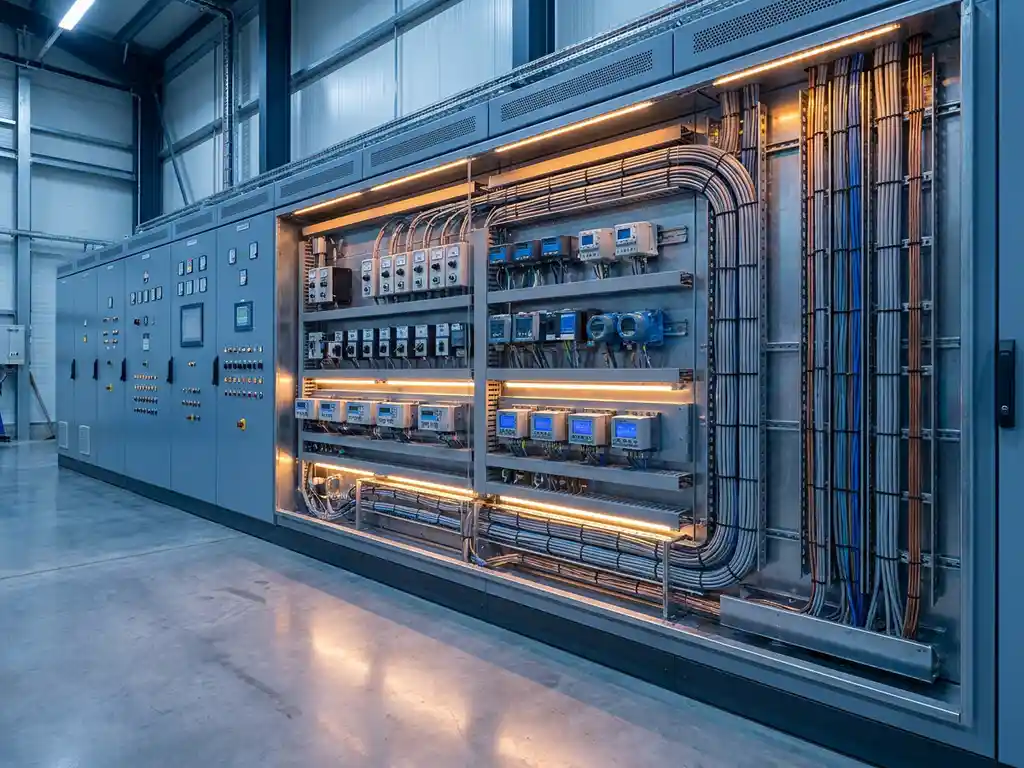
Integration is another area where the two approaches diverge significantly. A DCS typically includes native support for process historians, advanced process control, batch management, and safety systems within a single engineering environment. This means engineers configure, document, and maintain the entire control system in one place.
PLC-based systems often rely on third-party SCADA platforms, separate historians, and custom communication drivers to achieve the same level of integration. This is not inherently a weakness, but it does introduce more complexity in system maintenance, version management, and long-term support. For facilities that need tight integration between control, safety, and energy management, the unified architecture of a DCS is a meaningful advantage.
When should a plant choose a DCS over a PLC?
A plant should choose a DCS when the process is continuous, involves a large number of control loops, requires integrated alarm management and process historian capabilities, or demands high availability with redundant control paths. If the facility manages hundreds or thousands of I/O points across a wide geographic footprint, a DCS is almost always the more appropriate foundation.
Key indicators that point toward a DCS include:
- Continuous process operations running 24 hours a day, 7 days a week
- More than a few hundred control loops requiring coordinated regulation
- Regulatory requirements for process data logging, audit trails, or batch records
- Functional safety requirements integrated into the control architecture
- A need for centralized operator oversight across multiple process units
- Long asset lifecycles where platform consistency and vendor support matter
A PLC makes more sense when the application is machine-level, the logic is primarily sequential or discrete, the number of I/O points is manageable, and fast cycle times are critical. Choosing a DCS for a simple packaging line, or a PLC for a large refinery, would both be mismatches that create unnecessary cost and complexity.
Can a DCS and PLC work together in the same facility?
Yes, a DCS and PLC can work together in the same facility, and this is a common configuration in modern industrial plants. The DCS typically handles plant-wide continuous process control, while PLCs manage specific machine-level or discrete automation tasks. Communication between the two systems is achieved through standard industrial protocols such as PROFIBUS, PROFINET, or OPC UA.
A practical example is a food and beverage plant where the DCS controls fermentation, pasteurization, and blending processes, while PLCs run individual filling machines and conveyors. The DCS can receive status signals and production data from the PLCs, giving operators a unified view of the entire facility without requiring every piece of equipment to be on the same control platform.
The key to making this hybrid architecture work is thoughtful integration design. Engineers need to define clear boundaries between what each system controls, establish reliable communication links, and ensure that operators have consistent alarm and data visibility regardless of which underlying system generated the information. When those boundaries are well defined, a combined DCS and PLC environment delivers the strengths of both technologies without the limitations of either.
How CoNet helps with DCS selection and implementation
Choosing between a DCS and a PLC, or designing a hybrid architecture that uses both, is a decision with long-term consequences for operational performance, maintenance costs, and scalability. At CoNet, we help process industries navigate exactly these decisions, bringing deep expertise in Siemens PCS 7 and a clear understanding of what each technology does best.
Working with us, you get:
- Technology assessment: We evaluate your process requirements, I/O count, safety needs, and growth plans to recommend the right control architecture for your specific situation
- DCS engineering and configuration: As a certified Siemens PCS 7 Specialist Partner, we design, configure, and commission DCS systems that are built to perform reliably over decades
- PLC and DCS integration: We engineer communication layers between DCS and PLC systems so that hybrid architectures deliver consistent, plant-wide visibility
- Process safety expertise: As the only organization in the Netherlands certified as a Siemens PCS 7 Process Safety Specialist, we integrate safety functions directly into your control strategy
- Ongoing support and optimization: From maintenance contracts to process improvement projects, we remain a long-term partner beyond the initial implementation
If you are evaluating a new control system, planning an upgrade, or simply want an expert perspective on your current architecture, we would be glad to help. Get in touch with our team to discuss your process control challenges and find out how we can support your next project.
Frequently Asked Questions
How much more expensive is a DCS compared to a PLC system?
A DCS typically carries a higher upfront cost than a PLC-based system, often significantly so, because you are purchasing an integrated platform that includes engineering software, operator workstations, process historians, and redundancy features out of the box. However, total cost of ownership over a 20–30 year asset lifecycle can favor a DCS in complex facilities, since the integration, maintenance, and engineering effort required to achieve equivalent functionality with a PLC and SCADA combination can close much of that gap. The right comparison is not unit price but the full cost of delivering the required functionality reliably over the system’s operational life.
What are the most common mistakes engineers make when choosing between a DCS and a PLC?
The most frequent mistake is selecting based on familiarity or upfront cost rather than process requirements. Teams with a strong PLC background sometimes underestimate the integration complexity of scaling a PLC-based system to handle hundreds of control loops, while teams familiar with DCS platforms can over-engineer simple machine-level applications where a PLC would be faster and more cost-effective. A second common error is failing to account for future scalability — choosing a PLC system for a plant that is expected to expand significantly often leads to expensive rework within a few years.
How long does it typically take to implement a DCS for a mid-sized process plant?
For a mid-sized process plant with several hundred to a few thousand I/O points, a full DCS implementation — covering design, engineering, factory acceptance testing, installation, and commissioning — typically takes between 12 and 24 months. The timeline depends heavily on the complexity of the process, the availability of detailed Pu0026IDs, the readiness of the site infrastructure, and whether the project involves a greenfield installation or a migration from a legacy system. Early engagement with your DCS integrator during the design phase is one of the most effective ways to compress the schedule and reduce commissioning surprises.
Can an existing PLC-based system be migrated to a DCS, and how disruptive is that process?
Yes, migrating from a PLC-based system to a DCS is a well-established project type, and platforms like Siemens PCS 7 are specifically designed to support phased migrations that minimize production downtime. The typical approach is to migrate one process unit or section at a time, running the new DCS in parallel with the legacy system until each section is validated and handed over. The most disruptive element is usually the I/O rewiring and control logic translation, which is why thorough upfront documentation of the existing system is critical before any migration project begins.
What communication protocols are most commonly used to connect a DCS and PLC in a hybrid architecture?
OPC UA is increasingly the preferred protocol for DCS-to-PLC communication in modern hybrid architectures because it is vendor-neutral, secure, and supports both data exchange and contextual information modeling. PROFIBUS DP and PROFINET remain widely used in Siemens-centric environments, particularly where the PLC is a Siemens S7 series device integrating with a PCS 7 DCS. The choice of protocol should be driven by the required data throughput, the latency tolerance of the application, and the native capabilities of both the DCS and PLC platforms involved.
How are functional safety requirements handled differently in a DCS versus a PLC setup?
Both DCS and PLC platforms offer safety-certified options, but a DCS typically provides tighter native integration between the basic process control system and the safety instrumented system (SIS). In a DCS environment like Siemens PCS 7 with its integrated safety layer, engineers configure and manage both standard control and safety functions within a single engineering framework, which simplifies validation, change management, and auditing. PLC-based safety systems (such as Siemens SIMATIC Safety) are fully capable of meeting IEC 61511 requirements but generally require more deliberate effort to maintain a clear separation of safety and non-safety logic and to align documentation across separate platforms.
What should a plant operator expect during the transition period after a new DCS goes live?
Operators should expect a learning curve in the first weeks after go-live, particularly around navigating the new operator interface, interpreting alarm structures, and building confidence in the new system’s behavior compared to what they were used to. Structured operator training before commissioning, combined with experienced DCS engineers on-site during the initial live period, significantly reduces this adjustment time. It is also normal to see a temporary increase in alarm activity immediately after cutover as alarm limits and priorities are fine-tuned to match actual process behavior — this is a standard part of the commissioning and optimization phase rather than a sign of system problems.