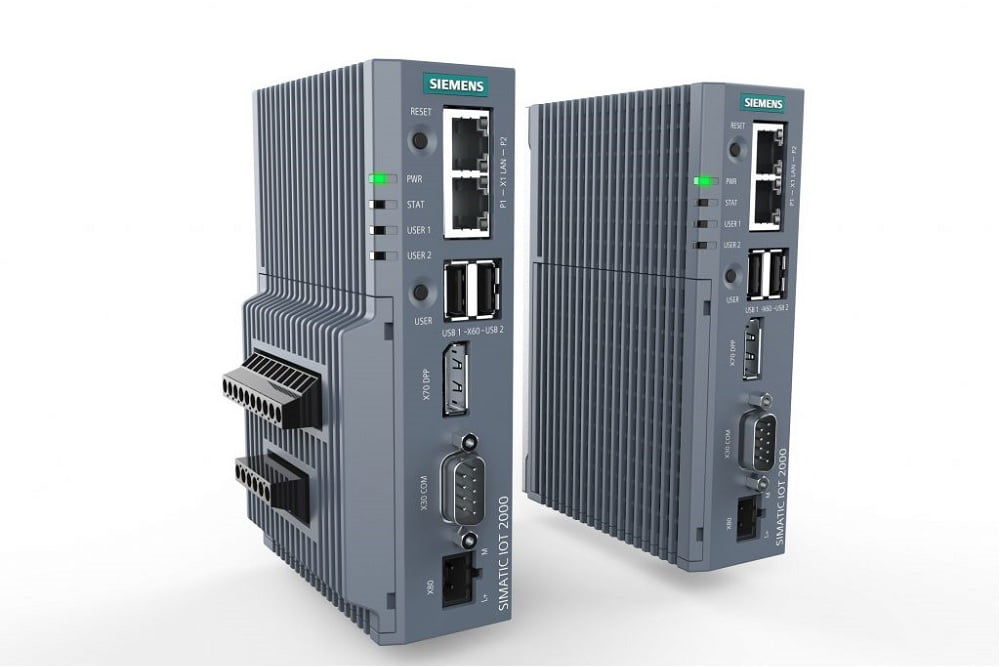

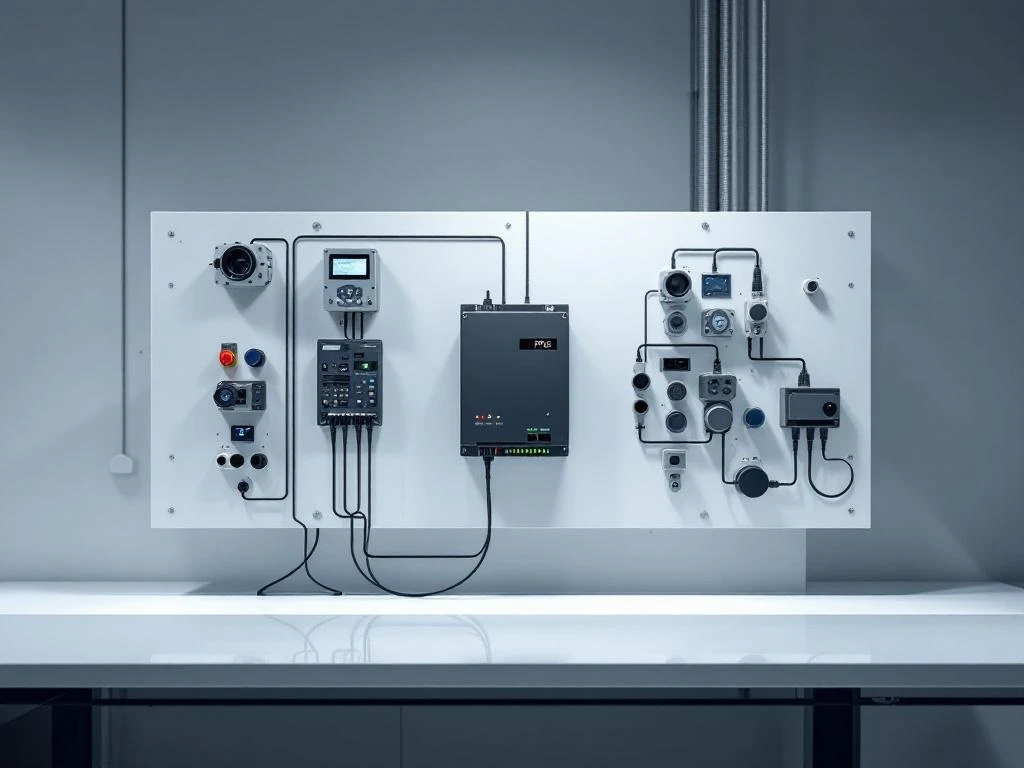
PLC stands for Programmable Logic Controller, a digital computer system designed to control industrial machinery and processes automatically. These robust devices replaced traditional relay-based control systems in manufacturing, offering greater flexibility, reliability, and precision. PLCs monitor inputs from sensors, execute programmed logic, and control outputs such as motors, valves, and lights across diverse industries, including chemical processing, food production, and energy generation.
What does PLC actually stand for and why does it matter?
PLC stands for Programmable Logic Controller, where each word defines a crucial aspect of its functionality. “Programmable” means the device can be reprogrammed for different tasks without hardware changes. “Logic” refers to the decision-making capabilities based on input conditions. “Controller” indicates its role in managing industrial processes and equipment.
PLCs became essential because they replaced complex relay-based control panels that were difficult to modify and maintain. Traditional relay systems required physical rewiring for any logic changes, making them inflexible and prone to mechanical failures. PLCs eliminated these limitations by storing control logic in software, allowing engineers to modify operations through programming rather than rewiring.
The significance extends beyond simple replacement. PLCs brought standardisation to industrial automation, enabling consistent programming approaches across different manufacturers and applications. They also introduced diagnostic capabilities, allowing operators to identify faults quickly and reduce downtime. This transformation made industrial automation more accessible to smaller facilities while providing enterprise-level capabilities for complex manufacturing operations.
How does a programmable logic controller actually work in industrial settings?
A PLC operates through a continuous three-step cycle: input scanning, program execution, and output updating. During input scanning, the PLC reads signals from sensors, switches, and other field devices. Program execution processes this input data according to the programmed logic. Output updating sends control signals to actuators, motors, valves, and indicators.
This cycle typically completes in milliseconds, ensuring real-time control of industrial processes. The PLC’s processor executes the user program sequentially, evaluating each instruction and updating internal memory locations called registers or tags. These memory locations store current values for process variables, setpoints, and system status information.
In chemical processing facilities, PLCs monitor temperature sensors and pressure transmitters, then adjust valve positions and pump speeds to maintain optimal conditions. Food and beverage operations use PLCs to control mixing sequences, temperature profiles, and packaging line coordination. Energy-sector applications include monitoring generator parameters and controlling distribution equipment. The modular design allows facilities to expand their systems by adding input/output modules without replacing the entire controller.
What’s the difference between PLCs and other industrial control systems?
PLCs differ from other control systems in their architecture, application focus, and operational characteristics. Distributed Control Systems (DCS) are designed for continuous process control with extensive operator interfaces and advanced control algorithms. PLCs excel at discrete manufacturing and sequential control applications with simpler programming requirements.
SCADA (Supervisory Control and Data Acquisition) systems focus on data collection, visualisation, and remote monitoring across multiple locations. They typically work alongside PLCs, which handle local control, while SCADA provides supervisory oversight and historical data analysis. Traditional relay controls use electromechanical components for simple on/off logic but lack programmability and diagnostic capabilities.
The choice between systems depends on application requirements. PLCs suit manufacturing environments with discrete operations, moderate I/O counts, and standard control requirements. DCS systems are appropriate for continuous processes requiring advanced control strategies, extensive operator graphics, and integrated safety systems. SCADA complements both by providing enterprise-level monitoring and data management capabilities across multiple sites or processes.
Why are PLCs considered essential for modern manufacturing automation?
PLCs are essential because they provide flexibility, reliability, and cost-effectiveness that modern manufacturing demands. Their programmable nature allows rapid reconfiguration for different products or process changes without hardware modifications. This adaptability is crucial in today’s manufacturing environment, where product lifecycles are shorter and customisation requirements are increasing.
Reliability stems from their industrial-grade construction and solid-state operation. PLCs withstand harsh environmental conditions, including temperature extremes, electrical noise, and vibration that would disable standard computers. Their mean time between failures often exceeds 100,000 hours, making them suitable for critical applications where downtime costs are substantial.
Integration capabilities make PLCs valuable for connecting legacy equipment with modern systems. They communicate with Manufacturing Execution Systems (MES), Enterprise Resource Planning (ERP) systems, and various fieldbus networks. This connectivity enables data-driven decision-making and supports Industry 4.0 initiatives. In the chemical, food and beverage, and energy sectors, PLCs facilitate regulatory compliance through precise control and comprehensive data-logging capabilities essential for audit trails and quality assurance.
What should you consider when choosing a PLC system for your facility?
PLC selection requires evaluating I/O requirements, programming languages, communication protocols, and scalability needs. Begin by counting digital and analogue inputs and outputs, including 20–30% spare capacity for future expansion. Consider signal types, voltage levels, and any special requirements such as high-speed counting or motion-control capabilities.
Programming-language support affects long-term maintainability. Standard languages include Ladder Logic (familiar to electricians), Structured Text (similar to computer programming), and Function Block Diagram (graphical programming). Choose systems that support multiple languages to accommodate different skill levels within your maintenance team.
Communication requirements determine network compatibility and integration possibilities. Modern PLCs should support Ethernet-based protocols for connection to MES, SCADA systems, and enterprise networks. Consider fieldbus requirements for connecting intelligent devices such as variable-frequency drives and smart transmitters.
Scalability planning ensures the system grows with your needs. Modular systems allow adding I/O modules, communication cards, and processing power without major infrastructure changes. Evaluate the manufacturer’s product roadmap and support commitment to ensure long-term availability of spare parts and technical assistance. We specialise in helping facilities evaluate these requirements and implement scalable process-automation solutions that optimise production efficiency while maintaining flexibility for future growth.