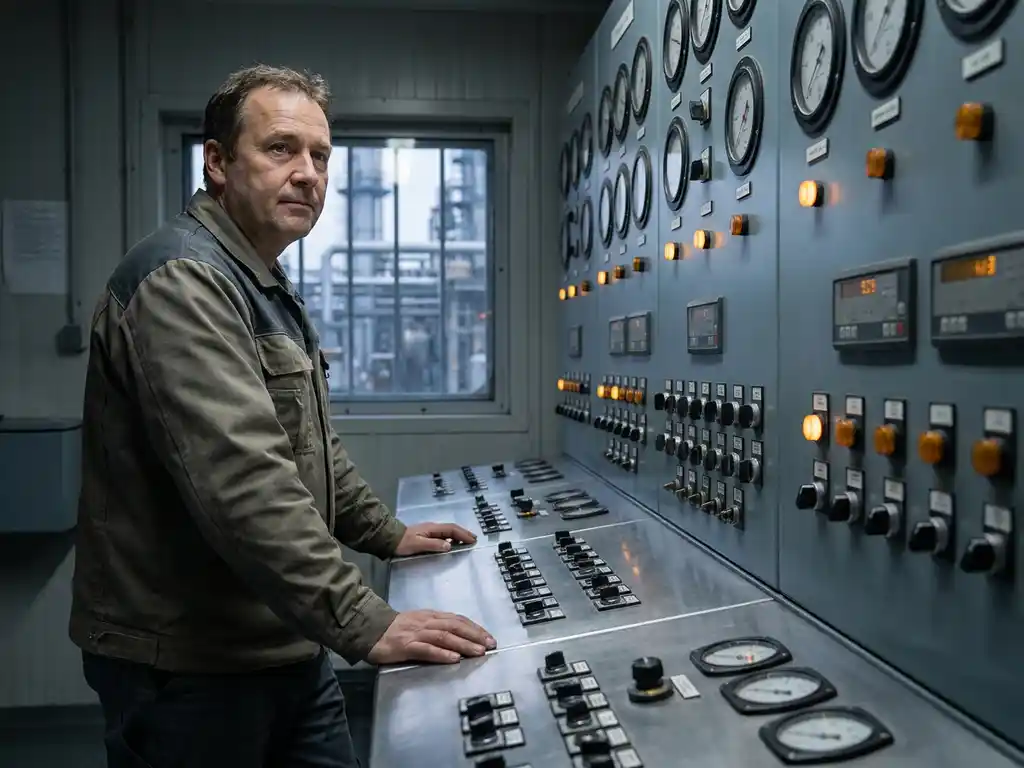

Industrial automation relies on several programming languages, each designed for specific control system functions. Ladder logic remains the most widely used language for PLC programming, while structured text and function block diagrams handle complex logic. Modern systems increasingly incorporate high-level languages like Python and C++ for advanced data processing and system integration.
What programming languages are most commonly used in industrial automation?
Five primary programming languages dominate industrial automation: ladder logic, structured text, function block diagram, sequential function charts, and instruction list. These languages form the IEC 61131-3 standard that governs PLC programming worldwide.
Ladder logic leads adoption rates across manufacturing industries because of its visual similarity to electrical relay circuits. Plant managers and technicians can easily understand and troubleshoot ladder logic programs without extensive programming backgrounds. This accessibility makes it the preferred choice for basic control functions like motor starts, conveyor systems, and safety interlocks.
Structured text handles mathematical calculations and complex algorithms that would be cumbersome in ladder logic. Food and beverage industries frequently use structured text for recipe management and batch processing controls. Function block diagrams excel at process control applications, particularly in chemical plants where continuous control loops manage temperature, pressure, and flow rates.
High-level programming languages like Python and C++ are gaining ground in industrial automation. Python particularly shines in data analysis, predictive maintenance algorithms, and integration with enterprise systems. C++ provides the performance needed for real-time control applications and complex motion control systems.
How does ladder logic programming work in automation systems?
Ladder logic uses graphical symbols that represent electrical contacts and coils, arranged in horizontal rungs between two vertical power rails. The program executes from left to right, top to bottom, mimicking the flow of electricity through traditional relay circuits.
The fundamental symbols include normally open contacts, normally closed contacts, and output coils. When input conditions on the left side of a rung are true, power flows to activate the output on the right side. This visual approach allows maintenance technicians to trace program logic just like reading electrical schematics.
Scan cycle operation defines how PLCs execute ladder logic programs. The controller reads all inputs, processes the ladder logic program, updates outputs, and repeats this cycle continuously. Typical scan times range from microseconds to milliseconds, depending on program complexity and hardware capabilities.
Advanced ladder logic incorporates timers, counters, and comparison instructions for sophisticated control strategies. These elements handle delayed actions, count production pieces, and compare process values against setpoints. Modern ladder logic editors provide simulation capabilities, allowing engineers to test programs before deploying them to live systems.
What’s the difference between PLC and SCADA programming languages?
PLC programming uses the five IEC 61131-3 languages for direct machine control, while SCADA systems typically use high-level languages like C#, Visual Basic, or web technologies for human-machine interfaces and data visualization.
PLCs execute real-time control logic with deterministic timing requirements. The programming focuses on immediate responses to input changes, safety functions, and precise control of actuators and motors. Ladder logic and structured text handle these millisecond-critical operations effectively.
SCADA programming emphasizes data collection, trending, alarming, and operator interfaces. These systems use database connectivity, web services, and graphics libraries that require more sophisticated programming environments. Languages like Python, JavaScript, and SQL become essential for modern SCADA development.
Integration complexity differs significantly between the two approaches. PLC programs typically communicate through industrial protocols like Modbus, EtherNet/IP, or PROFINET. SCADA systems must interface with multiple PLCs, databases, enterprise systems, and web services, requiring broader programming knowledge and system integration skills.
Which programming languages should automation engineers learn first?
Begin with ladder logic as your foundation, then progress to structured text for complex calculations. These two languages handle the majority of industrial control applications and provide essential understanding of PLC operating principles.
Ladder logic offers the gentlest learning curve because its visual nature matches electrical control concepts familiar to most engineers. Master basic contacts, coils, timers, and counters before advancing to more complex instructions. This foundation applies across all major PLC brands, making your skills transferable.
Structured text becomes crucial when ladder logic becomes unwieldy for mathematical operations or complex decision-making. Learn structured text after gaining confidence with ladder logic basics. This progression mirrors how most industrial applications combine both languages within the same project.
Consider your career goals when prioritizing additional languages. Process industries benefit from function block diagram knowledge for continuous control applications. System integrators need familiarity with high-level languages like Python for data analysis and enterprise integration. Motion control specialists should explore C++ for high-performance applications.
How are modern programming languages changing industrial automation?
Python integration is revolutionizing industrial automation by bringing advanced data analytics, machine learning, and artificial intelligence capabilities directly to manufacturing systems. Modern automation platforms now support Python scripting alongside traditional PLC languages.
Web technologies are transforming human-machine interface development. HTML5, CSS, and JavaScript enable responsive, mobile-friendly operator interfaces that work across devices. This shift allows automation engineers to create modern, intuitive interfaces without specialized HMI software.
Object-oriented programming concepts are entering industrial automation through advanced PLC platforms. These approaches improve code reusability, maintenance, and team collaboration on large automation projects. Engineers can create standardized function blocks that work across multiple machines and facilities.
Industry 4.0 and IoT integration demand broader programming skills beyond traditional automation languages. RESTful APIs, JSON data handling, and cloud connectivity require knowledge of modern programming practices. Edge computing devices increasingly run containerized applications written in languages like Go, Node.js, and Python.
Cybersecurity concerns are driving adoption of secure coding practices borrowed from IT development. Version control systems, automated testing, and continuous integration workflows are becoming standard practice in industrial automation programming.
Hoe CoNet helpt bij industriële automatiseringsprogrammering
We specialize in Siemens programming languages and automation solutions, offering comprehensive support for industrial automation programming projects. Our expertise covers the complete spectrum from basic PLC programming to advanced system integration using modern programming approaches.
Our programming services include:
- PCS 7 process automation programming and optimization
- SIMATIC PLC programming using all IEC 61131-3 languages
- Advanced SCADA system development and integration
- Python scripting for data analysis and predictive maintenance
- Safety system programming with certified expertise
As the only certified PCS 7 Process Safety Specialist in the Netherlands, we ensure your automation programming meets the highest safety and reliability standards. Our team combines traditional automation expertise with modern programming capabilities to deliver future-ready solutions.
Ready to optimize your industrial automation programming? Contact our programming specialists to discuss how we can enhance your automation systems with expert programming solutions tailored to your specific requirements.