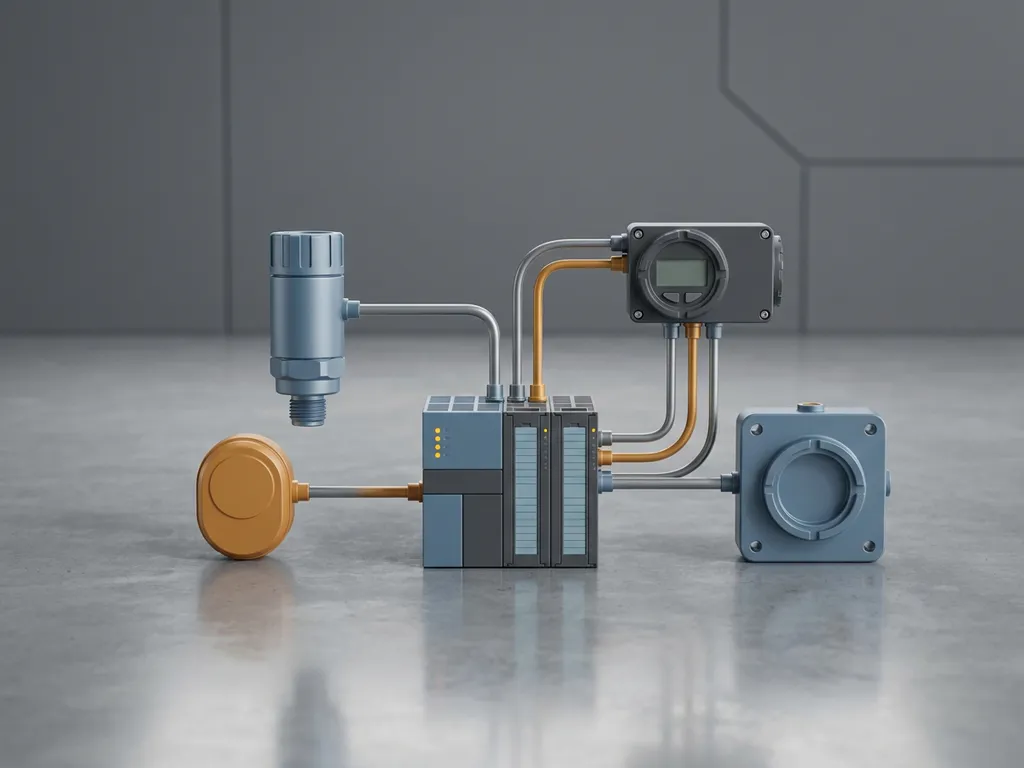


Industrial automation encompasses several distinct types of systems designed to control and monitor manufacturing processes with minimal human intervention. These systems range from simple programmable logic controllers to complex distributed control systems, each serving specific industrial needs. Process automation handles continuous operations like chemical processing, while discrete automation manages individual manufacturing steps, and hybrid systems combine both approaches for comprehensive facility control.
What is industrial automation and why is it essential for modern manufacturing?
Industrial automation uses control systems, computers, and information technologies to handle different processes and machinery in manufacturing facilities. It reduces human intervention while maintaining precise control over production operations, quality standards, and safety protocols.
Modern manufacturing relies on automation to achieve consistent product quality that manual processes cannot match. Automated systems operate continuously without fatigue, maintaining exact specifications and reducing variability in production outcomes. This consistency becomes crucial when dealing with complex chemical processes or precision manufacturing, where small deviations can result in significant quality issues.
Safety improvements represent another essential benefit of industrial automation. Automated systems can operate in hazardous environments, handle dangerous materials, and shut down processes immediately when safety parameters are exceeded. This protection extends to both personnel and equipment, preventing accidents that could result in injuries or costly facility damage.
Efficiency gains through automation allow manufacturers to optimize resource usage, reduce waste, and increase production speeds. Automated systems can coordinate multiple processes simultaneously, balance loads across equipment, and schedule maintenance during optimal windows to minimize downtime.
What are the main categories of industrial automation systems?
Process automation manages continuous manufacturing operations like chemical processing, oil refining, and power generation. These systems handle flowing materials through interconnected equipment while maintaining precise control over temperature, pressure, flow rates, and chemical composition.
Process automation systems excel in industries where materials undergo continuous transformation. They monitor multiple variables simultaneously and make real-time adjustments to maintain optimal operating conditions. The complexity of these systems allows for sophisticated control strategies that can predict and prevent process upsets before they occur.
Factory automation controls discrete manufacturing operations where individual products move through distinct production steps. This category includes assembly lines, packaging systems, and material handling equipment that work with separate items rather than continuous flows.
Factory automation focuses on coordinating sequential operations, managing inventory movement, and ensuring proper timing between production stages. These systems track individual products through manufacturing steps and can adapt to different product variations without manual reconfiguration.
Hybrid automation systems combine elements of both process and factory automation to handle complex manufacturing environments. Many modern facilities require both continuous process control and discrete manufacturing coordination, making hybrid systems increasingly common in diverse industries.
How do process control systems like DCS and SCADA work in industrial automation?
Distributed Control Systems (DCS) manage complex process operations through multiple interconnected controllers that work together as a unified system. Each controller handles specific process areas while sharing information with other controllers to coordinate overall facility operations.
DCS architecture distributes control functions across multiple processors, providing redundancy and improved reliability. If one controller experiences problems, other controllers can continue operating their assigned processes while backup systems take over critical functions. This distributed approach prevents single points of failure that could shut down entire facilities.
The operator interface in DCS systems provides comprehensive visibility into all process operations through graphical displays that show equipment status, process trends, and alarm conditions. Operators can monitor hundreds of process variables simultaneously and make adjustments from centralized control rooms.
SCADA (Supervisory Control and Data Acquisition) systems monitor and control processes across wide geographical areas, often connecting multiple facilities through communication networks. SCADA excels in applications like pipeline monitoring, power distribution, and water treatment, where equipment spans large distances.
SCADA systems collect data from remote terminal units and programmable logic controllers, then transmit this information to central control stations. Operators can monitor pipeline pressures, pump operations, and valve positions across hundreds of miles from a single control center.
What’s the difference between PLCs and other automation control systems?
Programmable Logic Controllers (PLCs) handle discrete input and output signals to control individual pieces of equipment or simple processes. They excel in applications requiring fast response times, reliable operation, and straightforward programming for repetitive tasks.
PLCs work best for controlling motors, valves, conveyor systems, and other equipment that operates in on/off or simple analog control modes. Their programming uses ladder logic that mirrors electrical relay circuits, making them familiar to maintenance technicians with electrical backgrounds.
The main difference between PLCs and DCS systems lies in their scope and complexity. PLCs typically control individual machines or small process areas, while DCS systems coordinate entire facilities with hundreds of control loops. PLCs use simpler programming languages and focus on reliability rather than advanced control strategies.
PLCs offer advantages in discrete manufacturing where quick response times and simple logic are more important than complex process control. They cost less than DCS systems and require less specialized training for programming and maintenance.
DCS systems provide better integration for complex process control with advanced features like predictive control, optimization algorithms, and sophisticated alarm management. They handle continuous processes more effectively but require higher initial investment and specialized expertise for implementation and maintenance.
Which industries benefit most from different types of automation systems?
Chemical processing industries rely heavily on DCS systems to manage complex reactions, maintain precise temperature and pressure control, and ensure safe handling of hazardous materials. These facilities require continuous monitoring of multiple process variables with sophisticated control strategies.
Oil and gas operations use both DCS and SCADA systems depending on the application. Refineries typically employ DCS for process control, while pipeline operations rely on SCADA for monitoring remote equipment across vast distances.
Food and beverage manufacturing often uses hybrid automation systems that combine process control for mixing and cooking operations with discrete control for packaging and material handling. These industries require flexibility to handle multiple product variations while maintaining strict quality and safety standards.
Pharmaceutical manufacturing demands the highest levels of automation sophistication due to regulatory requirements and quality standards. These facilities use advanced DCS systems with extensive data logging, batch tracking, and validation capabilities to ensure product safety and regulatory compliance.
Power generation facilities rely on DCS systems for boiler control, turbine operation, and emissions monitoring. These systems must respond rapidly to load changes while maintaining safe operating conditions and environmental compliance.
Hoe CoNet helpt bij industriële automatisering
CoNet specialises in Siemens automation solutions, particularly PCS 7 process automation systems that serve complex industrial applications. As certified PCS 7 Process Safety Specialists, we provide comprehensive support from initial system design through ongoing maintenance and optimization.
Our industrial automation services include:
- Complete PCS 7 system engineering and implementation
- SCADA and DCS integration for multi-site operations
- Process safety system design and validation
- 24/7 technical support and maintenance services
- System upgrades and modernisation projects
We serve the chemical processing, food and beverage, and energy sectors with tailored automation solutions that improve efficiency, safety, and regulatory compliance. Our single-brand Siemens strategy ensures seamless integration between different automation components and consistent support throughout your facility.
Ready to optimize your industrial processes with proven automation expertise? Contact our automation specialists to discuss your specific requirements and discover how advanced process control can transform your operations.