
A batch is a defined quantity of material that is processed together under the same conditions to produce a specific amount of product. In manufacturing, batch processing means producing goods in discrete groups rather than in a continuous, uninterrupted flow. Understanding how batches work is fundamental to process industries ranging from pharmaceuticals to food production, and it shapes how automation systems are designed and controlled.
The sections below unpack how batch processing works in practice, where it is used, how it differs from continuous production, and how batch control is handled in modern industrial automation environments.
How does batch processing actually work in manufacturing?
Batch processing works by grouping a fixed quantity of raw materials, processing them through a defined sequence of steps, and completing the production run before starting the next batch. Each batch follows a recipe that specifies ingredients, quantities, temperatures, durations, and process parameters. Once a batch is finished, the equipment may be cleaned, reconfigured, or simply reloaded before the next run begins.
The production sequence typically moves through several stages. Raw materials are measured and loaded into the process equipment. The batch then passes through one or more processing steps, such as mixing, heating, reacting, or fermenting. After processing, the batch is discharged, packaged, or transferred for further treatment. The result is a traceable, discrete unit of production with a clear start and end point.
Traceability is one of the defining characteristics of batch manufacturing. Because each batch is treated as a distinct production event, manufacturers can record exactly which raw materials were used, which equipment was involved, and what process conditions were applied. This makes it straightforward to investigate quality issues, recall specific lots, or demonstrate regulatory compliance.
What are common examples of batch production in industry?
Batch production is found across a wide range of industries wherever products need to be made in discrete quantities rather than in a continuous stream. Pharmaceuticals, food and beverage, specialty chemicals, paints and coatings, and brewing are among the most common sectors that rely on batch manufacturing.
Some concrete examples include:
- Pharmaceuticals: A batch of tablets or injectable solutions is produced using a validated recipe, then tested for quality before release. Regulatory frameworks such as GMP require full batch records.
- Food and beverage: A bakery produces a batch of dough, a brewery ferments a batch of wort, or a sauce manufacturer cooks a fixed volume of product in a jacketed vessel.
- Specialty chemicals: Resins, adhesives, and pigments are often produced in reaction vessels where ingredients are combined in a specific order and held at precise temperatures for a defined period.
- Paints and coatings: Colour formulations are mixed in batches to ensure consistency within a production run, with each batch tested before being approved for packaging.
What these examples share is the need for precise recipe execution, clear lot identification, and the ability to vary the product from one batch to the next without redesigning the entire production line.
What’s the difference between batch and continuous processing?
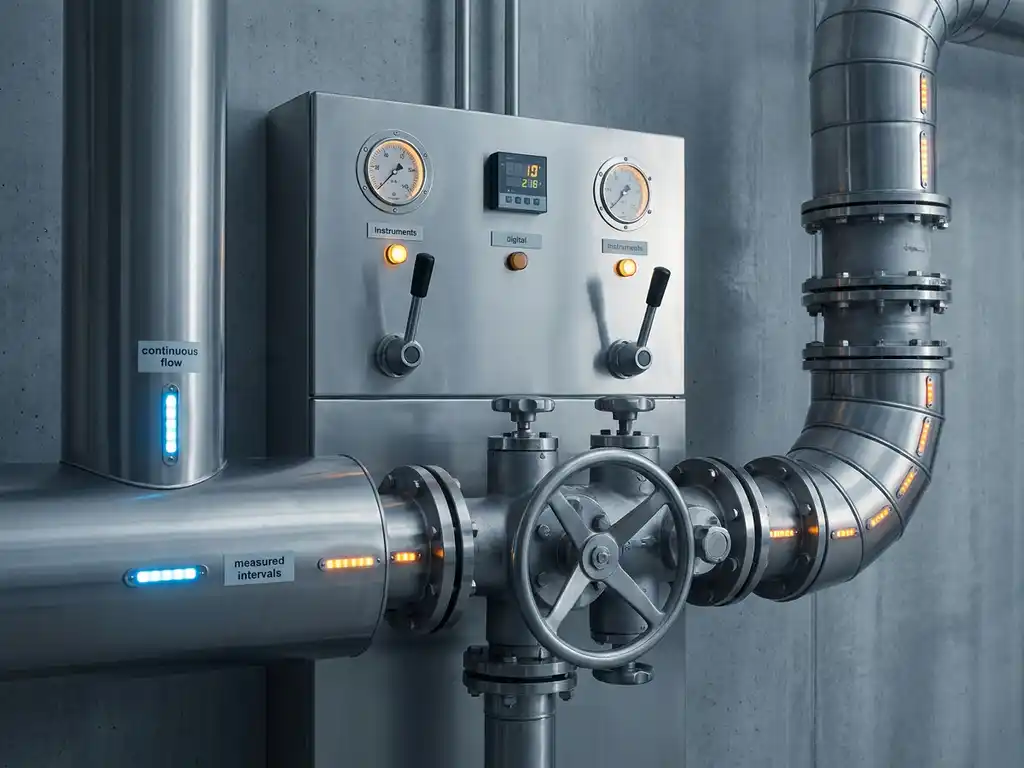
The key difference between batch and continuous processing is that batch production handles discrete, finite quantities of material with a defined start and end, while continuous processing moves material through the system without interruption for as long as the plant is running. In continuous production, there is no natural stopping point between individual units of output.
Continuous processing is well suited to high-volume, standardised products where the same material is produced at a steady rate around the clock. Oil refining, paper manufacturing, and bulk chemical production are classic examples. The process runs at steady state, and operators manage deviations from that state rather than executing a sequence of steps.
Batch processing, by contrast, is better suited to products that are made in smaller volumes, require different recipes, or need strict lot-level traceability. The trade-off is that batch production involves non-productive time between runs for cleaning, changeover, and setup, whereas continuous production avoids these interruptions.
A useful way to think about the distinction is this: in continuous processing, the process is always running and the product flows out; in batch processing, the process runs, stops, and runs again, with a discrete quantity of product produced each time.
Why do some processes use batch instead of continuous production?
Processes use batch production instead of continuous production when the product, volume, or regulatory environment makes a discrete approach more practical or necessary. The most common reasons are product variety, volume flexibility, traceability requirements, and the nature of the chemistry or biology involved.
Several factors drive the choice toward batch:
- Product variety: When a facility produces many different formulations using the same equipment, batch processing allows recipe changes between runs without rebuilding the production line.
- Low or variable volumes: Products with seasonal demand or limited market size often do not justify the capital investment of a continuous plant designed around a single throughput rate.
- Regulatory traceability: In pharmaceuticals and food production, regulators require lot-level records that link a specific quantity of product to the exact materials and conditions used. Batch production naturally generates this data.
- Reaction characteristics: Some chemical or biological reactions need time to reach completion and cannot be easily staged into a continuous flow without significant engineering complexity.
- Quality control: Holding a batch for testing before release gives manufacturers a checkpoint that is harder to implement in a continuous process without building in intermediate hold tanks.
How is batch control managed in industrial automation systems?
Batch control in industrial automation is managed using dedicated software and control architectures that execute recipes automatically, coordinate equipment, and record process data for each batch. The international standard ISA-88 (also known as S88) defines the models and terminology that most batch control systems follow, providing a common framework for recipe management, equipment control, and procedural logic.
In practice, a batch control system translates a product recipe into a sequence of instructions that the automation layer executes. The system manages the coordination between different pieces of equipment, monitors process variables against defined limits, handles exceptions and alarms, and generates a batch report at the end of each run. This automation reduces manual intervention, improves repeatability, and creates the audit trail that regulated industries require.
Modern batch control systems are typically integrated with process historians and enterprise systems so that batch data is available for quality analysis, yield tracking, and operational reporting. The connection between the batch control layer and higher-level data platforms is increasingly important as manufacturers look to use production data to drive continuous improvement.
How CoNet helps with batch control
At CoNet, we help process manufacturers design, implement, and optimise batch control solutions built on Siemens technology. As one of the world’s leading Siemens PCS 7 Specialist Partners, we bring deep expertise in the automation layer that sits at the heart of batch production. Whether you are implementing a new batch system from scratch, migrating from an older platform, or looking to improve the performance of an existing installation, we provide the engineering knowledge to get it right.
Our batch control and automation engineering services cover:
- Recipe engineering and ISA-88-compliant batch framework design within Siemens PCS 7
- Integration of batch control systems with process historians, MES, and ERP platforms
- Process data analysis and reporting through our Process IT team, including cloud connectivity via Azure and MindSphere IoT solutions
- Ongoing maintenance, support, and optimisation of batch automation systems
- Consultancy for industries including food and beverage, chemicals, and pharmaceuticals
If you are looking to improve your batch control setup or want to understand what a modern batch automation solution could do for your operation, get in touch with our team and we will be happy to discuss your specific situation.
Frequently Asked Questions
How do I know if my process is a good candidate for batch automation?
A process is typically a strong candidate for batch automation if it involves multiple recipes or formulations, requires strict lot-level traceability, or currently relies on manual steps that introduce variability between runs. Key indicators include frequent product changeovers, regulatory reporting obligations (such as GMP batch records), or recurring quality inconsistencies that are difficult to trace back to a specific production event. If your operators are manually recording process parameters or following paper-based procedures, automation is likely to deliver significant improvements in repeatability and compliance.
What is ISA-88 (S88) and why does it matter for batch manufacturing?
ISA-88, commonly referred to as S88, is an international standard that defines a structured model for batch control systems, covering equipment hierarchy, recipe structure, and procedural logic. It matters because it gives engineers, system integrators, and software vendors a common language and framework, making batch systems easier to design, validate, and maintain. Following S88 principles also makes it significantly easier to modify recipes or scale production without reworking the underlying control logic, which reduces both engineering time and the risk of introducing errors.
What are the most common mistakes manufacturers make when implementing a batch control system?
One of the most frequent mistakes is designing recipes that are too tightly coupled to specific equipment, which makes it difficult to run the same recipe on an alternative vessel or production line. Another common issue is underestimating the importance of exception handling — batch processes rarely run perfectly every time, and a system that cannot gracefully manage alarms, holds, or operator interventions will cause significant disruption. Finally, many implementations overlook the integration between the batch control layer and higher-level systems such as MES or ERP, which limits the ability to use batch data for yield analysis and continuous improvement.
Can batch control systems be integrated with existing ERP or MES platforms?
Yes, modern batch control systems are designed to integrate with ERP and MES platforms, and this connectivity is increasingly considered a standard requirement rather than an optional add-on. Integration typically allows production orders to flow down from the ERP into the batch system, while completed batch records, material consumption data, and quality results flow back up. The specific integration approach depends on the platforms involved, but standard communication protocols and middleware solutions make this achievable even when connecting newer batch systems to legacy enterprise software.
How long does it typically take to implement a batch control system?
The timeline for implementing a batch control system varies considerably depending on the complexity of the process, the number of recipes, the extent of equipment integration required, and whether the project involves a new installation or a migration from an existing platform. A straightforward implementation on a single vessel with a small number of recipes might take a few months, while a multi-unit facility with complex recipe structures and full MES integration could take a year or more. Engaging an experienced system integrator early in the project — particularly one familiar with the relevant industry standards and regulatory requirements — is one of the most effective ways to keep the project on schedule.
How does batch control support regulatory compliance in industries like pharmaceuticals or food production?
Batch control systems support regulatory compliance by automatically generating a complete electronic batch record for every production run, capturing process parameters, operator actions, alarm events, and material usage against the defined recipe. This audit trail is essential for demonstrating compliance with frameworks such as GMP (Good Manufacturing Practice) and for responding to regulatory inspections or customer audits. Automated records are also significantly more reliable than paper-based alternatives because they remove the risk of transcription errors and ensure that data is captured in real time rather than retrospectively.
Is it possible to migrate from an older batch control platform to a modern system without disrupting production?
Migration from a legacy batch platform is entirely possible and is a project that many process manufacturers undertake as older systems approach end-of-life or become difficult to support. The key to minimising production disruption is thorough upfront planning, including a detailed audit of existing recipes, equipment interfaces, and any custom logic built into the legacy system. Phased migration approaches — where new and old systems run in parallel during a transition period — are commonly used to reduce risk. Working with a specialist integrator who has experience in both the legacy platform and the target system is critical to ensuring that validated recipes and historical batch data are preserved through the transition.