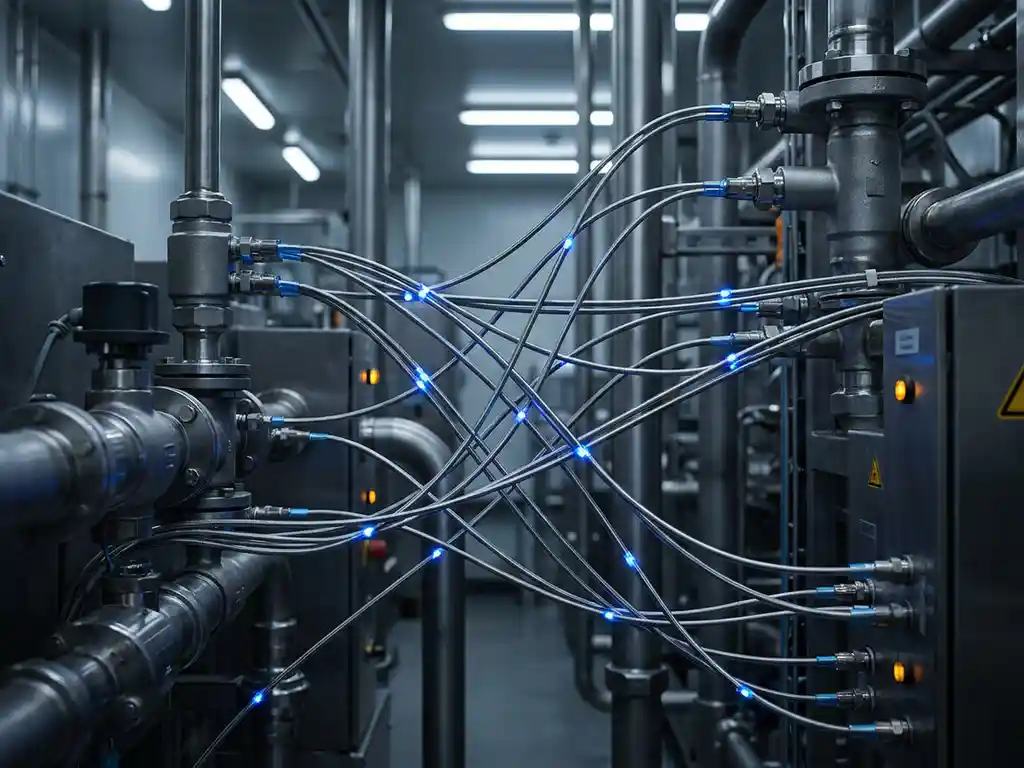


PLC integration with MES systems creates a seamless bridge between shop floor operations and manufacturing execution management. PLCs collect real-time production data and send it to MES platforms through standardised communication protocols such as OPC UA, enabling coordinated process control and production tracking. This integration optimises manufacturing efficiency by connecting field-level automation with enterprise-level planning and monitoring systems.
What is the relationship between PLCs and MES systems in industrial automation?
PLCs and MES systems form a hierarchical partnership in which PLCs handle real-time process control while MES manages production execution and workflow coordination. PLCs operate at the field level, directly controlling machinery, sensors, and actuators with millisecond response times. MES systems function at the manufacturing operations level, orchestrating production schedules, tracking materials, and monitoring quality metrics.
This relationship follows the automation pyramid structure. PLCs sit at the control layer, making immediate decisions about process variables such as temperature, pressure, and flow rates. The MES occupies the manufacturing operations management layer, focusing on production orders, resource allocation, and performance analysis. Together, they bridge the gap between physical processes and business systems.
The integration enables bidirectional communication, with PLCs reporting current production status, alarm conditions, and process data to the MES. In return, the MES sends production recipes, setpoints, and operational commands back to the PLCs. This coordination ensures that manufacturing operations align with business objectives while maintaining precise process control.
Modern industrial environments require this integration for competitive manufacturing. Without it, production data remains isolated in individual control systems, preventing optimised scheduling, quality tracking, and performance improvement initiatives.
How do PLCs communicate with MES systems in real time?
PLCs communicate with MES systems through industrial communication protocols, with OPC UA being the most widely adopted standard for modern installations. OPC UA provides secure, platform-independent data exchange that handles complex data structures and maintains real-time performance. Legacy systems often use OPC Classic, Modbus, or EtherNet/IP protocols, depending on equipment capabilities.
Real-time communication occurs through two primary methods: polling and event-driven data exchange. Polling involves the MES regularly requesting data from PLCs at predetermined intervals, typically every few seconds. Event-driven communication triggers data transmission when specific conditions occur, such as production milestones, alarm states, or quality measurements.
The data flow encompasses production variables, equipment status, alarm information, and operational parameters. PLCs package this information into standardised data formats that MES systems can interpret and store. Communication speeds vary by protocol, with Ethernet-based solutions providing faster data transfer than serial communication methods.
Network infrastructure plays a crucial role in maintaining reliable communication. Industrial Ethernet networks, often segregated from corporate networks, carry PLC–MES traffic. Redundant communication paths and network monitoring ensure continuous data flow even during equipment maintenance or network issues.
What are the main challenges when integrating PLCs with MES platforms?
Protocol compatibility represents the primary challenge, especially when connecting legacy PLCs with modern MES platforms. Older PLCs may support only proprietary or outdated communication protocols, requiring protocol converters or gateway devices. Data format mismatches occur when PLC data structures do not align with MES database schemas, necessitating complex data mapping and transformation.
Network security concerns arise when connecting manufacturing systems to enterprise networks. Industrial control systems traditionally operated in isolation, but MES integration creates potential cybersecurity vulnerabilities. Implementing proper network segmentation, firewalls, and access controls becomes essential, without compromising real-time performance.
Time synchronisation poses another significant challenge. PLCs operate on deterministic schedules measured in milliseconds, whereas MES systems work with longer time horizons for production planning. Coordinating these different temporal requirements while maintaining system responsiveness requires careful architectural planning.
Scalability limitations emerge as manufacturing operations expand. Adding new PLCs, production lines, or process areas can overwhelm existing communication infrastructure. The integration architecture must accommodate growth without requiring complete system redesigns.
Legacy system integration difficulties compound these challenges. Existing PLCs may lack sufficient processing power or memory to handle modern communication protocols, forcing organisations to balance upgrade costs against integration benefits.
Which integration architecture works best for PLC–MES connectivity?
The optimal integration architecture depends on system complexity, security requirements, and scalability needs. Direct PLC–MES connections work well for smaller installations with modern equipment that supports standard protocols. This approach minimises complexity and reduces potential failure points but may lack the flexibility needed for larger operations.
SCADA middleware solutions provide an intermediate layer that aggregates data from multiple PLCs before sending it to the MES. This architecture offers better data management, protocol translation capabilities, and centralised alarm handling. SCADA systems excel at managing diverse PLC types and communication protocols while providing operator interfaces for process monitoring.
Modern IoT gateway architectures represent the most flexible approach for complex manufacturing environments. These gateways handle protocol conversion, data preprocessing, and edge computing functions. They can buffer data during network outages, perform local analytics, and provide secure communication channels to cloud-based MES platforms.
Hybrid architectures combine elements from different approaches based on specific requirements. Critical production areas might use direct connections for maximum reliability, whereas auxiliary systems connect through gateways for cost efficiency. The key is to match architecture complexity to operational needs without over-engineering the solution.
We recommend evaluating current infrastructure, future expansion plans, and security requirements before selecting an architecture. The chosen approach should support both immediate integration needs and long-term manufacturing digitalisation goals.
How do you ensure data quality and security in PLC–MES integration?
Data quality assurance begins with proper data validation techniques at multiple integration points. PLCs should validate sensor inputs before transmission, checking for reasonable value ranges and signal integrity. MES systems must verify received data against expected parameters and flag anomalies for investigation. Implementing data timestamps and sequence numbers helps identify communication delays or missing information.
Cybersecurity measures require a layered defence approach. Network segmentation isolates manufacturing systems from corporate networks using industrial firewalls and demilitarised zones. Encryption protocols protect data in transit, while access controls limit system interaction to authorised personnel and applications. Regular security updates and vulnerability assessments maintain protection against evolving threats.
Monitoring systems continuously track communication health, data quality metrics, and security events. These systems alert operators to communication failures, unusual data patterns, or potential security breaches. Automated backup and recovery procedures ensure rapid restoration of normal operations following system disruptions.
Data integrity verification includes checksums, digital signatures, and redundant data paths where critical processes require maximum reliability. Regular system audits verify that integration components function correctly and that security measures remain effective.
Establishing clear data governance policies ensures consistent data handling across all integration points. These policies define data ownership, retention periods, and access rights while ensuring compliance with industry regulations and quality standards.