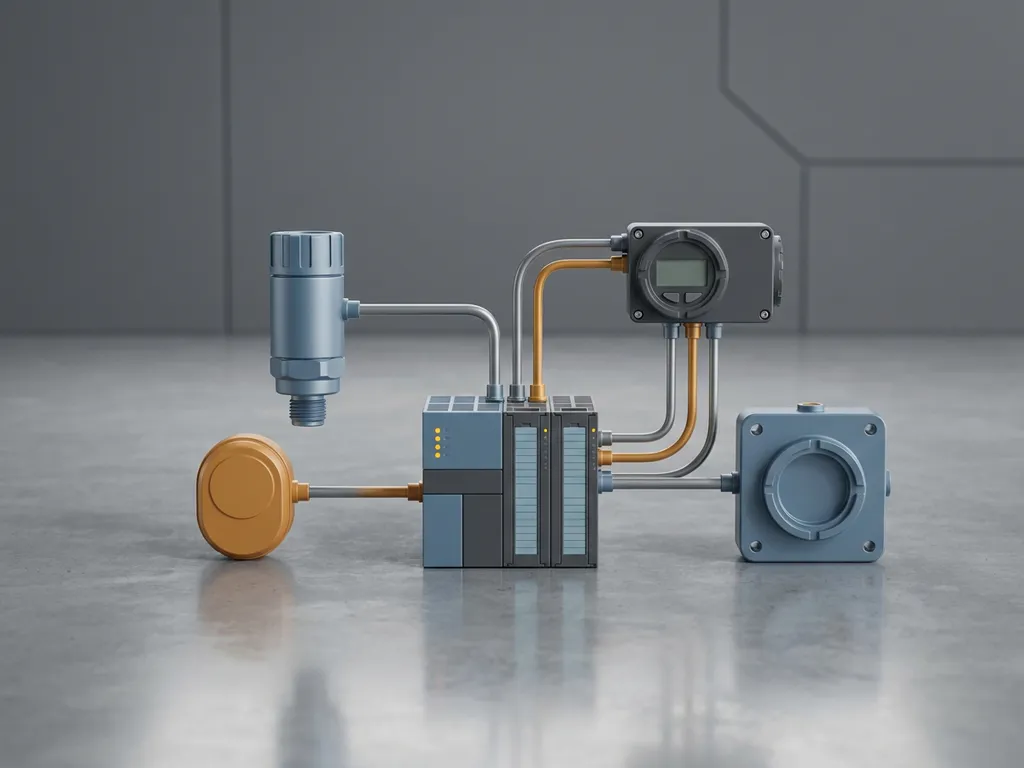


Safety Integrity Level (SIL) standards define the reliability requirements for safety instrumented systems in industrial automation. These standards directly influence system design by dictating hardware selection, redundancy requirements, and safety function implementation. SIL levels range from 1 to 4, with each level specifying different risk reduction factors and failure rate tolerances that determine the complexity and cost of automation systems.
What are SIL safety standards and why do they matter in automation?
Safety Integrity Level (SIL) standards are international safety requirements that specify the performance levels for safety instrumented systems in industrial automation. SIL standards classify safety systems into four levels (SIL 1–4) based on their ability to reduce risk and prevent dangerous failures.
The four SIL levels represent increasing safety requirements:
- SIL 1: Lowest safety level with a risk reduction factor of 10–100
- SIL 2: Moderate safety level with a risk reduction factor of 100–1,000
- SIL 3: High safety level with a risk reduction factor of 1,000–10,000
- SIL 4: Highest safety level with a risk reduction factor of 10,000–100,000
These standards matter because they establish mandatory safety requirements for industrial automation systems. Regulatory bodies require SIL compliance in industries such as chemical processing, oil and gas, and power generation. SIL standards help prevent accidents by ensuring safety systems perform reliably when needed, protecting personnel and equipment from dangerous process conditions.
How do SIL requirements influence automation system design decisions?
SIL requirements fundamentally shape automation system architecture by mandating specific hardware selections, redundancy configurations, and safety function implementations. Higher SIL levels require more sophisticated and expensive components with lower failure rates and greater diagnostic coverage.
Hardware selection becomes increasingly restrictive as SIL levels rise. SIL 1 systems can use standard industrial components, while SIL 3 and 4 systems require certified safety-rated hardware with proven failure rates. This significantly impacts component costs, as safety-certified devices typically cost two to five times more than standard equipment.
Redundancy requirements also escalate with SIL levels. SIL 1 may allow single-channel architectures, while SIL 2 typically requires 1oo2 (one out of two) voting systems. SIL 3 often demands 2oo3 (two out of three) configurations, and SIL 4 may require complex fault-tolerant architectures with multiple layers of redundancy.
System complexity increases substantially with higher SIL requirements. Engineers must implement comprehensive diagnostic functions, proof-testing procedures, and failure detection mechanisms. This complexity extends project timelines and requires specialised engineering expertise throughout the design and implementation phases.
What’s the difference between SIL 1, 2, 3, and 4 in practical automation applications?
Each SIL level corresponds to different industrial applications based on the potential consequences of safety system failure. The levels represent increasing reliability requirements and decreasing acceptable failure rates in practical automation scenarios.
SIL 1 applications include basic equipment protection where failure consequences are limited. Examples include simple pump protection systems, basic level control in non-hazardous applications, and standard motor protection circuits. These systems typically protect against equipment damage rather than personnel safety.
SIL 2 systems handle moderate safety risks in industrial automation. Common applications include fire and gas detection systems, basic emergency shutdown systems in chemical plants, and safety interlocks for rotating equipment. These systems protect both personnel and major equipment from moderate hazards.
SIL 3 applications involve high-consequence scenarios where failure could result in serious injury or major environmental damage. Examples include emergency shutdown systems in refineries, safety instrumented systems in chemical reactors, and critical process shutdown systems in power plants. These systems require extensive testing and maintenance protocols.
SIL 4 represents the highest safety level, typically reserved for applications where failure could cause catastrophic consequences. Nuclear power plant safety systems and critical railway signalling systems often require SIL 4 compliance. These applications demand the most rigorous design, testing, and maintenance procedures available.
How do you determine the required SIL level for your automation project?
SIL determination begins with comprehensive hazard analysis and risk assessment to identify potential dangerous events and their consequences. This systematic process evaluates the severity of potential accidents and the likelihood of occurrence without safety systems in place.
The process follows these key steps:
- Conduct hazard and operability studies (HAZOP) to identify dangerous scenarios
- Perform consequence analysis to determine potential impact severity
- Assess the likelihood of dangerous events occurring
- Apply risk matrices to determine tolerable risk levels
- Calculate the required risk reduction factors
- Select the appropriate SIL level based on risk reduction requirements
Industry standards such as IEC 61508 and IEC 61511 provide frameworks for this assessment process. Risk matrices help translate qualitative assessments into quantitative SIL requirements. Factors influencing SIL determination include personnel exposure, potential environmental impact, asset value at risk, and regulatory requirements specific to your industry.
Professional safety engineers typically lead this assessment process, as it requires specialised knowledge of risk analysis techniques and safety standards. The assessment must be documented thoroughly and reviewed by independent parties to ensure accuracy and completeness.
What challenges do engineers face when implementing SIL-compliant automation systems?
Documentation requirements represent one of the most significant challenges in SIL implementation, demanding comprehensive records of design decisions, component specifications, testing procedures, and maintenance activities throughout the system lifecycle.
Key implementation challenges include:
- Extensive documentation requirements for design rationale and safety case development
- Complex testing procedures, including factory acceptance testing and site integration testing
- Certification processes requiring third-party verification and validation
- Ongoing maintenance obligations with scheduled proof testing and diagnostic monitoring
- Higher costs for safety-certified components and specialised engineering resources
- Extended project timelines due to additional design, testing, and approval phases
Managing technical complexity becomes increasingly difficult with higher SIL levels. Engineers must balance safety requirements with operational functionality while ensuring systems remain maintainable and user-friendly. Integration challenges arise when connecting safety systems with standard process control systems.
Ongoing compliance obligations continue throughout the system lifecycle. Regular proof testing, diagnostic monitoring, and periodic safety assessments require dedicated resources and careful planning. These activities must be documented and tracked to maintain SIL compliance over time.
Hoe CoNet helpt met SIL-compliant automatiseringsoplossingen
We specialise in implementing SIL-compliant Siemens automation systems through our certified expertise as a PCS 7 Process Safety Specialist. Our comprehensive approach covers every phase of SIL implementation, from initial risk assessment through to ongoing maintenance support.
Our SIL implementation services include:
- Risk assessment and SIL determination studies
- Safety instrumented system design and engineering
- Factory acceptance testing and site commissioning
- Documentation preparation and certification support
- Ongoing maintenance and proof-testing services
- 24/7 support for critical safety systems
Our team combines deep technical knowledge of Siemens safety systems with extensive experience in process industries, including chemical, oil and gas, and power generation. We understand the regulatory requirements and practical challenges of SIL implementation across different industrial sectors.
Ready to discuss your SIL compliance requirements? Contact our safety specialists to explore how we can support your next safety instrumented system project with proven expertise and comprehensive lifecycle support.